Shortlisted for the Georgina Mace Prize 2024
Micha V. Jackson discusses her team’s research looking into the distribution of shorebirds and their feeding behaviour within a wetland to better understand habitat selection and quality.
About the Research
Overview
Shorebirds undertake some of the most spectacular migrations on earth, but are also one of the world’s most threatened bird groups – especially in the Australasian region. Alarming population declines linked to coastal habitat loss have galvanised scientists and policy makers to preserve critical remaining habitats, often in heavily developed and highly populated regions. But conserving habitat extent is only part of the story. Management to maintain and improve habitat suitability is also critical, yet extremely challenging due to shorebirds’ highly mobile lifestyle.

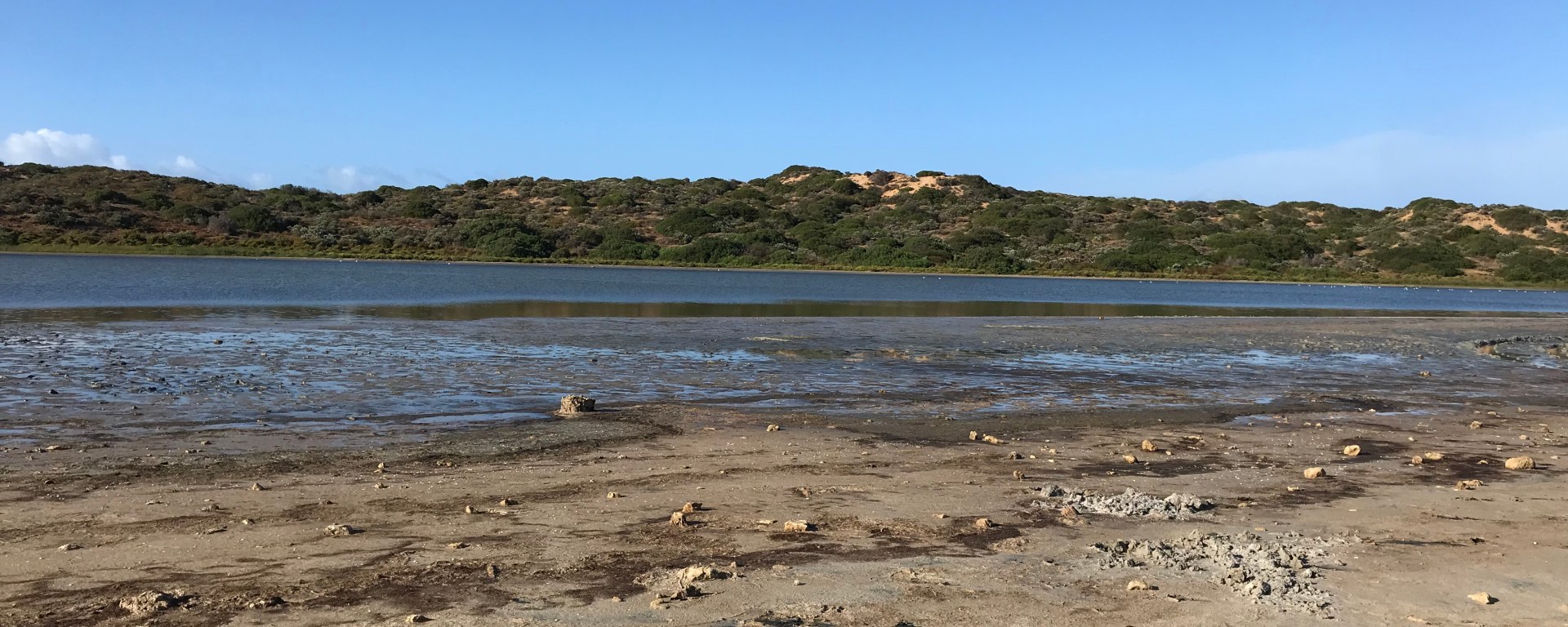
We tackled this tricky question by investigating what shorebird distribution and feeding behaviour within a wetland revealed about habitat selection and habitat quality. We intensively counted and recorded videos of shorebirds and modelled our observations in relation to multiple biophysical variables like sampled prey density and environmental conditions.

Surprises and challenges
One expectation we had was that there would be a clear relationship between shorebird distribution and measured prey abundance, but this turned out not to be the case. Even at small scales within a single wetland shorebirds apparently responded most strongly to potential habitat extent (that is, how much bare sand and mud were available), making them potentially susceptible to an ecological trap. A major challenge was not getting sucked down into the mud while collecting the macroinvertebrate samples needed to make this discovery!
Next steps and broader implications
Measuring habitat quality is a complex, sometimes frustrating, and often time-consuming process. Advances in remote sensing products (for example the ability to map exposure time of wetlands) and in machine learning (for example the potential for automated species-level identification of birds from images or drone footage), will cut down processing times and increase our ability to understand the complex relationships between animals and their environments.
Shorebirds benefit from widespread efforts amongst scientists and volunteers aimed at their conservation. These often involve regularly counting birds and campaigning to preserve habitat extent. We hope that our research will encourage people to incorporate habitat quality as part of their monitoring and management, which could really maximise the benefits derived. We’ve provided some tips on how to do so – like using shorebird step rate, which is much quicker and simpler to measure, as a proxy for prey density.
About the Author
Getting involved in ecology

My first ecological work was with an organisation that supported land management efforts in remote parts of northern Australia that are managed by Indigenous peoples. Although I have always been drawn to water, in this rugged and challenging environment I became particularly entranced with understanding and protecting dynamic and fragile wetland ecosystems.
Current position
I now work with a team that is tracking waterbird movements in Australia’s Murray Darling Basin to better understand their ecology. Our work directly informs largescale water management aimed at improving the ecological health of Australia’s largest river system.
Current research focus
My current position includes research on the habitat conditions required for successful breeding and foraging by waterbirds within the same river system that the wetland described in our paper is situated. Further, I am currently collaborating with overseas colleagues to collate knowledge from multiple shorebird habitat quality studies to provide advice to researchers and volunteers about how habitat quality measures can most easily and effectively be integrated into monitoring efforts.
Advice for fellow ecologists
Collaborators are key – many different skills and perspectives are needed to unravel the mysterious relationships that we observe in the natural world and conserve species that move across human-drawn borders and boundaries.
Read the full article ‘Shorebird habitat selection and foraging behaviour have important implications for management at an internationally important non-breeding wetland‘ in Ecological Solutions and Evidence.
Find the other early career researchers and their articles that have been shortlisted for the Georgina Mace Prize 2024 here!
 The Applied Ecologist