Field Diaries: A PhD Student’s Journey into Waterfowl Research

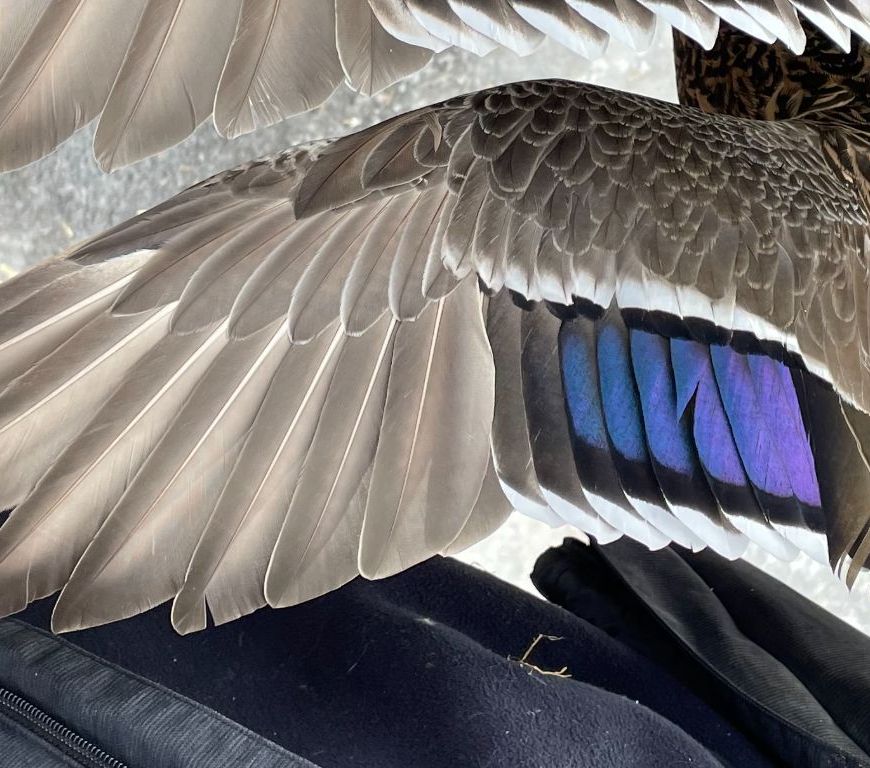
In our ‘Field Diaries’ series, The Applied Ecologist is sharing stories from a range of different fieldwork experiences. In this post, Cassidy Waldrep shares her story working with waterfowl across the Atlantic Flyway. In the waterfowl world, many biologists grow up with a love for ducks and geese, some having hunted since they could walk. For me, this was not the case. I grew up … Continue reading Field Diaries: A PhD Student’s Journey into Waterfowl Research

Georgina Mace Prize 2024: Winner Announcement

Ecological Solutions and Evidence is thrilled to announce the winner of our annual Georgina Mace Prize! This award is given to an outstanding article published in the journal by an author at the start of their career. The winner was selected by our Senior Editors who had to choose from our list of highly impressive short-listed authors. Winner: Kristy Ferraro Research: Missing carcasses, lost nutrients: … Continue reading Georgina Mace Prize 2024: Winner Announcement

Ruth Dunn: Marine bird abundance estimates during the non-breeding season

Shortlisted for the Georgina Mace Prize 2024 Ruth Dunn shares her team’s research investigating the number of marine birds that may be undetectable when underwater during at-sea surveys outside of their breeding seasons. About the Research Overview The aim of our paper was to help improve the accuracy of marine bird abundance estimates generated from at-sea surveys. We did this by calculating correction factors that … Continue reading Ruth Dunn: Marine bird abundance estimates during the non-breeding season

Micha V. Jackson: Shorebird habitat selection and foraging behaviour

Shortlisted for the Georgina Mace Prize 2024 Micha V. Jackson discusses her team’s research looking into the distribution of shorebirds and their feeding behaviour within a wetland to better understand habitat selection and quality. About the Research Overview Shorebirds undertake some of the most spectacular migrations on earth, but are also one of the world’s most threatened bird groups – especially in the Australasian region. … Continue reading Micha V. Jackson: Shorebird habitat selection and foraging behaviour

Kristy Ferraro: Quantifying nutrient losses from deer culling practices in Scotland

Shortlisted for the Georgina Mace Prize 2024 Kristy Ferraro shares insights into her team’s study researching how removing deer carcasses during the culling process can negatively impact ecosystems. About the Research Overview Our study quantifies a largely overlooked consequence of Scotland’s widespread deer culling practices—the loss of essential elements from ecosystems due to carcass removal. While deer management is a critical tool for ecosystem recovery … Continue reading Kristy Ferraro: Quantifying nutrient losses from deer culling practices in Scotland

AI and population monitoring; does it really make a difference?

Emily A. Jordan discusses the use of AI in population monitoring and her team’s experience using it to assess the Kapitia skink. In population monitoring, using unique markings to identify individuals is a practical solution when species are challenging to tag. We can camera trap elusive snow leopards, drone-photograph whales, and happily snap our tiniest amphibians. Yet these photographic records bring a fresh challenge. Each … Continue reading AI and population monitoring; does it really make a difference?

The story behind the research: “Combining detection dogs and camera traps improves cheetah monitoring”

Tim Hofmann and Stijn Verschueren from the Cheetah Conservation Fund in Otjiwarongo, Namibia investigate how to effectively monitor cheetah populations. Cheetahs are Africa’s most endangered big cats, with fewer than 7,100 individuals left in the wild, scattered across less than 9% of their historical range. These estimates are largely based on expert opinions and few well-studied populations. In many parts of the cheetah’s range, we … Continue reading The story behind the research: “Combining detection dogs and camera traps improves cheetah monitoring”

Solutions and Practical Implications with Ecological Solutions and Evidence

Ecological Solutions and Evidence publishes articles directly linked to species management, biodiversity, ecosystems, and practical solutions to ecological problems. Each article highlights a problem and is supported by key findings and observations that contribute towards solutions. Last summer, the journal introduced the requirement that all authors must outline a ‘solution’ or ‘practical implication’ at the end of their abstract, clearly indicating what key management takeaways … Continue reading Solutions and Practical Implications with Ecological Solutions and Evidence

Keeping our havened populations fighting fit: Do native predators help Australian mammals face invasive cats and foxes?

Linking to the recently-published article, Natasha Harrison discusses whether native predators inside ‘predator-free’ havens could be good for the conservation of threatened native prey species. Predator-free havens Since their introduction into the Australian landscape following European settlement, feral cats and red foxes have caused prolific population declines among our native fauna. The extinction of Australian mammals makes up more than two thirds of contemporary global … Continue reading Keeping our havened populations fighting fit: Do native predators help Australian mammals face invasive cats and foxes?

Revealing the hidden lives of non-breeding Black-tailed Godwits

In this blog post, Taylor Craft discusses the use of GPS tracking and satellite imagery to uncover the lives of Black-tailed Godwits in the Senegal Delta. You can read their latest study, published alongside co-authors, here. A pressing challenge The landscapes of the endangered continental Black-tailed Godwit face increasing pressures at nearly every key site along their migratory route. With poor recruitment limiting population growth, … Continue reading Revealing the hidden lives of non-breeding Black-tailed Godwits