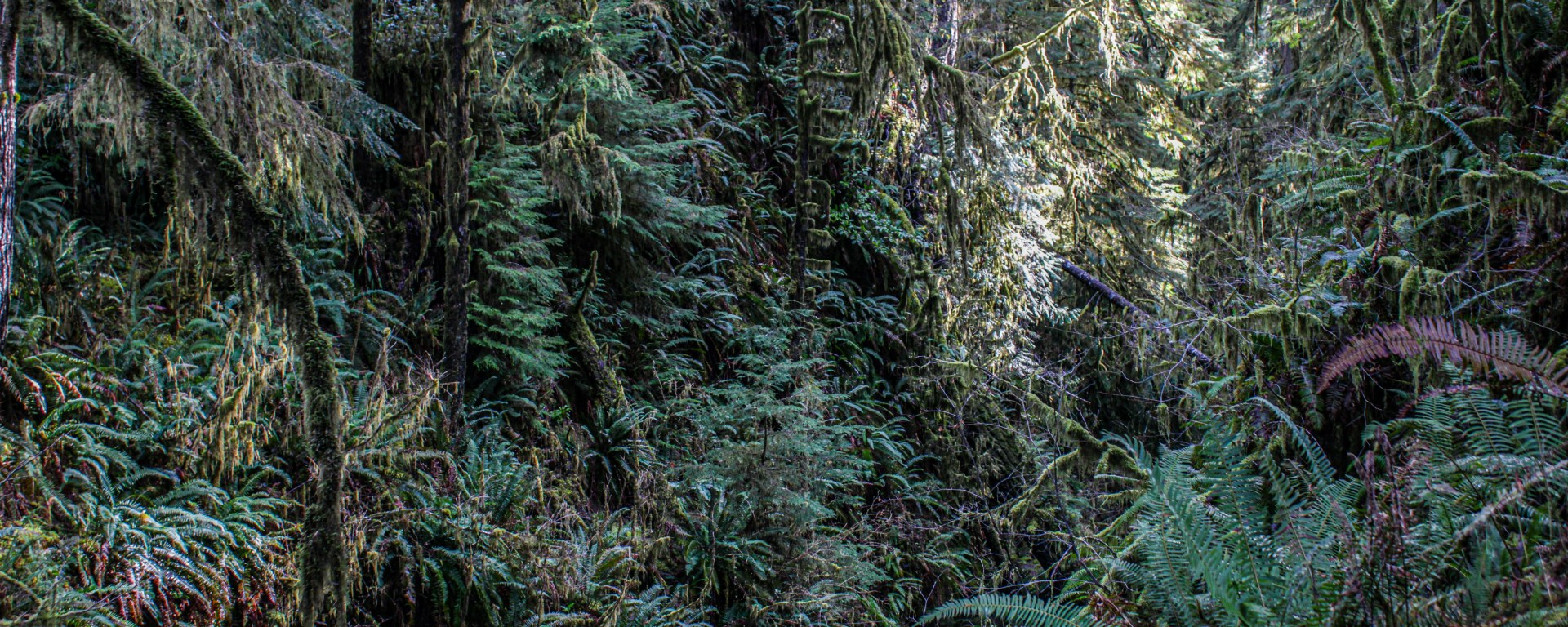
Katerina Chernyuk highlights the need to understand the various factors impacting temperate rainforests and shares her team’s research investigating the potential climate envelopes in Ireland and Britain.
Recently, temperate rainforests have captured public awareness across Ireland and Britain, with everything from award-winning books, media articles and restoration projects, leading to attention from both NGOs and governments. Temperate rainforests have become a flagship habitat for Irish and British nature recovery that has captured both hearts and minds, being aesthetically appealing whilst also native and biodiverse. However, we still do not know much about this habitat and how to restore it, and the current social and political impetus has outrun scientific evidence. In a time when the biodiversity crisis is in full swing, it is of critical importance that we refer to facts and be mindful of what we do not yet know, as we risk misusing the opportunities and resources arising from heightened media interest.
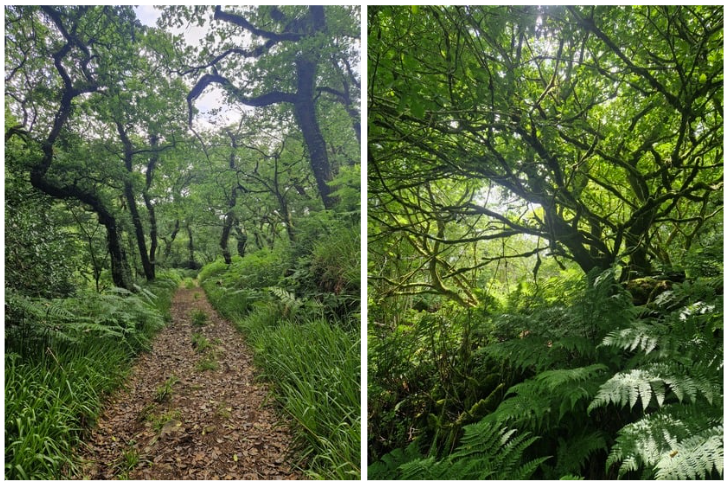
Temperate rainforests, for example, despite the attention they receive, are not well-defined. We know that they occur in mid-latitude areas of the globe, in temperate regions, and that they occur in areas with higher rainfall. However, what exactly is the correct amount of rainfall? For example, commonly used thresholds seen in scientific literature for temperate rainforests vary dramatically from a minimum requirement of 846 mm annual rainfall [1] to requiring more than 1400 mm [2]. Such differences between the possible climate envelopes (where this habitat could feasible exist according to its climatic requirements) are further compounded by different thresholds of associated temperatures, different variables (e.g. July mean temperature vs mean temperature of warmest quarter) and by some climate envelopes using formulas of these variables computed together [3] rather than using thresholds of the variables directly.
As a result, we really don’t know where these habitats occur, and this is made even more difficult by our rapidly changing climate that means where temperate rainforests may have been suitable in the past, may no longer be suitable now or may cease to suitable in the very near future. This would render a significant loss of investment and resources as tree planting and woodland restoration are not inexpensive endeavours, and any site selection occurring now must ascertain the correct investment of valuable resources. When looking at the commonly used climate envelopes for temperate rainforest, specifically in Ireland and Britain we found substantial differences across both the proposed suitable extents and their distributions. We found that Amann’s Index of Hygrothermy3 at over 100[4] was the best fit for proxy temperate rainforest habitat distribution in Ireland, but this itself was not a perfect fit.
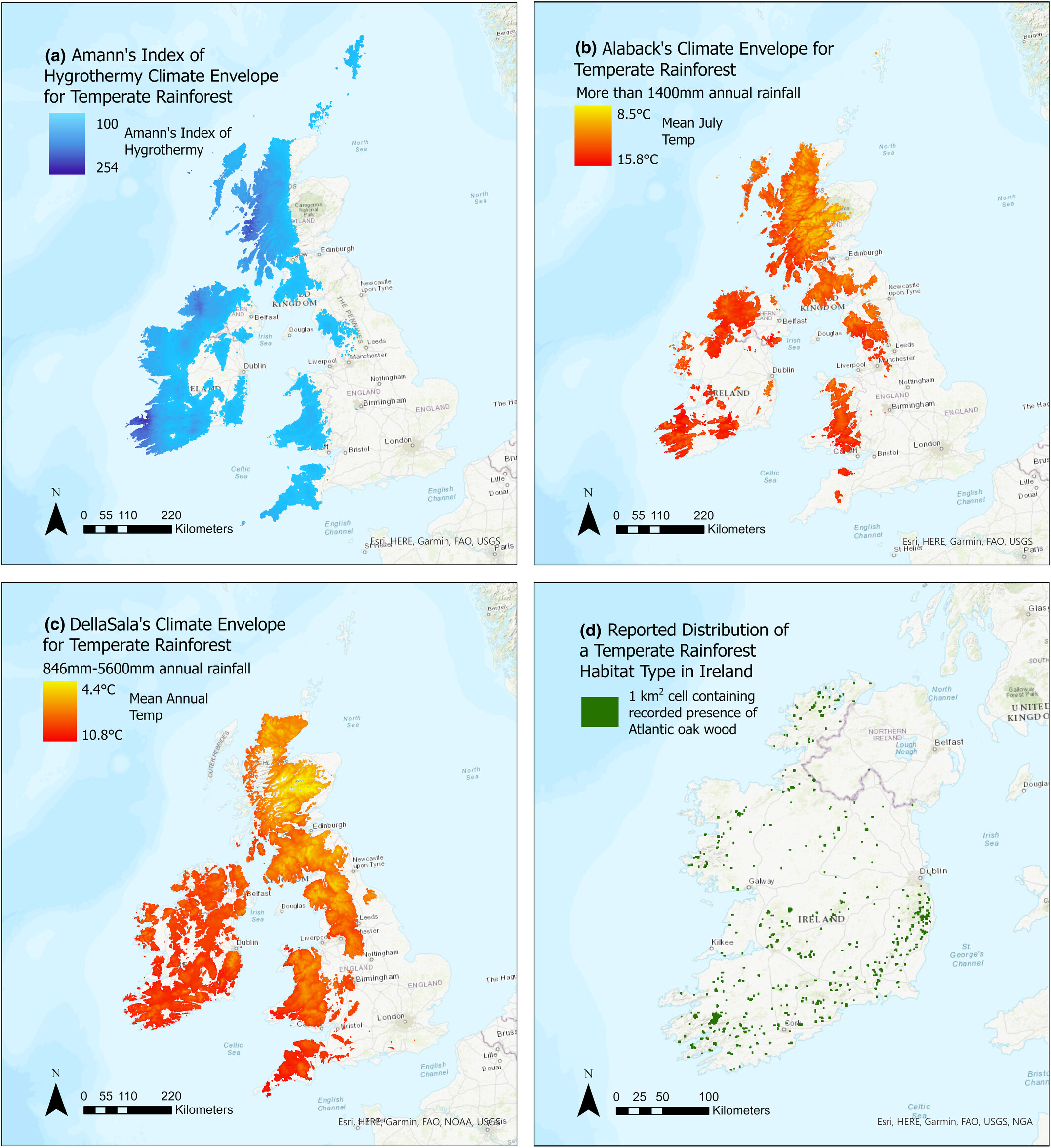
This means that when choosing to delegate resources, practitioners and researchers working with temperate rainforests need to be aware of the multiple potential climatic suitability zones, as well as local factors that may contribute to differences in microclimate (such as rivers or narrow valleys that may alter humidity levels in localised areas) and what these factors mean for careful and appropriate site selection. Climate modellers and ecological researchers have to work with practitioners, landowners and policymakers to ensure the correct application of resources to successfully and sustainably conserve and restore this internationally important habitat type.
Read the full article ‘Comparison of three temperate rainforest climate envelopes for Britain and Ireland: Where could our rainforest be?’ in Ecological Solutions and Evidence.
References
[1] https://doi.org/10.5822/978-1-61091-008-8
[2] Alaback, P.B., 1991. Comparative ecology of temperate rainforests of the Americas along analogous climatic gradients. Revista Chilena de Historia Natural, 64(3).
[3] Amann, J., 1929. L’hygrothermie du climat, facteur déterminant la répartition des espèces atlantiques. Bulletin de la Murithienne, (47), pp.39-46.
 The Applied Ecologist