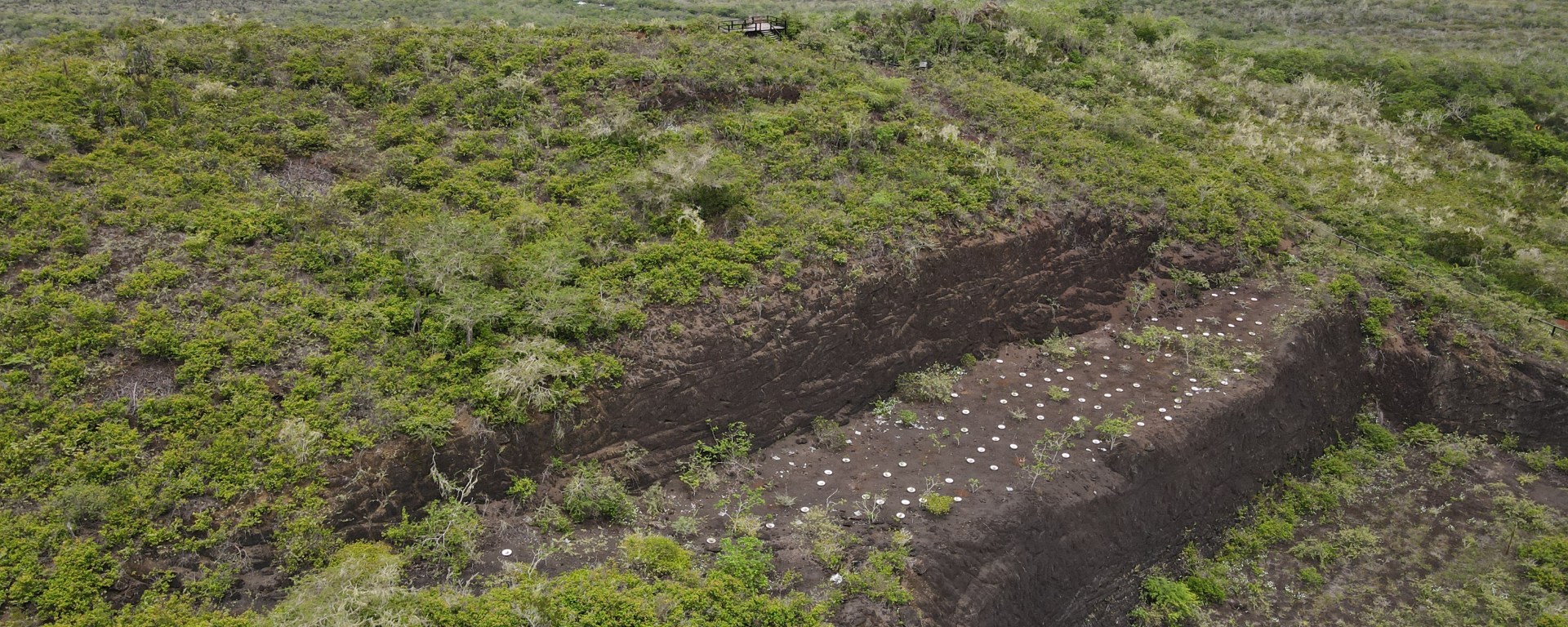
Anna Calle-Loor, co-author of a new publication, shares her team’s experience assessing the survival of plant species in the Galapagos to inform decision-making amongst stakeholders.
When you think of the Galapagos Islands, what comes to mind? Perhaps volcanic landscapes, giant tortoises and other unique wildlife, scenes that could easily belong in a nature documentary. But behind this iconic scenery lies a less picturesque reality: the islands are also home to the infrastructure required to sustain an archipelago that welcomes around 300,000 visitors every year.
The Galapagos is also home to around 30,000 residents. To meet their daily needs and support tourism, the islands depend on essential infrastructure such as water and power, waste systems, transport, telecommunications, housing, schools and health services. This infrastructure supports the human presence that, in turn, supports conservation. However, the larger the population and the greater the number of visitors, the more pressure is placed on the islands’ ecosystems.
To manage this balance, 97% of the land area in the archipelago is designated as part of the Galapagos National Park, while the remaining 3% is allocated for human use. However, some sites of human activity are located within the National Park. These are known as Special Service Sites (SSS), areas established in exceptional circumstances to meet the essential needs of local populations. SSS include roads, quarries and garbage dumps, and they are, by definition, ecologically degraded.
Because these sites lie within protected areas, it is important to minimise their impacts on surrounding biodiversity. Once they are closed, they also require a strategic and evidence-based approach to restoration.
Bringing Research to SSS
To address this challenge, the Galapagos Verde 2050 (GV2050) Program carried out applied restoration research in four SSS: two quarries and two waste management sites located on Floreana Island, Baltra Island and San Cristóbal Island. The findings, recently published in a study, shed new light on how to restore degraded sites within the Galapagos National Park.
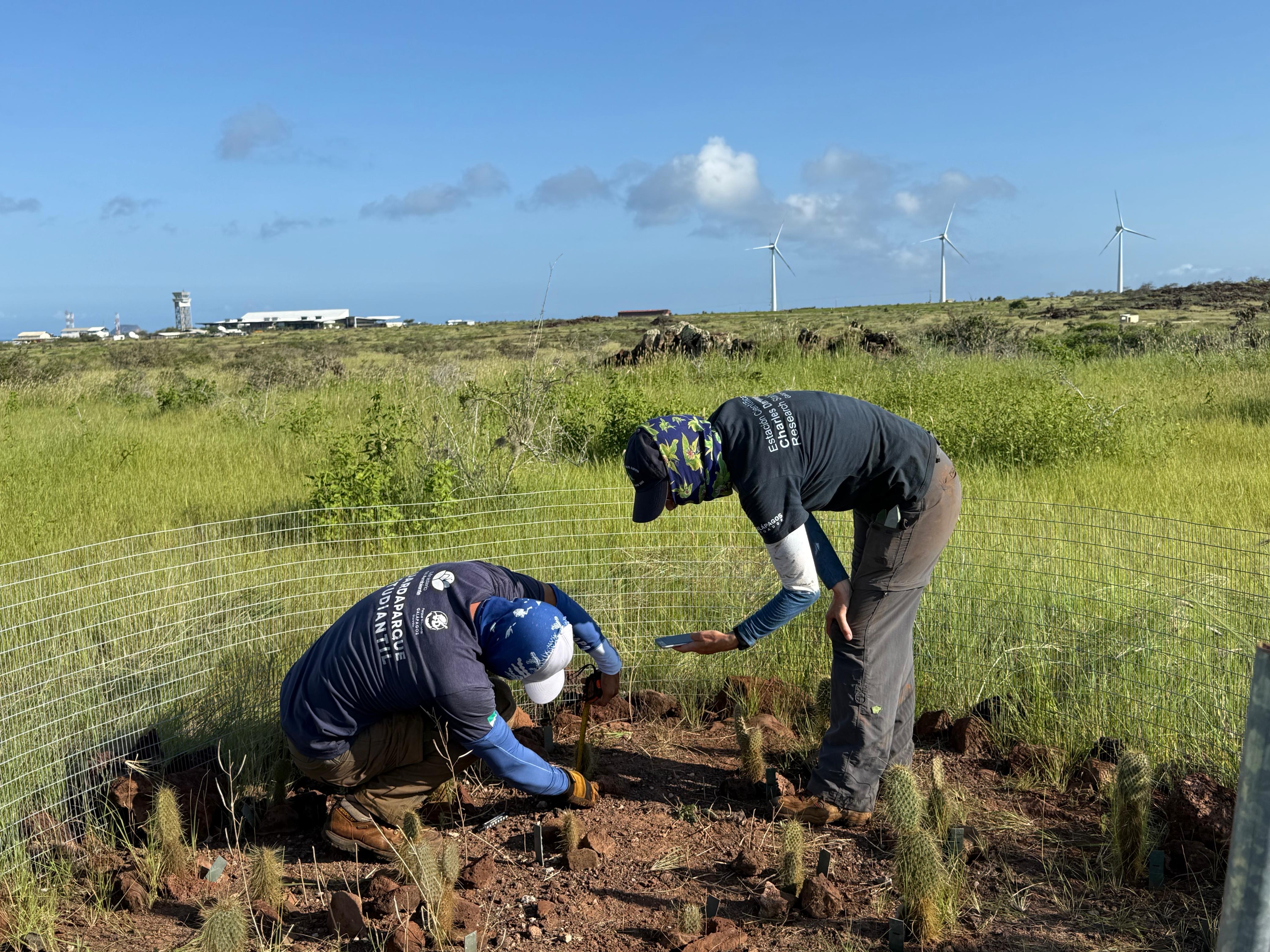
The team planted native species using different restoration tools and monitored their survival to identify which methods were most effective. The research also examined how restoration decisions are made through meetings with the Galapagos National Park Directorate (GNPD). Discussions focused on who manages SSS, how responsibilities are assigned and what mechanisms exist for monitoring and evaluation.
What the Findings Reveal
Plant survival rates varied depending on the restoration tool, site and species. This shows that there is no single best method for restoring SSS and that strategies must be site-specific and adaptive. It highlights the importance of applied research and adaptive management to use restoration resources effectively.
The study also illuminated how decisions about restoring SSS are made. SSS can only be managed by governmental institutions such as municipalities and local councils. These institutions sign a 50-year license agreement with the Galapagos National Park, which can later be renewed. Although formal mechanisms for monitoring and evaluation exist, a better communication between stakeholders with clear, shared indicators, would enhance accountability and guide future restoration efforts in SSS.
Why This Research Matters
The GNPD has established that, once closed, SSS must be restored with native and endemic vegetation. However, there is still much to learn about how to restore these sites effectively. A collaboratively derived research agenda identified 50 priority research questions for the Galapagos including: “What methods would be most effective in reducing the impact of extracting or processing building materials?” This question is directly linked to many SSS.
The areas currently being restored by GV2050 represent only a small portion of all SSS. For example, Santa Cruz Island, which has the largest human population in the archipelago, hosts several quarries within the national park, including Mina de Granillo Rojo, Mina de Granillo Negro, Mina de Granillo Fino and Área de Piedra. Isabela Island also has a garbage dump and several quarry sites.
As populations grow and tourism continues to expand, some SSS will close, others will expand, and new ones may be authorized. Without active restoration, these degraded areas can lead to habitat loss, soil degradation, fragmentation and the spread of invasive species, all of which threaten the unique ecosystems that make the Galapagos extraordinary.
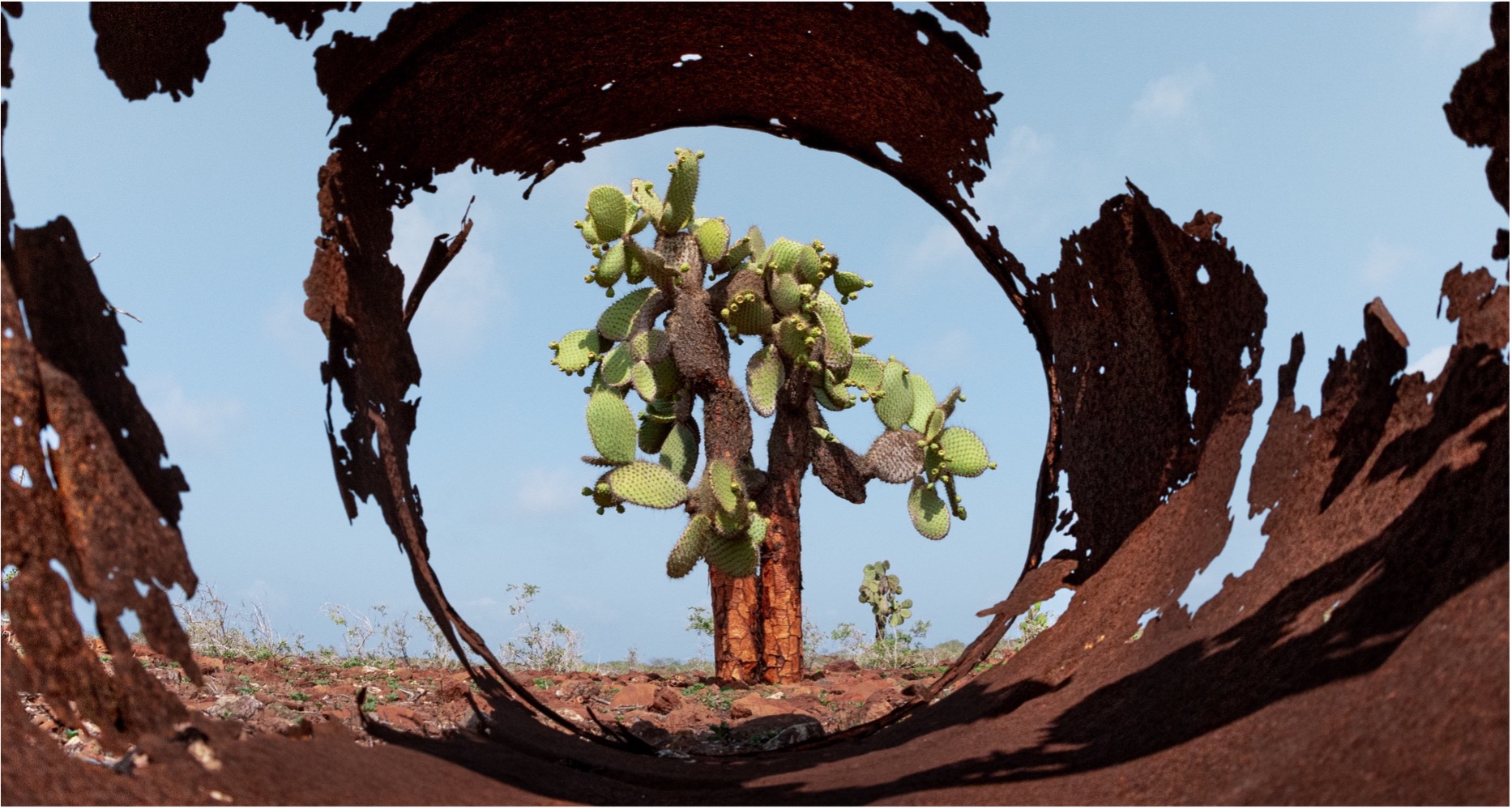
Photo of an Opuntia echios cactus, endemic to the Galapagos, framed by metal scraps in Baltra Island © Joshua Vela.
Looking Ahead
The Galapagos Islands show how closely human and natural systems are connected. People and infrastructure are part of the islands and excluding them is not realistic. The key is finding ways to meet human needs while protecting biodiversity.
Read the full article Plant science meets the decision-making process of restoration in quarries and waste dumps of a remote archipelago written by Nicolás Velasco, Christian Sevilla, Anna Calle-Loor, Paúl Mayorga, Danyer Zambrano, Patricia Jaramillo Díaz in Ecological Solutions and Evidence.
 The Applied Ecologist