Ceresa et al. share their experience investigating the conservation of peripheral populations, focusing on the critically endangered barred warbler Curruca nisoria in the Italian Alps.
Peripheral populations — those living at the edges of a species’ distribution — are often small and isolated. Yet they can be disproportionately important for conservation, harbouring unique genetic diversity and local adaptations that may help species cope with environmental change. The challenge is that studying them is rarely straightforward: low numbers and many, often intercorrelated potentially relevant environmental factors to consider can make robust habitat assessments difficult.
These challenges have been at the centre of our recent work on a rapidly declining population of barred warbler (Curruca nisoria), at the western margin of its breeding range in the Italian Alps.
A conservation problem at the range margin
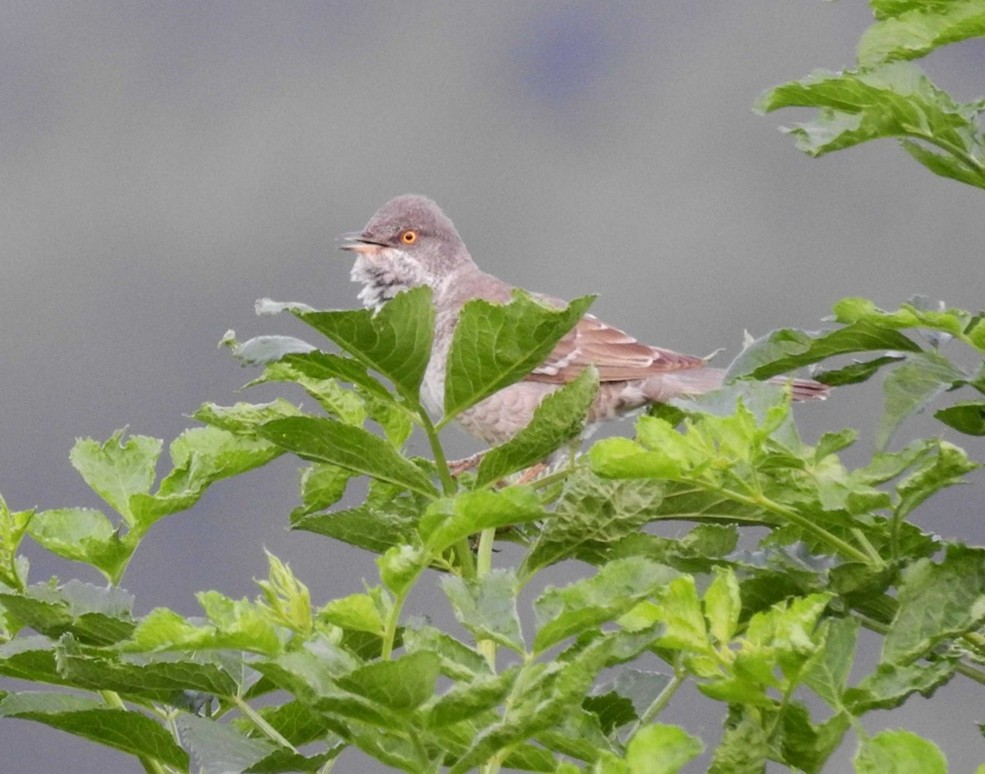
The barred warbler is a long-distance migratory passerine that breeds from Central Europe to Central Asia and winters in eastern Africa. While it is still relatively widespread across much of its core range, peripheral populations in western Europe have undergone dramatic declines. In Italy, the species has fallen from an estimated 1,000–2,000 breeding pairs in the 1980s to fewer than 100 today, and it is now classified as Critically Endangered nationally.
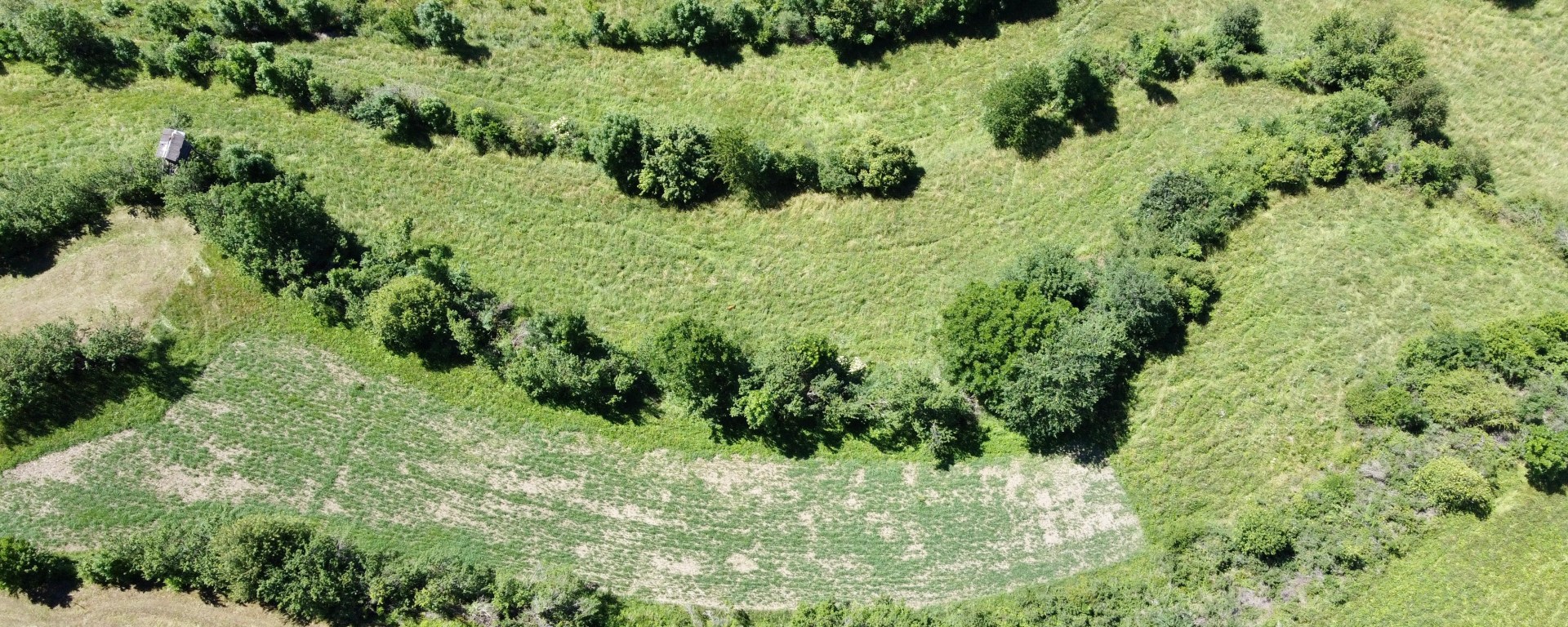
The remaining Italian population is fragmented and largely confined to semi-open agricultural landscapes in the Alps and Pre-Alps, where traditional farming systems are being reshaped by both land abandonment and agricultural intensification. Despite the urgency of the situation, detailed information on habitat requirements in an Alpine context has been lacking, as most previous studies were conducted in lowland or hilly areas of Central Europe.
How do you study habitat preferences with very little data?
We focused on a small Alpine stronghold in South Tyrol, where only a few tens of breeding pairs remain. Using territory mapping, we identified 21 breeding territories and compared them with 21 nearby control plots at the scale of a typical breeding territory (1 hectare). For each plot, we quantified fine-scale land-cover variables, including hedgerows, bushes and open farmland types, as well as topographic factors such as slope and solar radiation.
With such a small sample size and many intercorrelated predictors, traditional regression approaches would have been scarcely reliable. Instead, we adopted a two-step analytical strategy. First, we used partial least squares discriminant analysis (PLS-DA) to identify the most influential predictors while effectively handling multicollinearity. We then applied multivariate adaptive regression splines (MARS) to explore non-linear relationships and identify ecological thresholds relevant for management. This combination allowed us to extract robust, context-specific information from a very limited dataset.
Key results with direct management relevance
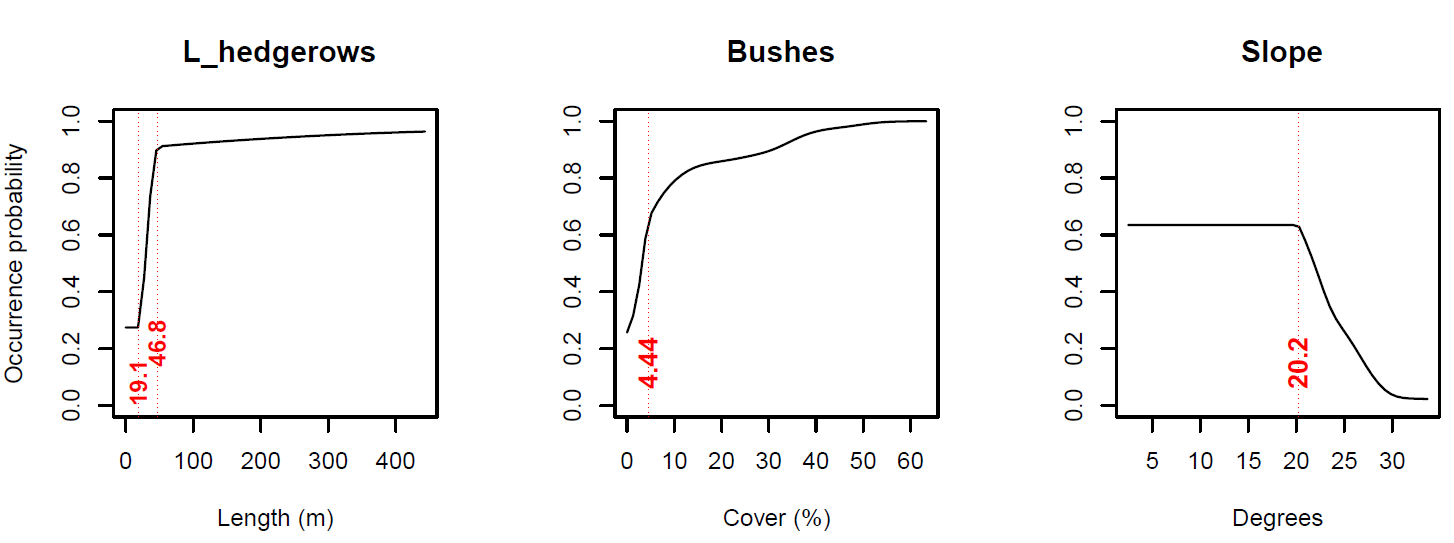
Three factors emerged as key drivers of barred warbler occurrence. Hedgerows proved to be the most important habitat element: very short hedgerows had virtually no effect, but the probability of occurrence increased sharply once hedgerows exceeded approximately 20 metres in length, reaching high values above about 40 metres per hectare. Bush cover also had a strong positive effect, with high occupancy probabilities reached at around 10% cover. Terrain slope played a significant role as well, with warblers avoiding the steepest areas and occurrence declining sharply above roughly 20 degrees.
In contrast, the type of open farmland matrix — whether meadows, pastures or arable land — had little influence at this scale, provided that marginal elements such as hedgerows and bushes were present.
Why does this matter for conservation?
Our results provide concrete, quantitative thresholds that can directly inform habitat management and agri-environment schemes. For instance, planting short hedgerows may appear beneficial on paper but is unlikely to support this species. Conservation incentives should instead prioritise the creation or maintenance of sufficiently long hedgerows and bushy areas, ideally located in gently sloping terrain.
More broadly, this study highlights two important points for applied ecology. First, habitat preferences can be strongly context-dependent: factors such as topography, which are largely irrelevant in lowland studies, become crucial in mountain landscapes. Second, small peripheral populations should not be dismissed as “data-poor”; with appropriate analytical approaches, they can yield valuable insights that are directly relevant for conservation action.
Looking ahead
The persistence of the barred warbler in the Italian Alps may prove crucial under ongoing climate change, potentially facilitating range shifts towards higher elevations, a process that is apparently already ongoing. Thus, ensuring that suitable habitat remains available at the margins of its range could therefore have implications well beyond this small population.
By combining flexible statistical tools with detailed field data, our study shows that it is possible to turn limited observations into actionable conservation guidance — exactly what is needed when time and numbers are running out.
Read the full article ‘Studying habitat requirements in extremely small, peripheral populations: an assessment of the barred warbler Curruca nisoria in the Italian Alps’ in Ecological Solutions and Evidence.
 The Applied Ecologist