Forests are naturally shaped by events such as fires, windstorms, or insect outbreaks, known altogether as forest disturbances. The long-term characteristics of these events is defined as disturbance regime; and their trends depend on multiple factors, including site conditions (e.g., climate and soil), disturbance and management legacies, and the specific causal agents present in the region.
In this study, we characterised the main disturbance regimes across Europe by causal agent and assessed their temporal dynamics. We analysed more than 3.8 million disturbances caused by fires, wind, and insect outbreaks (mostly bark beetles) that occurred across the European continent between 1985 and 2023.
We found that disturbance regimes vary substantially depending on whether they are driven by fire, or by wind and insect outbreaks. Moreover, within each causal group, regimes vary considerably across European regions. For instance, fire regimes had a clear north–south gradient: they tend to be rare but severe in boreal and temperate forests, while becoming more frequent and larger toward the Mediterranean.
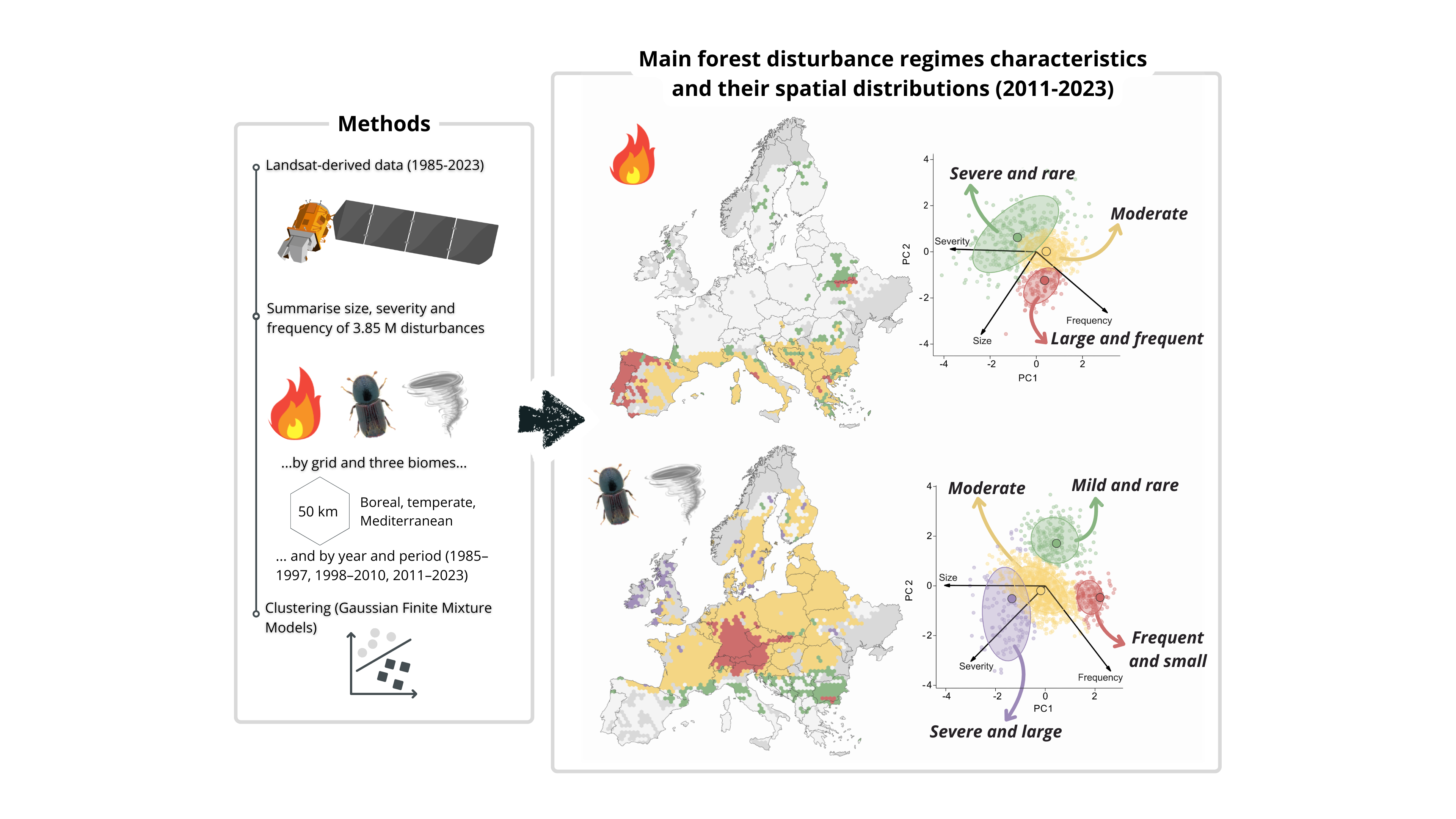
In contrast, wind and insect-driven disturbances are generally mild and rare in southern Europe, but moderate in boreal forests. The greatest heterogeneity—and the most extreme regimes— within the wind and bark-beetle disturbance group occurred in temperate forests.
The pronounced spatial heterogeneity of disturbance regimes across Europe, together with their high temporal variability — with about 15% of the analysed grid cells changing to a different regime during the study period —highlights the need for forest management strategies tailored to the specific context of each region. These strategies should account for the regimes of the different disturbance agents present, as well as local environmental conditions—both current and projected under climate change scenarios.
This is a Plain Language Summary discussing a recently-published article in Journal of Applied Ecology. Find the full article here.
 The Applied Ecologist