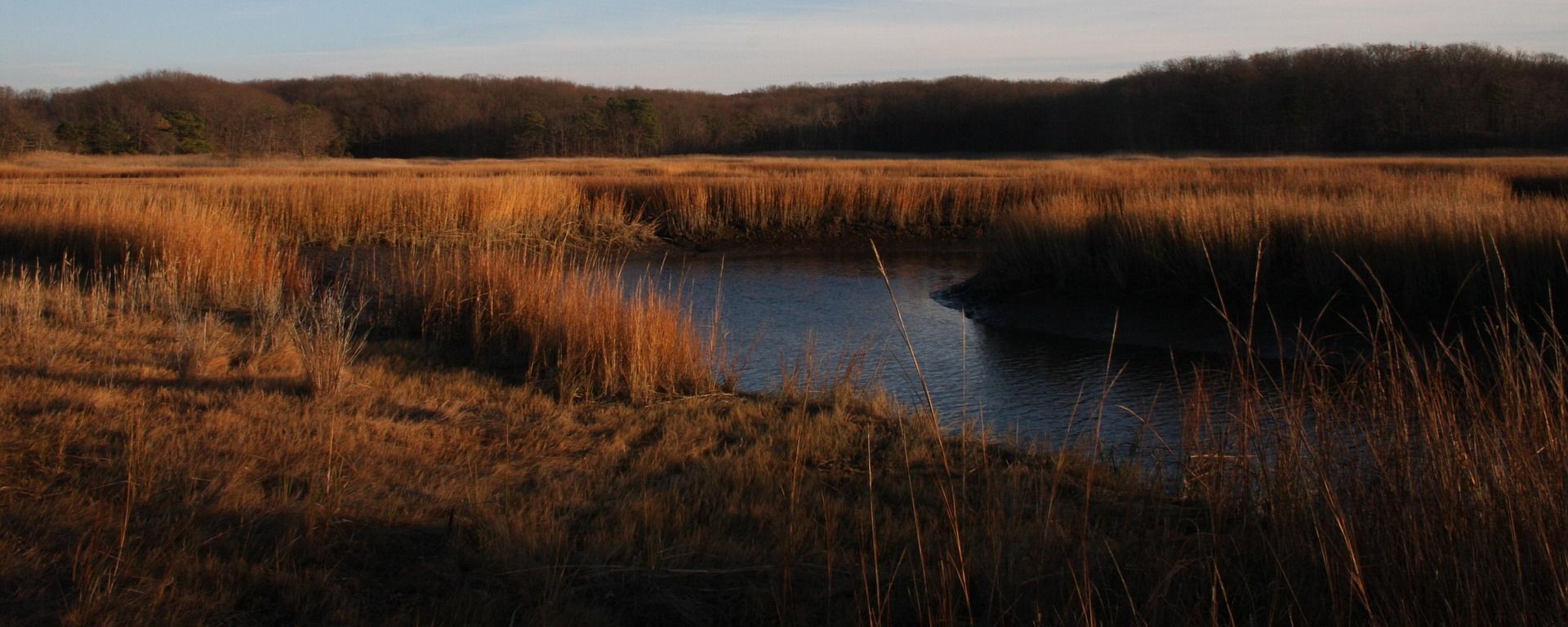
Coastal wetlands, including mangrove forests and saltmarshes, are known to reduce coastal erosion and flooding during storms. However, limited studies have investigated whether these ecosystems influence how tropical cyclones affect nearby farmlands.
Farmlands are highly vulnerable to extreme weather events predicted with climate change, threatening food security and regional economies. Our study examined patterns of flooding and crop cover change on coastal sugarcane land in the Whitsunday region of Queensland, Australia, following tropical Cyclone Debbie in 2017. Using satellite images taken before and after the cyclone, we mapped where surface water increased and where crop cover declined. We then analysed how these changes were related to environmental factors.
We found that soil properties, distance from the cyclone path, and the distance from coastal wetlands were important in explaining whether surface water increased or crop cover declined after the cyclone. Importantly, there was less flooding and smaller losses in crop cover in fields located within about 1 km of mangroves or saltmarshes than in more distant areas.
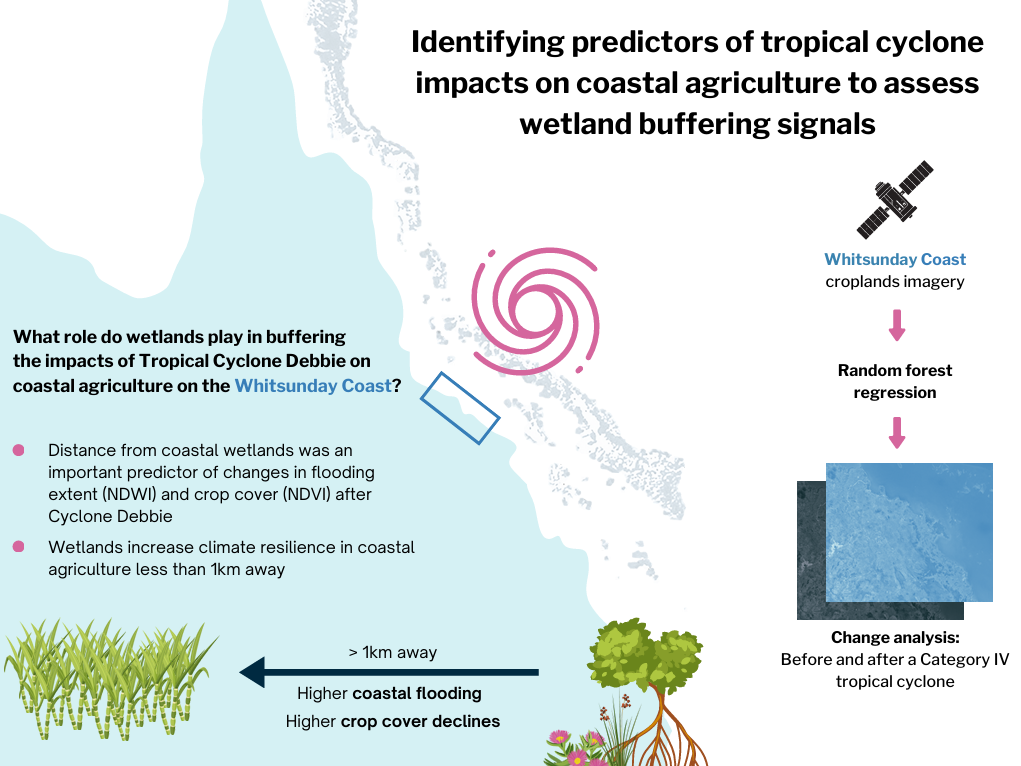
We also found that sandy and loamy soils exhibited higher average crop cover declines compared to historical wetland soils. This pattern suggests a localised wetland buffering signal. Much of the Whitsunday region’s original coastal wetlands were cleared or degraded during the 1960s, leaving only a narrow and fragmented coastal fringe.
Restoring mangrove forests and saltmarshes in suitable areas could therefore help improve the resilience of nearby farmlands to future cyclone damage, while delivering additional benefits such as improved soil conditions, reduced saltwater intrusion, and potential income through carbon and biodiversity markets.
This is a Plain Language Summary discussing a recently-published article in Journal of Applied Ecology. Find the full article here.
 The Applied Ecologist