Shortlisted for the 2025 Southwood Prize
About the research
Overview
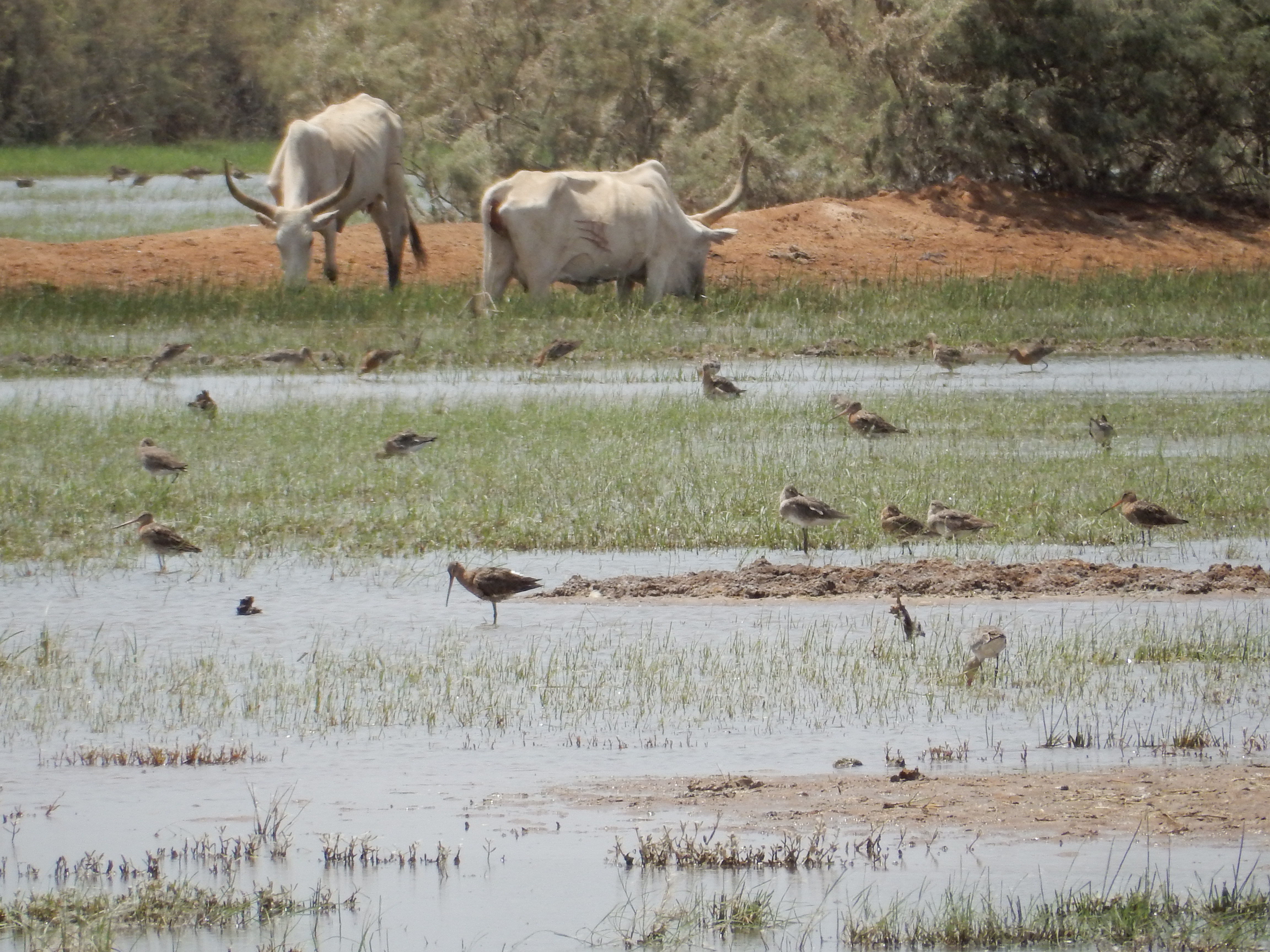
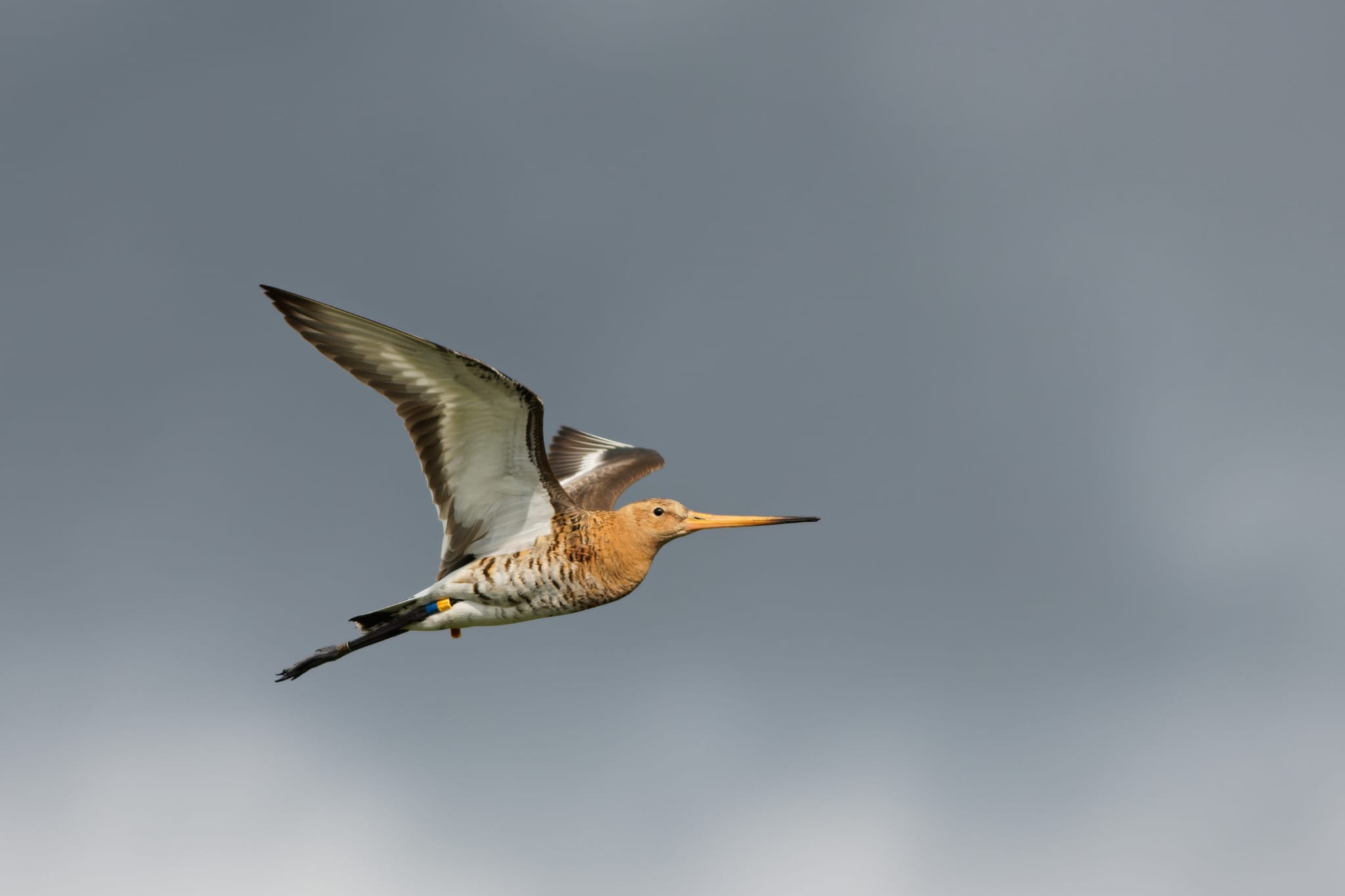
For decades, research has focused on the breeding grounds of migratory shorebirds in Northwest Europe. Yet much of their annual cycle is elsewhere along the East Atlantic Flyway, particularly in West Africa. Using tracking data from black-tailed godwits alongside field data from a key nonbreeding site, the Senegal Delta, we examined how different habitats support godwits during this period. We compared use of protected natural wetlands and working landscapes such as rice fields, and assessed how their relative importance shifts across the nonbreeding season.
Surprises and challenges
In some ways, the patterns were obvious. When you look at tracking data (through tools like the Animal Tracker App or the Global Flyway Network), you can clearly see when and where godwits concentrate.
The real challenge was turning those patterns into something rigorous and reproducible. Mapping habitats from satellite imagery required extensive ground-truthing. Defining and calculating core-use areas meant applying advanced movement models. In this sense, translating movement into measurable habitat value was far more technically demanding than it first appeared.
Next steps and broader implications
The next step is translating findings to action. Habitat restoration is already underway in the Senegal Delta through LIFE EU projects like GrassbirdHabitats and Godwit Flyway. At the same time, new PhD students are focusing on agroecology and spatial ecology in the region. The future of migratory bird conservation in the East Atlantic Flyway lies in connecting breeding and nonbreeding research into a more unified conservation strategy across the full flyway.
This work feeds directly into conservation decisions. Along the East Atlantic Flyway, shorebird researchers are collaborating across countries and disciplines. By quantifying how protected wetlands and agricultural landscapes both sustain godwits, our study provides evidence that working landscapes matter. The framework we developed can be applied to other key nonbreeding sites and to other migratory shorebirds under pressure.
About the author
Current position
I recently completed my PhD and am now a postdoctoral researcher at the University of Groningen. I continue to work at the intersection of movement ecology, conservation, and data science, using godwits as ecological sentinels. Increasingly, I’m also focused on making ecological insights more accessible beyond academia, working across disciplines and with practitioners to ensure that research informs real-world decision-making.
Getting involved in ecology
I grew up in the countryside with easy access to wild places, and spending time outdoors shaped how I see the world. I always valued the natural world for its own sake and admired old-school naturalists. I also knew I didn’t want a typical 9 to 5 job indoors. In college, that interest became more focused — I wanted to understand how science could inform management. Ecology offered a practical way to combine fieldwork, data, and applied problem-solving.
Current research focus
One major direction is upscaling the findings from this paper to other nonbreeding sites across the flyway. We’re asking whether similar patterns hold elsewhere and how local land use shapes habitat value. At the same time, our capacity-building efforts in West Africa have strengthened local partnerships. That’s allowing us to conduct more detailed agroecological and behavioral studies, linking foraging ecology and farming practices more directly to conservation outcomes.
Advice for fellow ecologists
Conservation is collective work and if you stay in your disciplinary lane, you’ll miss both insight and impact. I encourage others to make the effort to collaborate, especially with people trained differently to challenge your assumptions and improve your science.
Read the full article ‘Remote sensing and GPS tracking reveal temporal shifts in habitat use in nonbreeding Black-tailed Godwits’ in Journal of Applied Ecology.
Find the other early career researchers and their articles that have been shortlisted for the 2025 Southwood Prize here!
 The Applied Ecologist