Shortlisted for the 2025 Southwood Prize
About the research
Overview
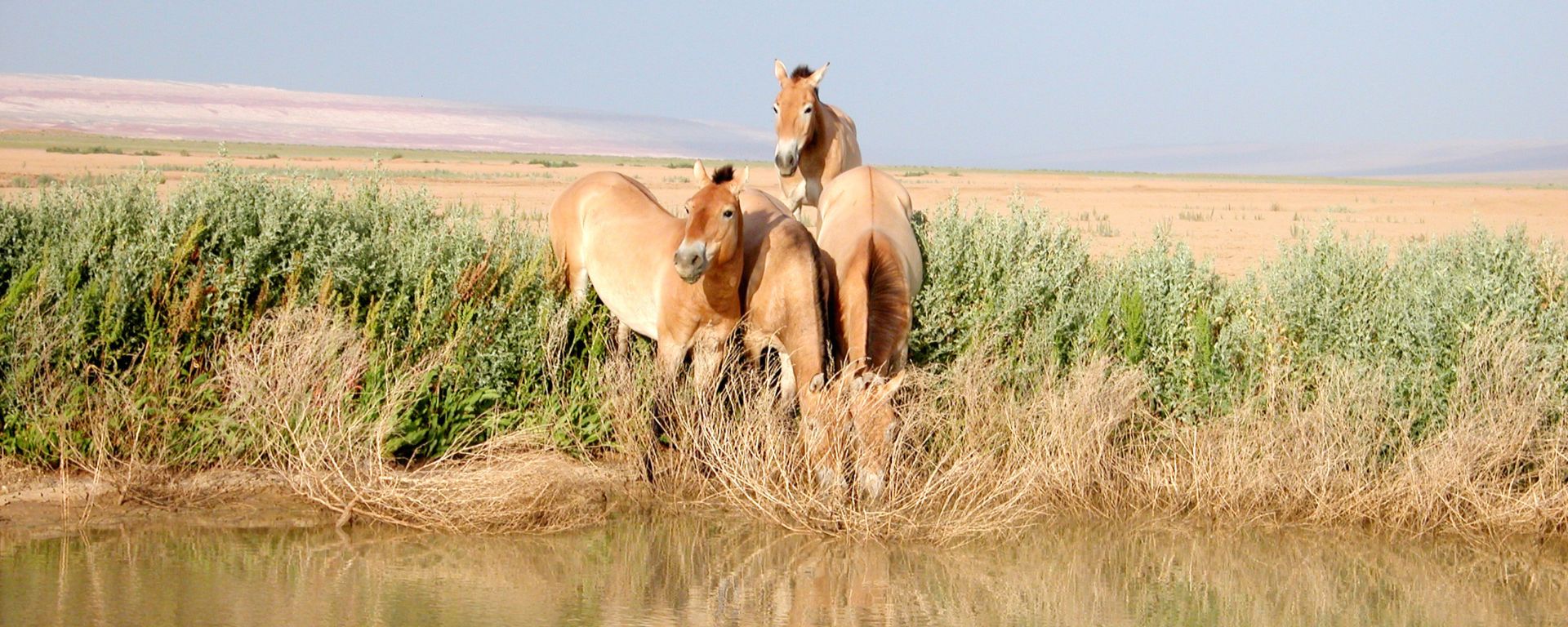
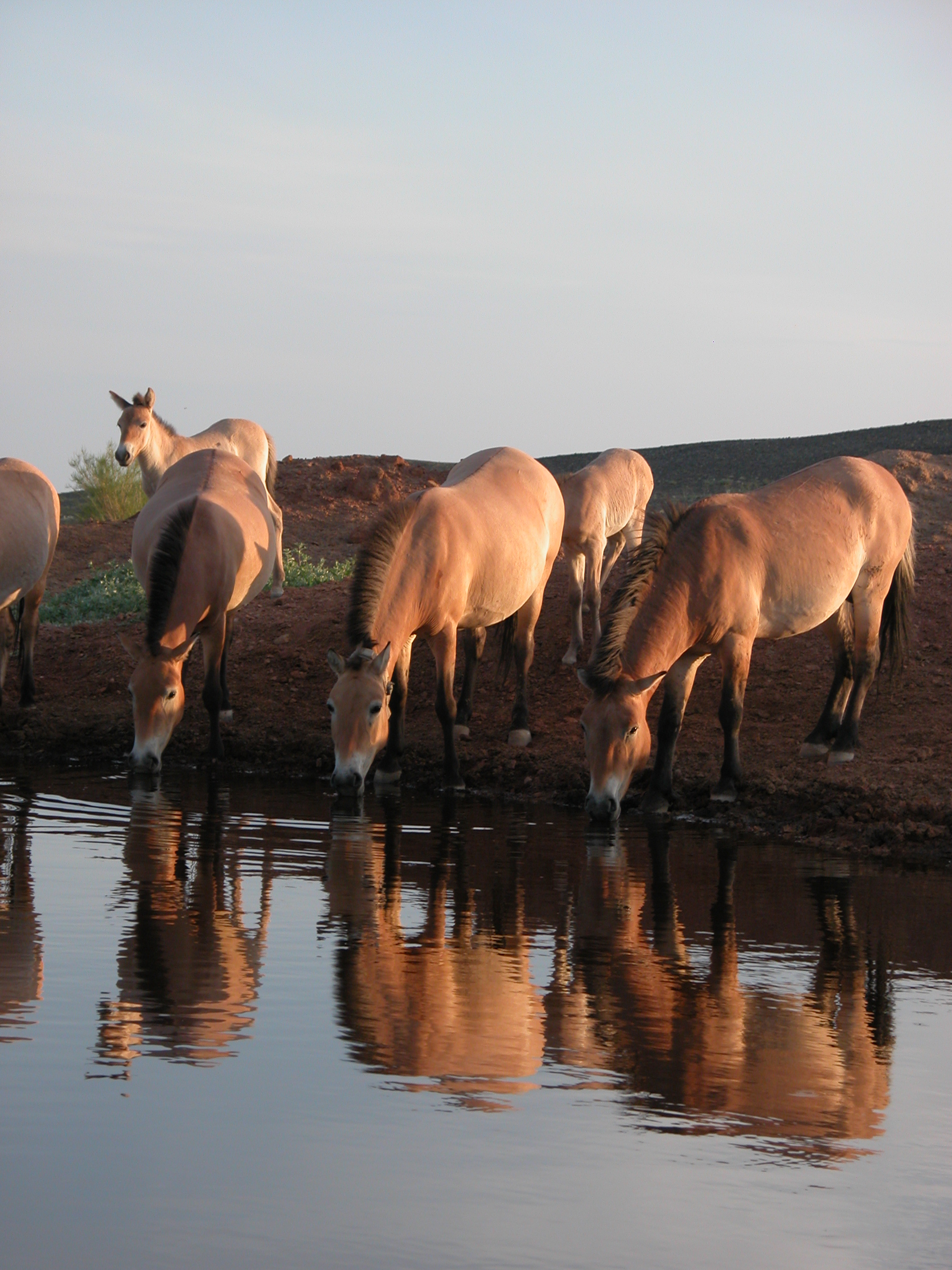
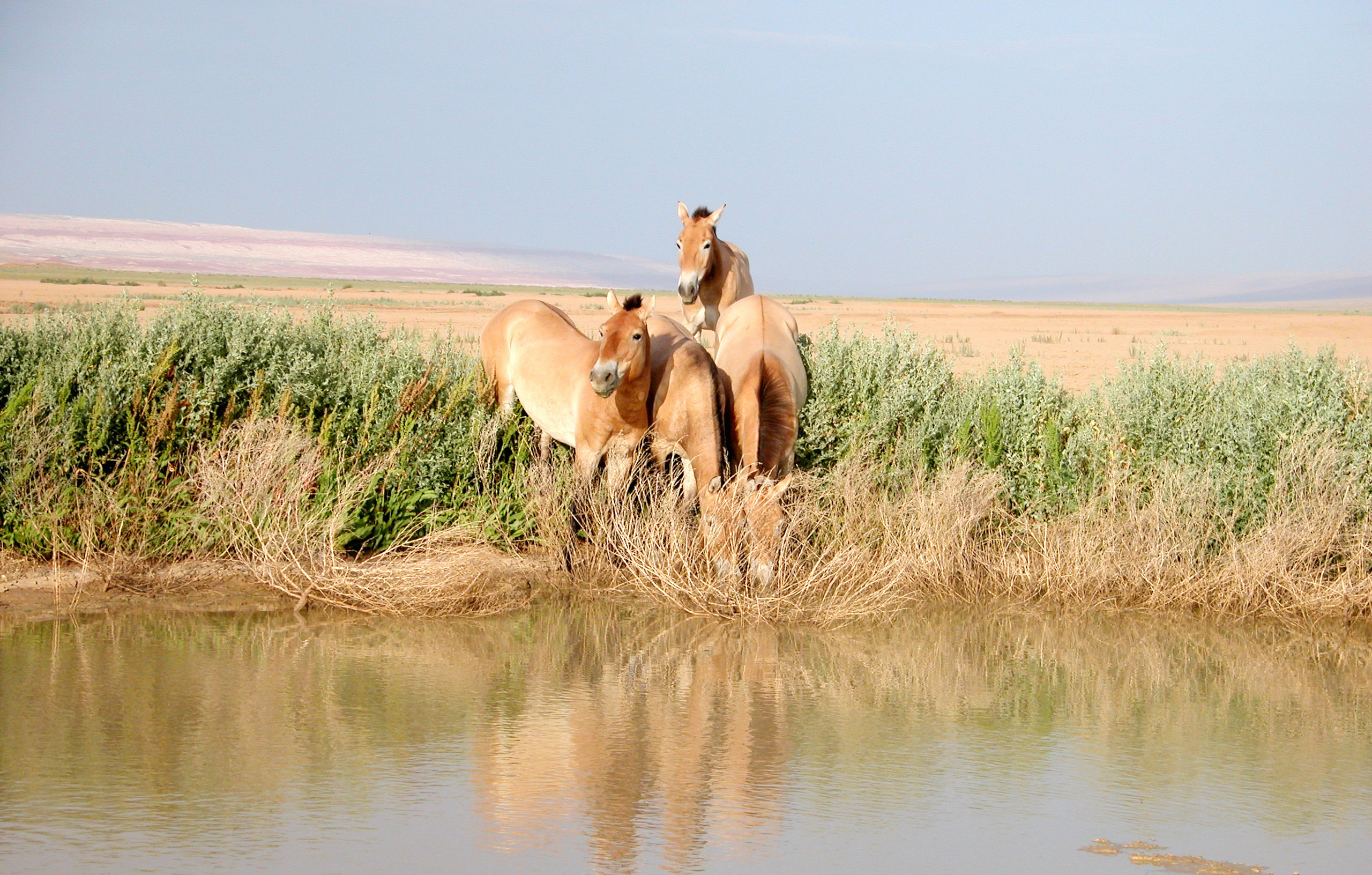
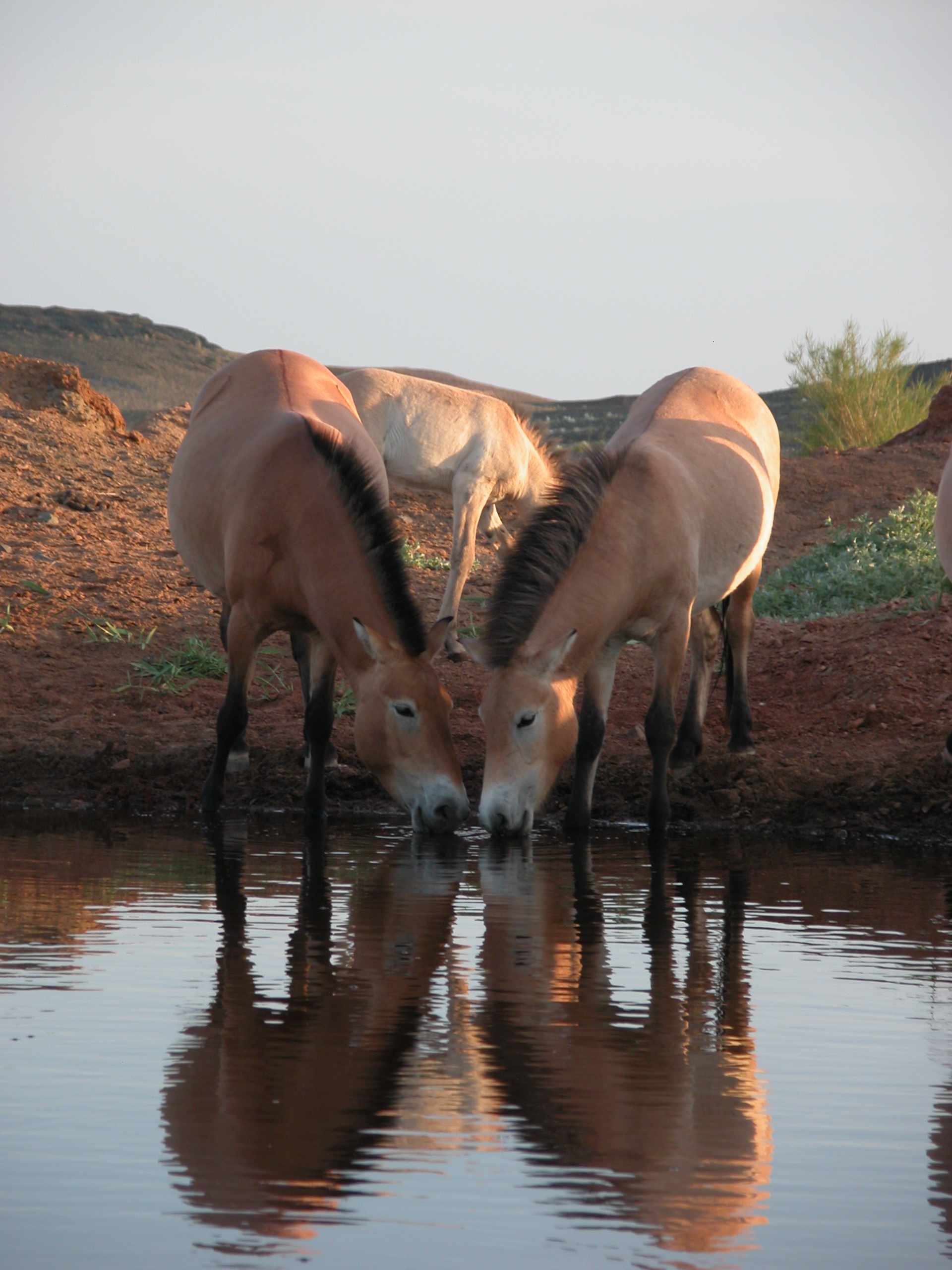
Our paper explores how two closely related wild equids—Przewalski’s horses and Asiatic wild asses—coexist in the extremely water-limited deserts of the Dzungarian Gobi. Classical niche theory would predict competitive exclusion under such scarcity, especially since horses are more water-dependent. By combining controlled water-use experiments with long-term camera trap data, we asked: what defines their fundamental water niches, and what shapes their realized niches in the wild? Surprisingly, we found that human presence plays a crucial role in mediating competition and enabling coexistence.
Surprises and challenges
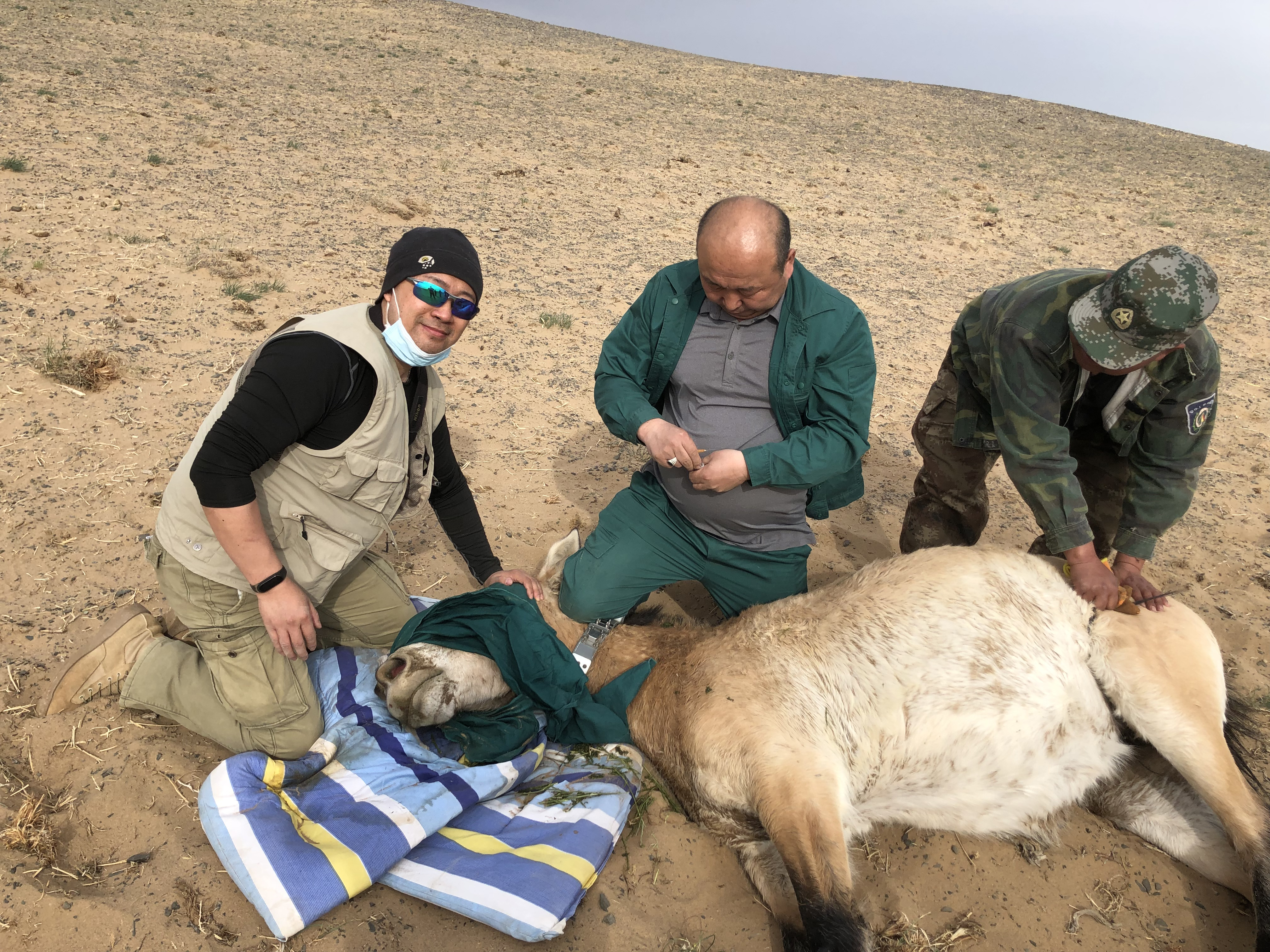
We expected physiological differences in water needs, but we did not anticipate that human infrastructure would create refuges for horses by generating a “landscape of fear” for wild asses. The biggest challenge was collecting long-term data in a remote desert: maintaining camera traps across seasons, coping with extreme temperatures, and tracking highly dynamic water sources. Analytically, separating fundamental niche differences from realized niche outcomes required integrating captive experiments with multi-year field data, which was both complex and rewarding.
Next steps and broader implications
A key next step is understanding how changing human activity will reshape coexistence. In our system, moderate human presence currently creates refuges for horses by deterring wild asses. However, intensified infrastructure, settlement expansion, or resource use could disproportionately benefit horses while restricting access for wild asses, potentially destabilizing this balance. At the same time, climate change is expected to intensify water scarcity. Future research must integrate behavioural ecology, movement data, and socio-ecological planning to guide adaptive management—ensuring that conservation strategies support long-term, climate-resilient coexistence rather than unintentionally favouring one species over another.
Our findings show that conservation planning in resource-limited systems must consider multi-species interactions and the nuanced role of humans. In Kalamaili Nature Reserve, our results have already informed adaptive management: managers have built two permanent reservoirs located away from settlements and large enough that wild asses cannot easily deplete them, reducing the risk of competitive exclusion. They are also planning additional dispersed water sources to expand available habitat for Przewalski’s horses, while introducing new policies to minimize human disturbance and protect highly vigilant wild asses from harassment. A key lesson from this work is that species coexistence in an increasingly human-dominated and warming world may depend not only on ecological differences, but on how intentionally we design and manage shared landscapes.
About the author
Current position
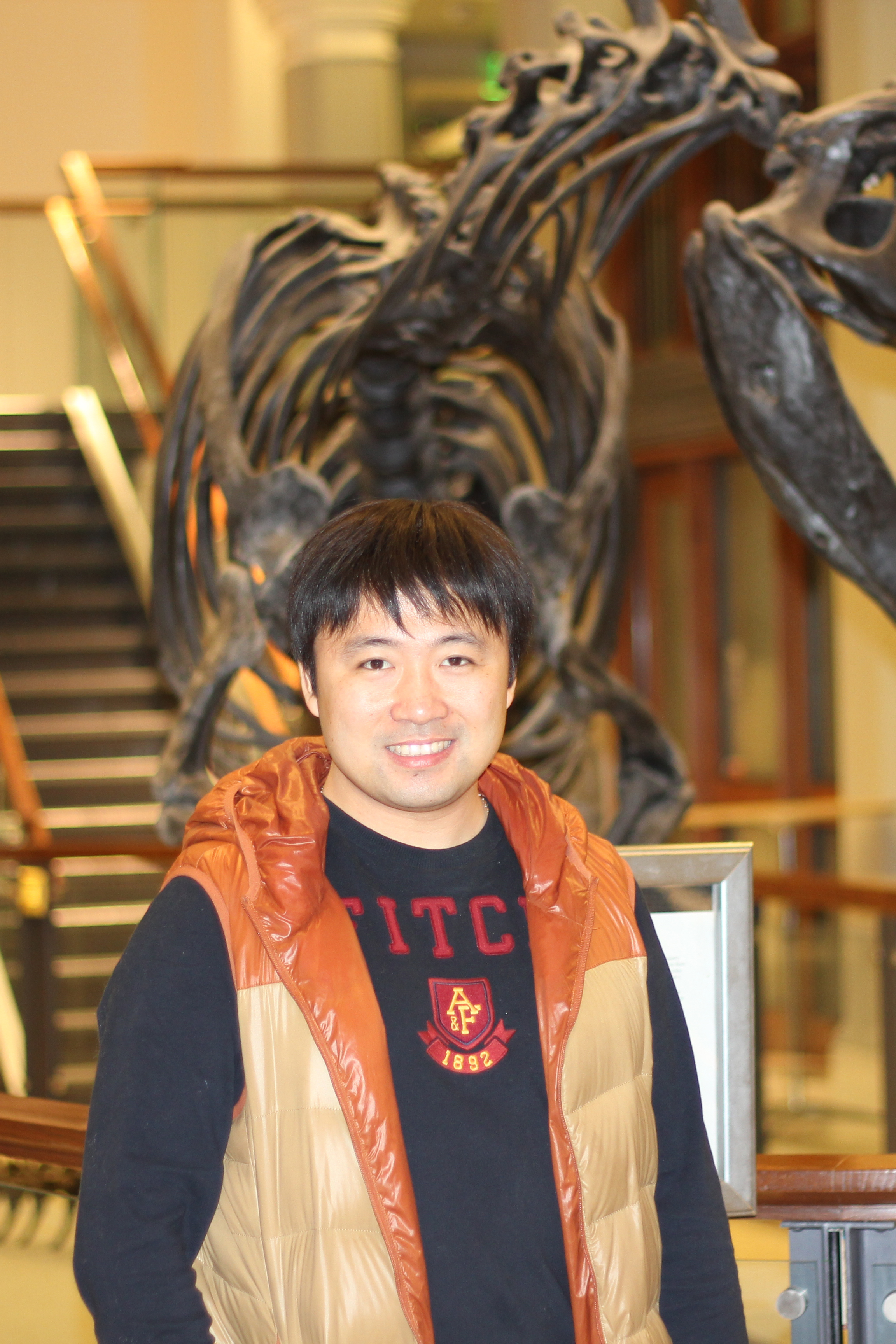
I am currently completing my PhD at Princeton University under the supervision of Dr. Dan Rubenstein and preparing for my dissertation defense. At the same time, I serve as a postdoctoral researcher affiliated with the Smithsonian’s National Zoo and Conservation Biology Institute, where I collaborate with Drs. Mel Songer and Peter Leimgruber. My research centers on equid ecology, population genetics, and conservation biology. By integrating behavioural ecology, long-term field studies, and conservation genomics, I aim to better understand how reintroduced species persist and adapt within complex, human-influenced landscapes.
Getting involved in ecology
I was born and raised in China, where the tension between rapid development and wildlife conservation is impossible to ignore. Growing up, I saw firsthand how deeply human activities can transform landscapes and shape the fate of species. In college, I became drawn to reintroduction ecology—the idea that extinction in the wild does not have to be the end of a story. I first worked on the restoration of the South China tiger (Panthera tigris amoiensis), but its recovery was constrained by a small founder population and widespread habitat destruction. When I later encountered Przewalski’s horse—with a stronger population base and vast desert habitat still intact—I felt hope. It seemed like a second chance, not just for a species, but for understanding how humans and wildlife might coexist more thoughtfully.
Current research focus
This paper forms a core chapter of my dissertation on coexistence between Przewalski’s horses and Asiatic wild asses, and I have expanded this work in several directions. I examined dietary niche differentiation and found that in sympatry, Przewalski’s horses exhibit a dietary niche shift and reduced diversity—further evidence of competitive disadvantage—while wild asses show dietary expansion. I also explored winter dynamics, when local herdsmen create an even stronger “landscape of fear” for wild asses, shaping their movements and diets, while horses are largely tolerated by local people. Together, these studies deepen our understanding of how competition and human pressure jointly structure coexistence.
Advice for fellow ecologists
Be patient with complexity. In ecology and conservation, the most important patterns often emerge only after years of observation and from examining systems from multiple angles—behaviour, diet, genetics, climate, and human influence. I’ve learned that coexistence is rarely shaped by a single mechanism; it is structured by subtle trade-offs and unexpected forces, especially people. My advice is to embrace interdisciplinary thinking and long-term commitment. Conservation is not just about saving a species—it’s about understanding the dynamic relationships that allow species to persist together in a changing world.
Read the full article ‘Coexistence between Przewalski’s horse and Asiatic wild ass in the desert: The importance of people’ in Journal of Applied Ecology.
Find the other early career researchers and their articles that have been shortlisted for the 2025 Southwood Prize here!
 The Applied Ecologist