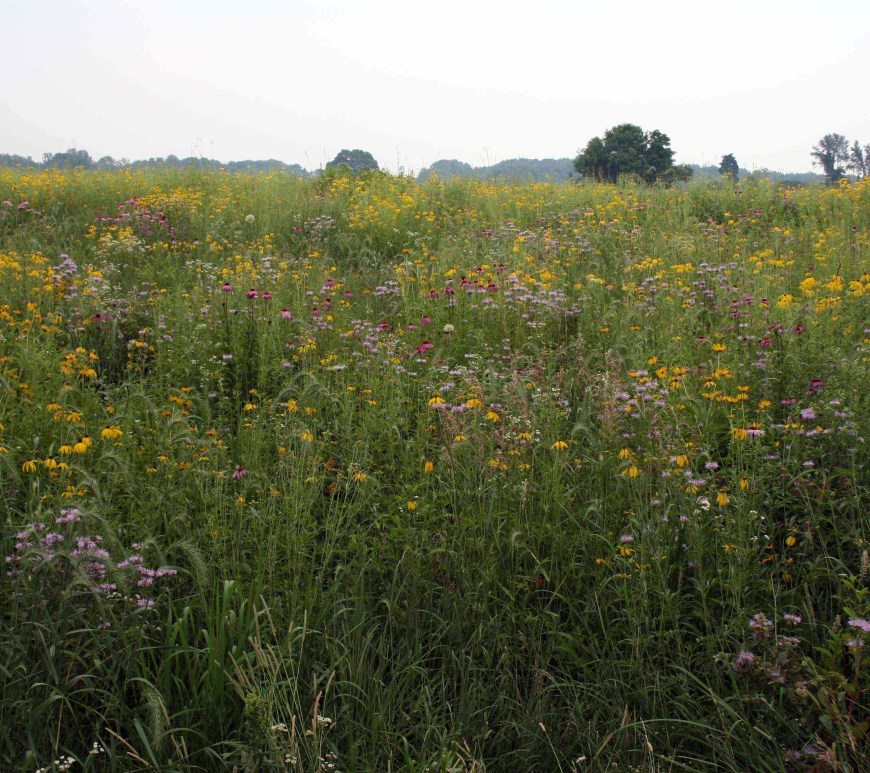
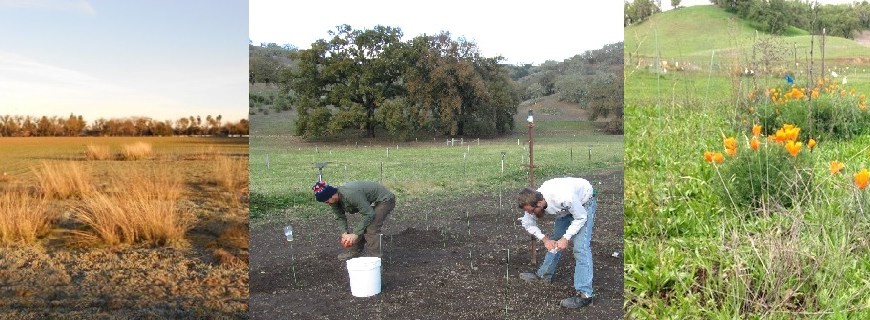
Spotlight: Ecosystem restoration under the microscope

The Spotlight for Issue 54:1 is on the subject of genetics and restoration. The post about this Spotlight is written by Ryan Sadler from University of Toronto. All five Spotlight papers are currently free to read online. When prompted to think of restoring an ecosystem, many people would surely conjure up memories of themselves standing over a freshly dug hole with a shovel and sapling … Continue reading Spotlight: Ecosystem restoration under the microscope

Innovative measure enables identification of threats to biodiversity

In this post BES Policy Team Intern Rick Parfett discusses a new metric, Relative Impact Potential, which allows rapid and accurate assessment of potential threats to biodiversity and ecosystem services from invasive alien species. The metric was published by Jaimie Dick and colleagues in their article ‘Invader Relative Impact Potential: a new metric to understand and predict the ecological impacts of existing, emerging and future … Continue reading Innovative measure enables identification of threats to biodiversity

Honeybees and the boom and bust cycle of mass flowering crops

In this post Associate Editor Romina Rader discusses a recent paper she handled from Fabrice Requier and colleagues ‘The carry-over effects of pollen shortage decrease the survival of honeybee colonies in farmlands‘ When we think about pollinators within intensive agricultural systems, mass flowering crops (MFCs) seemingly act as both heroes and villains.  On the upside, many pollinators congregate at local mass flowering crops during the … Continue reading Honeybees and the boom and bust cycle of mass flowering crops

Density-dependence and marine bird populations: Are wind farm assessments precautionary?

In this post, Catharine Horswill discusses her paper ‘Density-dependence and marine bird populations: Are wind farm assessments precautionary?‘ “Just one thing would be enough to halt climate change, if clean energy became cheaper than coal, gas or oil, fossil fuel would simply stay in the ground”. Sir David Attenborough made this statement in support of the Global Apollo Program, an international initiative to increase the amount … Continue reading Density-dependence and marine bird populations: Are wind farm assessments precautionary?

Vaccinating badgers against TB does not change their behaviour

In this post, Rosie Woodroffe discusses her paper “Ranging behaviour of badgers Meles meles vaccinated with Bacillus Calmette Guerin”, published today in Journal of Applied Ecology. Badgergeddon! That’s how one of Britain’s national newspapers described the ongoing cull of badgers, intended to curb the spread of bovine tuberculosis (TB) to cattle. The culls are highly controversial. Farmers clamour for decisive action to control a disease … Continue reading Vaccinating badgers against TB does not change their behaviour

Welcome to our new Associate Editors

Earlier this year Journal of Applied Ecology held an open recruitment process for new Associate Editors to apply to join the Editorial board. We received a very positive response to this initiative, with nearly 100 applications from ecologists interested in engaging with the Journal.  It was great to see such enthusiasm from potential Associate Editors and the quality of the applications was very impressive, which … Continue reading Welcome to our new Associate Editors

The map matters: crop-dominated landscapes have higher vector-borne plant virus prevalence

In this post Suzi Claflin discusses her paper ‘Crop-dominated landscapes have higher vector-borne plant virus prevalence‘ It’s been clear for some time that landscape composition—that is, land-use types and the connections between them—strongly affects the community of creatures living in a given area. When it comes to insects, the landscape has been shown to shape the communities of both the ones we like, such as … Continue reading The map matters: crop-dominated landscapes have higher vector-borne plant virus prevalence

Climate change and food security

In this post, Adam Frew discusses his paper ‘Increased root herbivory under elevated atmospheric carbon dioxide concentrations is reversed by silicon-based plant defences‘ As the global climate changes the global population continues to rise, we are faced with the daunting challenge of achieving sustainable crop production to meet the increasing demand for food. Professor John Beddington in 2009, UK chief scientist at the time, highlighted … Continue reading Climate change and food security

Fatal attraction of Spotted Wing Drosophila to a yeast symbiont, for sustainable control

In this blog post Joelle Lemmen, Alix Whitener, Boyd Mori and Peter Witzgall discuss the recent paper by Boyd Mori and colleagues ‘Enhanced yeast feeding following mating facilitates control of the invasive fruit pest Drosophila suzukii‘ Spotted Wing Drosophila (SWD) is currently the most economically important insect in Europe and North America. SWD damages a wide range of our favourite berries and soft fruit, including … Continue reading Fatal attraction of Spotted Wing Drosophila to a yeast symbiont, for sustainable control

Forest thinning: a bat’s friend or foe?

In this post, Rachel Blakey discusses her paper in the latest issue of Journal of Applied Ecology ‘Bat communities respond positively to large-scale thinning of forest regrowth‘ The world’s forests are changing. Most of the remaining forests are re-growing after being cleared, but do these regrowth forests resemble the original primary forests? Often, where large tracts of forests were cleared at once (e.g. clear-felling), they … Continue reading Forest thinning: a bat’s friend or foe?