Crop rotations called into question

Why it’s time to rethink the way we approach this agricultural practice: Mathias Cougnon & Associate Editor, Pieter De Frenne (Ghent University, Belgium) discuss the recent paper, Distantly related crops are not better rotation partners for tomato by by Ingerslew and Kaplan. Crop rotations are central to common agricultural practice and growing related crops year after year on the same patch of land is generally … Continue reading Crop rotations called into question

A win-win for wine

Inter-row vegetation in vineyards can help tackle soil erosion without sacrificing the quality of grapes. Associate Editor, Peter Manning (Senckenberg Biodiversity and Climate Centre) discusses the recent Review by Winter et al., Effects of vegetation management intensity on biodiversity and ecosystem services in vineyards: A meta‐analysis When we think of intensive agriculture most of us conjure images of factory farmed chickens or wheat fields spayed with litres … Continue reading A win-win for wine

Ensuring sustainable açaí fruit production in the Amazon river delta

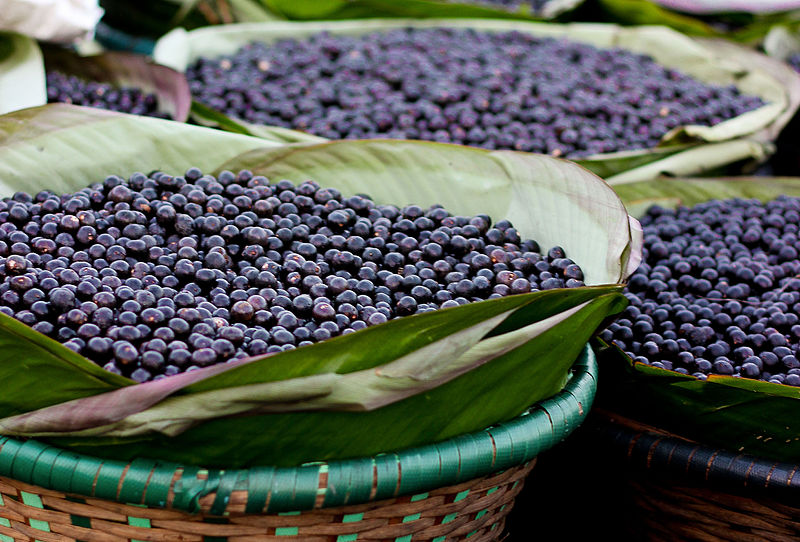
With açaí fruit becoming increasingly popular, it is important to understand how farming management practices are affecting vital pollination services. Associate Editor, Ainhoa Magrach comments on the recent article, Anthropogenic disturbance of tropical forests threatens pollination services to açaí palm in the Amazon river delta by Campbell et al. Worldwide the demand for the berries of the açaí palm is increasing. These anti-oxidant rich foods have … Continue reading Ensuring sustainable açaí fruit production in the Amazon river delta

Functional traits in agroecology: advancing description and prediction in agroecosystems

Our series of posts on the Special Feature, Functional traits in agroecology rounds up with a post from one of the series’ editors, Adam Martin. We’ve always thought “commentary” articles – particularly those that outline a vision for a future field of research – to be an interesting enigma in science. On one hand, many commentary-type articles have been undoubtedly influential and can be pointed … Continue reading Functional traits in agroecology: advancing description and prediction in agroecosystems

Functional traits represent a key nexus between scientific and local knowledge

Continuing our Special Feature series, Functional traits in agroecology, Marney Isaac comments on her paper, Farmer perception and utilization of leaf functional traits in managing agroecosystems. Using leaf functional traits to understand plant response to environmental change is well-established for research in a wide number of natural ecosystems, and now being more widely applied to agroecosystems. Yet, little is known about if, or how, farm managers … Continue reading Functional traits represent a key nexus between scientific and local knowledge

Ecological diversity metrics can teach us how to feed the world well

For the latest post in our Functional traits in agroecology series, Stephen Wood (The Nature Conservancy, Yale School of Forestry & Environmental Studies) highlights the importance of considering social and human, as well as ecological traits in agricultural systems. The full article, Nutritional functional trait diversity of crops in south-eastern Senegal is a part of a Special Feature in Journal of Applied Ecology. Crop yields have … Continue reading Ecological diversity metrics can teach us how to feed the world well

Abandoned pastures regenerate to low diversity forests without intervention

To start the week, Associate Editor, Cate Macinnis-Ng comments on the recently published article, Abandoned pastures cannot spontaneously recover the attributes of old-growth savannas by Cava et al. Savanna ecosystems of the seasonally dry tropics cover almost 20% of the earth’s land area. Maintenance of biodiversity in savannas relies on the right amounts of grazing and fire. While overgrazing of savannas is a common threat, … Continue reading Abandoned pastures regenerate to low diversity forests without intervention

Finding evidence for land restoration strategies

Restoration has never been more important, with almost a third of the world’s land surface degraded. But what exactly is restoration? And how do we know if it works? Madelon Lohbeck continues our Special Feature series on Functional traits in agroecology. Read the full article, Trait-based approaches for guiding the restoration of degraded agricultural landscapes in East Africa. More than 1.5 billion of the world’s poorest … Continue reading Finding evidence for land restoration strategies

Leveraging functional diversity in farm fields for sustainability

The latest issue of Journal of Applied Ecology includes a Special Feature, Functional traits in agroecology. To accompany the feature, we’re introducing a series of blog posts from the authors themselves. The first of these comes from Jennifer Blesh and discusses her article, Functional traits in cover crop mixtures: Biological nitrogen fixation and multifunctionality. Global climate, energy, and water crises pose immense challenges for agricultural systems. … Continue reading Leveraging functional diversity in farm fields for sustainability

When ecosystems take with one hand and give with the other

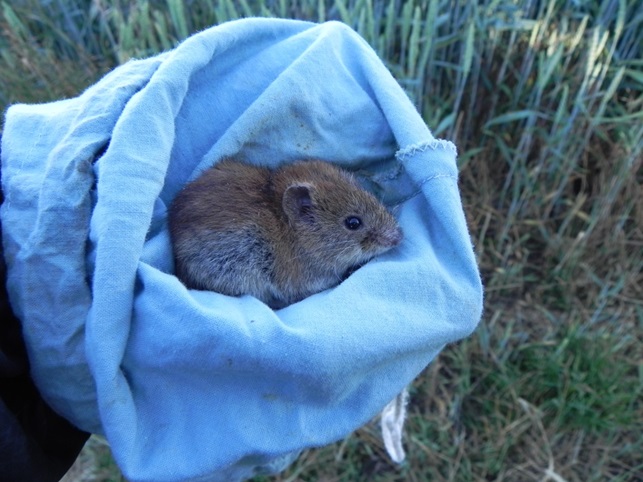
Assessing the costs and benefits small rodents present to farmers, Associate Editor, Jonathan Rhodes comments on the recent article by Fischer et al. Ecosystem services and disservices provided by small rodents in arable fields: Effects of local and landscape management. We all know that ecosystems provide a wealth of benefits to humans and there is now a whole rapidly growing discipline in this area focused on … Continue reading When ecosystems take with one hand and give with the other