International Women’s Day 2017: advice for aspiring ecologists

For the last of our series of blog posts for International Women’s Day our Associate Editors give their advice for female students or early career researchers looking to make a career in ecology. Nathalie Butt – Unfortunately, it is still very much the case that it is not what you know, but who you know, so be strategic with who you work with/where you work. … Continue reading International Women’s Day 2017: advice for aspiring ecologists

International Women’s Day 2017: improvements towards gender equality in science

In the third of our posts in our series of blog posts for International Women’s Day we asked our Associate Editors about improvements they are seeing towards gender equality, new initiatives and any institution, department or person who deserves specific praise in this area. Nathalie Butt – I have seen big increases in awareness of, and talk about, gender equality issues in recent years, and … Continue reading International Women’s Day 2017: improvements towards gender equality in science

International Women’s Day 2017: barriers to entering science

Continuing our series of blog posts for International Women’s Day, our Associate Editors discuss barriers to women entering STEM fields and what we need to do to improve gender equality. Nathalie Butt – In terms of barriers to women, there are some fairly subtle ones, such as the general feeling that it is better to travel widely (e.g. degree in one place, PhD in another, … Continue reading International Women’s Day 2017: barriers to entering science

International Women’s Day 2017: pursuing a career in science

Wednesday 8 March 2017 is International Women’s Day, a global day to celebrate the social, economic, cultural and political achievements of women. The theme for this year’s International Women’s Day is #BeBoldForChange. This recognises the need to challenge bias and inequality, celebrate women’s achievements, champion women’s education and more. From encouraging more girls into STEM (science, technology, engineering and mathematics) education and careers to showcasing … Continue reading International Women’s Day 2017: pursuing a career in science

Optimally controlling invasive species in spatially-connected networks

In this post Sam Nicol discusses his recent article with Regis Sabbadin, Nathalie Peyrard and Iadine Chadès ‘Finding the best management policy to eradicate invasive species from spatial ecological networks with simultaneous actions‘ Lots of invasive species live in spatial networks, which means that they live in a series of discrete habitat sites, but occasionally move between the sites. Managing invasive species in these networks … Continue reading Optimally controlling invasive species in spatially-connected networks

Prioritizing conservation and management efforts with new methods to predict invasive species occurrence and impact

In this post Johanna Bradie discusses her recent paper with Brian Leung ‘Estimating non-indigenous species establishment and their impact on biodiversity, using the Relative Suitability Richness model‘ Invasive species are one of the leading causes of biodiversity loss and established invaders are nearly impossible to eradicate. Conservation efforts should therefore focus on preventing the establishment of invasive species. Managers need to be able to predict which … Continue reading Prioritizing conservation and management efforts with new methods to predict invasive species occurrence and impact

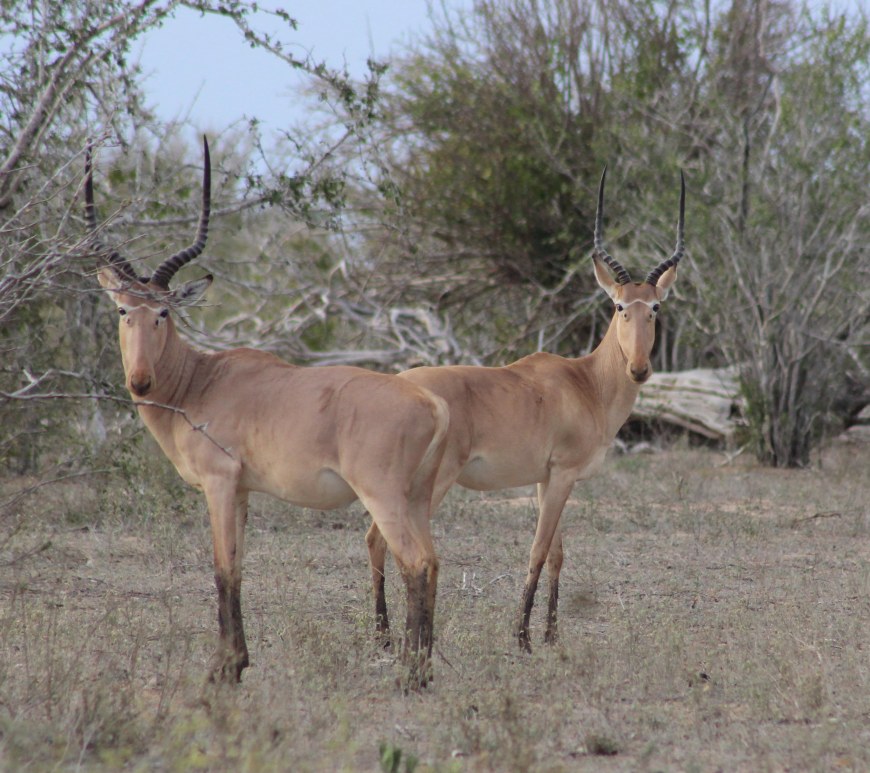
Why hirola are the world’s most endangered antelope, and what it will take to save them – with Somali translation

In this post Jacob Goheen and Abdullahi Ali discuss their recent paper ‘Resource selection and landscape change reveal mechanisms suppressing population recovery for the world’s most endangered antelope‘. Ali has also provided a Somali translation of this post. Journal of Applied Ecology is dedicated to making papers more accessible and increasing engagement with those in the region of the study. We encourage authors to write … Continue reading Why hirola are the world’s most endangered antelope, and what it will take to save them – with Somali translation

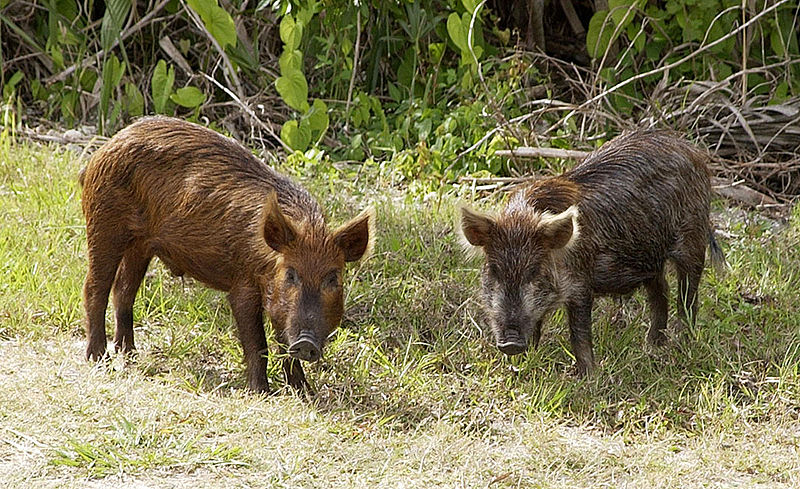
Invasive wild pigs making themselves at home throughout the USA

In this post Nathan Snow discusses his recent paper ‘Interpreting and predicting the spread of invasive wild pigs‘ The eruption of invasive wild pigs Sus scrofa throughout the world exemplifies the need to understand the influences of exotic and non-native species expansions. In particular, the continental USA is precariously threatened by a rapid expansion of these wild pigs, and a better understanding of the rate … Continue reading Invasive wild pigs making themselves at home throughout the USA

Tracking an apex marine predator – the shortfin mako shark

In this post Jeremy Vaudo and Mahmood Shivji discuss their article ‘Long-term satellite tracking reveals region-specific movements of a large pelagic predator, the shortfin mako shark, in the western North Atlantic Ocean’ In your paper you used satellite telemetry to investigate movements and seasonal distributions of shortfin mako sharks (Isurus oxyrinchus) in the western North Atlantic Ocean. What were the biggest challenges for this work? … Continue reading Tracking an apex marine predator – the shortfin mako shark

The “bright side” of invasive species – with Portuguese and Spanish translations

In this post Karen Castillioni discusses a recent paper by Bianca Charbonneau and colleagues ‘A species effect on storm erosion: Invasive sedge stabilized dunes more than native grass during Hurricane Sandy‘. Karen has also provided Portuguese and Spanish translations of this post to reach out to Portuguese and Spanish readers interested in this topic. Journal of Applied Ecology is dedicated to making papers more accessible … Continue reading The “bright side” of invasive species – with Portuguese and Spanish translations