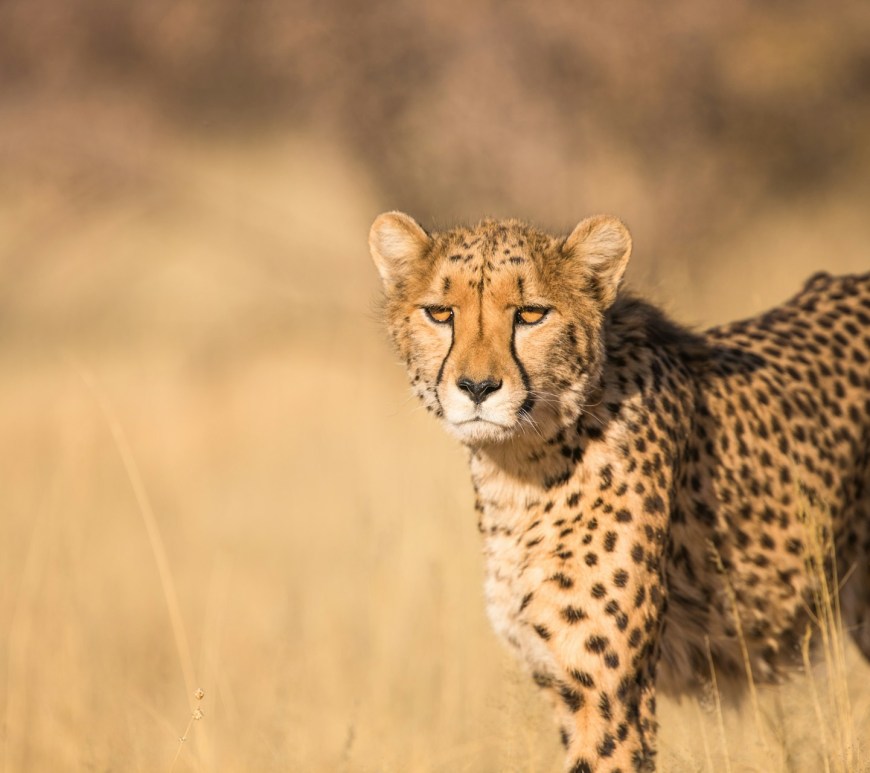
The story behind the research: “Combining detection dogs and camera traps improves cheetah monitoring”

Tim Hofmann and Stijn Verschueren from the Cheetah Conservation Fund in Otjiwarongo, Namibia investigate how to effectively monitor cheetah populations. Cheetahs are Africa’s most endangered big cats, with fewer than 7,100 individuals left in the wild, scattered across less than 9% of their historical range. These estimates are largely based on expert opinions and few well-studied populations. In many parts of the cheetah’s range, we … Continue reading The story behind the research: “Combining detection dogs and camera traps improves cheetah monitoring”

Issue 55:6

Here are some of the highlights from our last issue of 2018 and our last issue to be published in print. You can also read issue 55:6 online here. Disentangling natural vs anthropogenic influences on predation: reducing impacts on sensitive prey Our latest Editor’s Choice article Cover stories: Cheetah chase Take a look at this selection of images telling the story behind our latest cover … Continue reading Issue 55:6

Cover stories: Cheetah chase

Egil Dröge shares the high-energy story behind issue 55:6’s cover photo. See more of how the day unfolded in this gallery. I followed this female cheetah that day on her hunt. She would frequently use the small termite mounts to take the advantage of the elevation to scan the tall grass for prey. At some point, while she was walking through the tall grass, she … Continue reading Cover stories: Cheetah chase

Long-term decline in prey increases predator competition

Bringing together data from a 50-year period to better-understand predator-prey interactions. Associate Editor, Matt Hayward discusses the recently published article, Changes in African large carnivore diets over the past half‐century reveal the loss of large prey by Creel et al. Much of our understanding of ecology comes from systems that are assumed to represent the way life has interacted for millennia. Yet this assumption is … Continue reading Long-term decline in prey increases predator competition