Finding missing branches: Phylogenetic patterns of plant community diversity in restored and remnant tallgrass prairies

To round off our series of posts from the Special Feature, Toward prediction in the restoration of biodiversity, we’re sharing Rebecca Barak’s post from earlier this year on her article Restored tallgrass prairies have reduced phylogenetic diversity compared with remnants.  Tallgrass prairie is one of the most endangered habitats on earth. In my home state of Illinois, USA, back in 1820, almost 60% of the state was … Continue reading Finding missing branches: Phylogenetic patterns of plant community diversity in restored and remnant tallgrass prairies
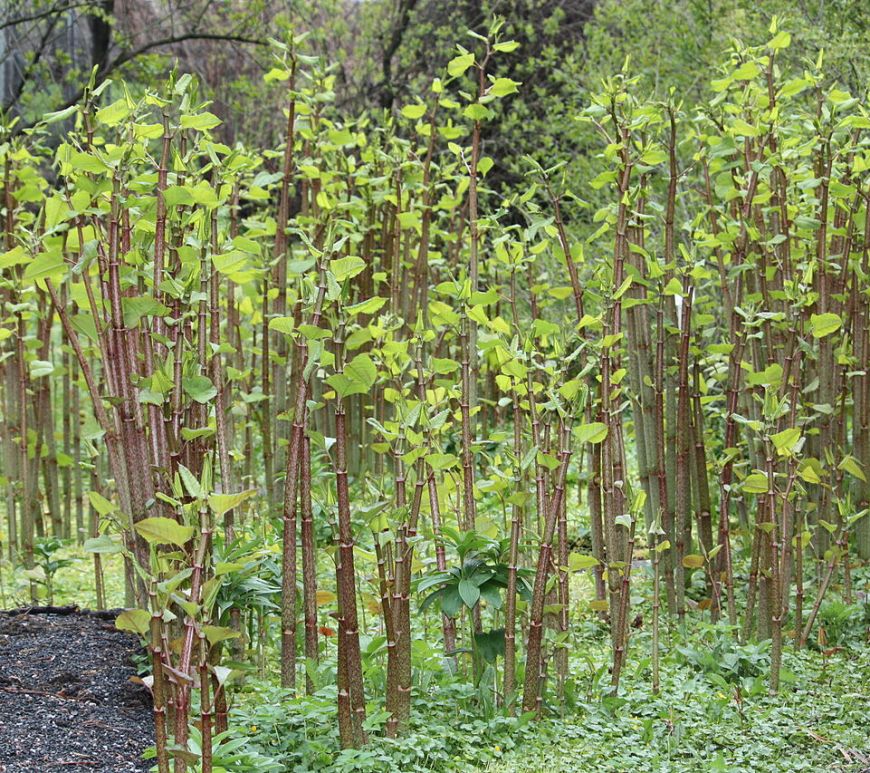
The “bright side” of invasive species – with Portuguese and Spanish translations

In this post Karen Castillioni discusses a recent paper by Bianca Charbonneau and colleagues ‘A species effect on storm erosion: Invasive sedge stabilized dunes more than native grass during Hurricane Sandy‘. Karen has also provided Portuguese and Spanish translations of this post to reach out to Portuguese and Spanish readers interested in this topic. Journal of Applied Ecology is dedicated to making papers more accessible … Continue reading The “bright side” of invasive species – with Portuguese and Spanish translations

Spotlight: Ecosystem restoration under the microscope

The Spotlight for Issue 54:1 is on the subject of genetics and restoration. The post about this Spotlight is written by Ryan Sadler from University of Toronto. All five Spotlight papers are currently free to read online. When prompted to think of restoring an ecosystem, many people would surely conjure up memories of themselves standing over a freshly dug hole with a shovel and sapling … Continue reading Spotlight: Ecosystem restoration under the microscope

Innovative measure enables identification of threats to biodiversity

In this post BES Policy Team Intern Rick Parfett discusses a new metric, Relative Impact Potential, which allows rapid and accurate assessment of potential threats to biodiversity and ecosystem services from invasive alien species. The metric was published by Jaimie Dick and colleagues in their article ‘Invader Relative Impact Potential: a new metric to understand and predict the ecological impacts of existing, emerging and future … Continue reading Innovative measure enables identification of threats to biodiversity

The Web Of Life: Understanding Complex Animal Relationships for Applied Conservation

In this post Susan Cheyne, who is taking part in our Associate Editor mentoring opportunity discusses a paper she recently handled by Paula Perrig and colleagues ‘Puma predation subsidizes an obligate scavenger in the high Andes‘ Of great interest in understanding biological systems is the often complex interplay between animals occupying different niches. Past studies involving ecological indicators of ecosystem function have selected individual indicator … Continue reading The Web Of Life: Understanding Complex Animal Relationships for Applied Conservation

A new method for assessing the age of old-growth forests

In this post, Associate Editor Nathalie Butt discusses a recent paper ‘Tree-ring based metrics for assessing the functional naturalness of forests‘ by Alfredo Di Filippo, Franco Biondi, Gianluca Piovesan and Emanuele Ziaco. Valuable ecosystems Primeval forest, or ancient woodland in the UK, is an integral part of many epic stories and myths throughout human history, especially in Europe:  just think of all those old tales … Continue reading A new method for assessing the age of old-growth forests

Avian pest control in vineyards

In this post Michelle Harrison and Cristina Banks-Leite discuss a recent paper by Luc Barbaro and colleagues ‘Avian pest control in vineyards is driven by interactions between bird functional diversity and landscape heterogeneity‘. The global wine industry currently contributes roughly US$303 billion to the world’s economy (Plant and Food Research, 2013). Wine is a key export for many European countries such as Italy, France and … Continue reading Avian pest control in vineyards

Getting people working on ecosystem functions connected

There’s news for people working on ecosystem functions and their monitoring: the Ecosystem Function Working Group has been recently launched by the Group on Earth Observations Biodiversity Observation Network (GEO BON), and the group is looking for its members. You may wonder what GEO BON is: GEO BON is an international networking platform part of GEO, the Group on Earth Observations. Within the GEO family, … Continue reading Getting people working on ecosystem functions connected

Evolution of plant materials for ecological restoration: insights from the applied and basic literature

In this post Erin Espeland discusses the recent paper ‘Evolution of plant materials for ecological restoration: insights from the applied and basic literature‘ by herself and co-authors Nancy Emery, Kristin Mercer, Scott Woolbright, Karin Kettenring, Paul Gepts and Julie Etterson. Native plant materials can evolve during seed collection, increase, and planting. We survey the evolutionary and agricultural literature and apply it to the problem of restoration, … Continue reading Evolution of plant materials for ecological restoration: insights from the applied and basic literature

Comparing the responses of functional redundancy and functional diversity indices to stress

In this post Daniel Bruno discusses his paper ‘Impacts of environmental filters on functional redundancy in riparian vegetation’ The world’s ecosystems are experiencing an unprecedented increase in the amount and variety of impacts (global change) which is leading to an unprecedented biodiversity loss and modification of ecosystem functioning (e.g. changes in primary production, pollination, nutrient cycling and organic matter decomposition). Accordingly, there is a long-standing … Continue reading Comparing the responses of functional redundancy and functional diversity indices to stress