A common currency for connecting the goals of restoration: plant traits can help us understand how plant communities form and help ecosystems function

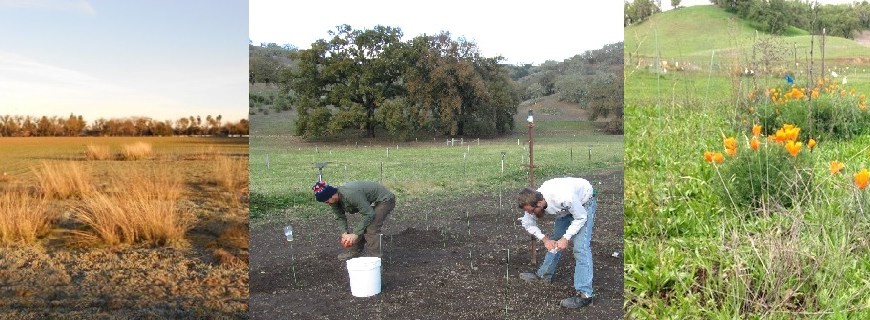
For the latest post in our Toward prediction in the restoration of biodiversity series, Chad Zirbel turns to tallgrass prairies to examine the role of plant traits in predicting restoration outcomes. Chad and colleagues’ paper, Plant functional traits and environmental conditions shape community assembly and ecosystem functioning during restoration, is available in the Journal of Applied Ecology. Two of the major goals of restoration are … Continue reading A common currency for connecting the goals of restoration: plant traits can help us understand how plant communities form and help ecosystems function

Every restoration is unique

In the second of our series of blogs to accompany the recently-published Special Feature, Toward prediction in the restoration of biodiversity, Katharine Stuble describes her work in Every restoration is unique: testing year effects and site effects as drivers of initial restoration trajectories. Restoration practitioners are acutely aware that the outcomes of their efforts are strongly contingent on a slew of factors.  Some are well … Continue reading Every restoration is unique

Toward prediction in the restoration of biodiversity

Issue 54:4 of the Journal of Applied Ecology features a Special Feature, Toward prediction in the restoration of biodiversity. In the first of a series of blogs accompanying the feature, Guest Editor, Lars Brudvig introduces the work and the ecological ideas behind this collection of articles. By repairing ecosystems damaged through human activities, ecological restoration plays an important role in biodiversity conservation efforts. Furthermore, restoration … Continue reading Toward prediction in the restoration of biodiversity

Research, management and local knowledge: an innovative approach to invasive species control

Executive Editor, Marc Cadotte shares his thoughts on Jennifer Firn and colleagues’ new article, Integrating local knowledge and research to refine the management of an invasive non-native grass in critically endangered grassy woodlands and why utilising local knowledge is vital if we’re to provide successful solutions to environmental issues.  While many hurdles hamper the successful application of ecological concepts and theories to developing solutions to environmental … Continue reading Research, management and local knowledge: an innovative approach to invasive species control

One year on: a Q&A with 2015 Southwood Prize winner Dustin Ranglack

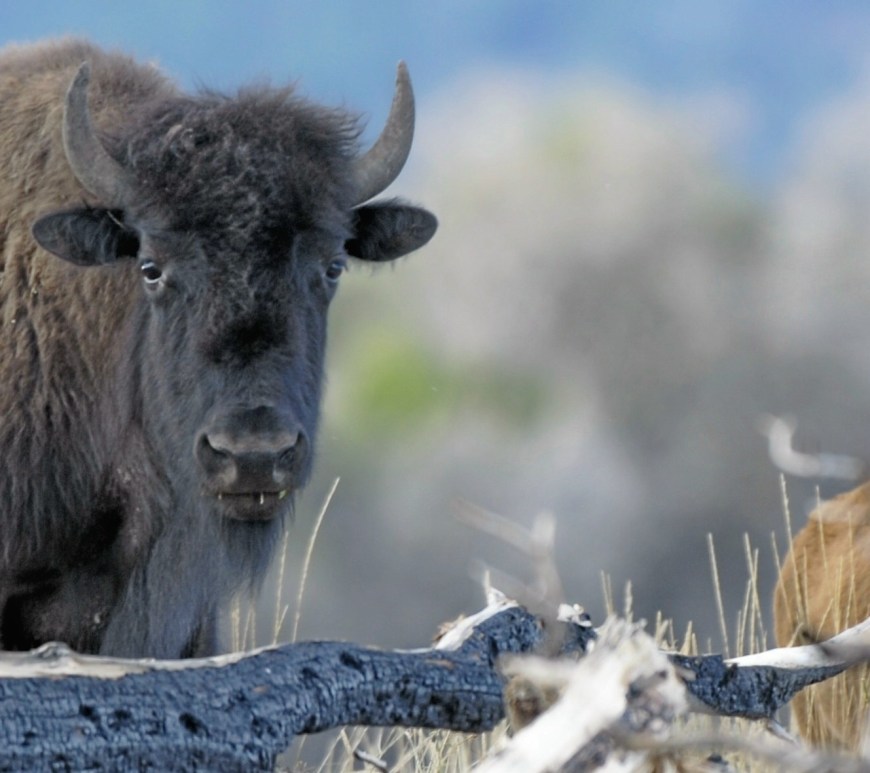
Today sees the announcement of this year’s winners of the BES Early Career Researcher Awards. Journal of Applied Ecology awards the Southwood Prize each year to the best paper in the Journal by an early career author at the start of their career. Dustin Ranglack won last year’s Southwood Prize for his paper ‘Competition on the range: science vs. perception in a bison–cattle conflict in … Continue reading One year on: a Q&A with 2015 Southwood Prize winner Dustin Ranglack

Finding missing branches: Phylogenetic patterns of plant community diversity in restored and remnant tallgrass prairies

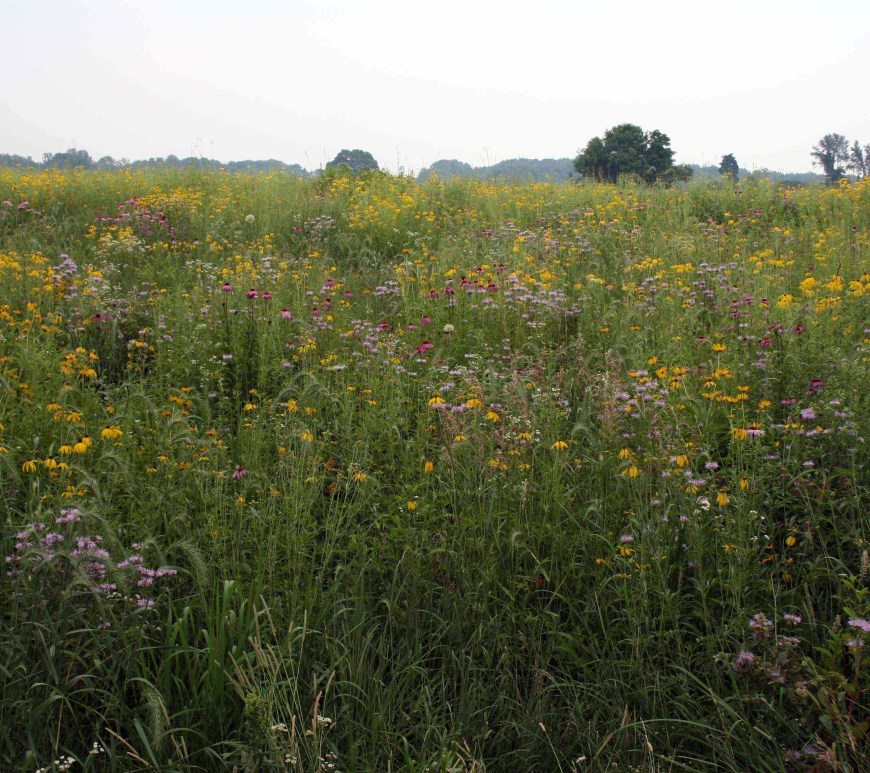
To round off our series of posts from the Special Feature, Toward prediction in the restoration of biodiversity, we’re sharing Rebecca Barak’s post from earlier this year on her article Restored tallgrass prairies have reduced phylogenetic diversity compared with remnants.  Tallgrass prairie is one of the most endangered habitats on earth. In my home state of Illinois, USA, back in 1820, almost 60% of the state was … Continue reading Finding missing branches: Phylogenetic patterns of plant community diversity in restored and remnant tallgrass prairies

Northern mixed-grass prairie bounces back, but slowly: reflections on a 33 year long grazing experiment

In this post Julie Kray, Agricultural Science Research Technician, USDA-ARS & Lauren Porensky, Ecologist, USDA-ARS discuss the recent paper ‘Thresholds and gradients in a semi-arid grassland: long-term grazing treatments induce slow, continuous and reversible vegetation change’ How do we strike a balance between an economically sustainable amount of grazing, and an ecologically sustainable amount? This is the central challenge in managing grazed landscapes around the … Continue reading Northern mixed-grass prairie bounces back, but slowly: reflections on a 33 year long grazing experiment

Ecological traits shape bee species’ fates in European agriculture

In this post Adriana De Palma discusses her recent paper ‘Ecological traits affect the sensitivity of bees to land-use pressures in European agricultural landscapes’. The article is open access courtesy of Imperial College London. For International Women’s Day, we asked Adriana about her career in science and the challenges and improvements she is seeing in STEM. You can read all of our posts for International … Continue reading Ecological traits shape bee species’ fates in European agriculture

Restoration of the tallgrass prairie in the face of global changes

In this post Nick Smith and Mike Schuster discuss their recent paper with Jeffrey Dukes ‘Rainfall variability and nitrogen addition synergistically reduce plant diversity in a restored tallgrass prairie‘ Prairies once covered great swathes of North America, from Texas to Canada and the foothills of the Rocky Mountains to the hardwood forests of the Eastern United States. These grasslands were home to a diverse array … Continue reading Restoration of the tallgrass prairie in the face of global changes

Managing ecosystem services: a grassland experiment

In this post Katherine Orford discusses her recent paper ‘Modest enhancements to conventional grassland diversity improve the provision of pollination services‘ You can also read a blog post from the Associate Editor who handled this paper, Peter Manning here: Pastures new for pollinators? Grassland diversity Species-rich grasslands were once widespread across Western Europe. However, post-war agricultural intensification has resulted in wide-scale conversion of these diverse grasslands … Continue reading Managing ecosystem services: a grassland experiment