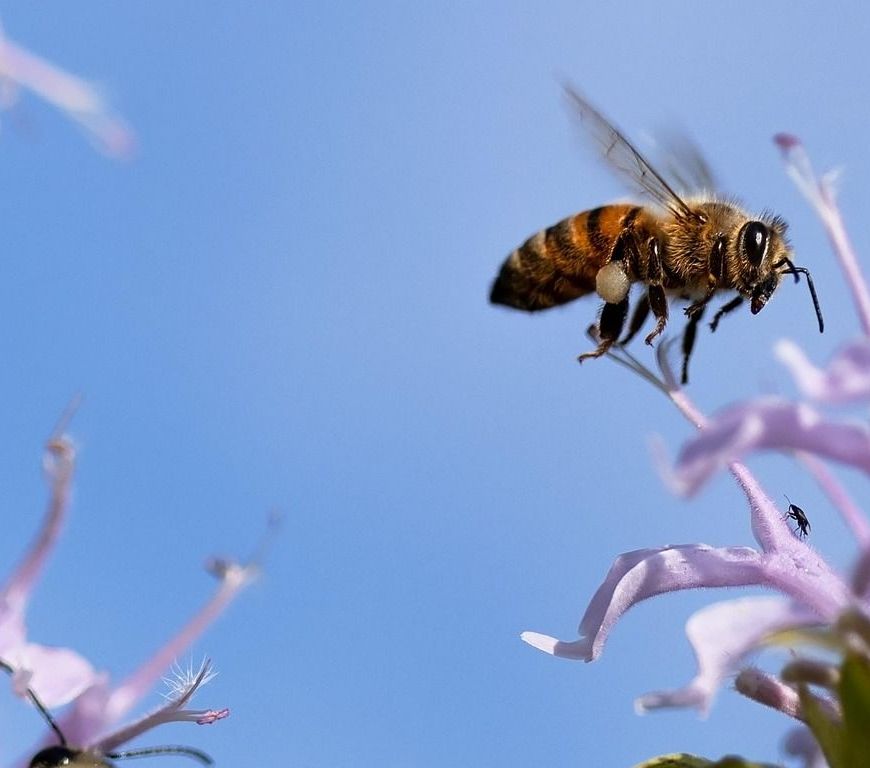
Honeybees interfere with wild bees in apple pollination in China

In this blog post, Yunhui Liu and team discuss their latest research into the importance of honeybees and wild bees for apple pollination, as well as whether the contribution of wild bees is influenced by increasing numbers of honeybees. Animal pollination is crucial for sustainable crop production and food security. Although there is a growing reliance on pollinators in crop production, global reports indicate a … Continue reading Honeybees interfere with wild bees in apple pollination in China

Variety is the spice of life: diverse key pollinators of British strawberry need non-crop resources

Author Edith Villa-Galaviz shares her team’s latest study exploring key pollinator species identity and behaviour for strawberry crops that can provide vital insights for improving crop yield. Fourteen years ago, a PhD student collected a large dataset on the visitation and pollen loads of the insects that visited three strawberry fields in the South West England. For various reasons, the student couldn’t publish their paper … Continue reading Variety is the spice of life: diverse key pollinators of British strawberry need non-crop resources

When stressed by both pesticides and parasites, honey bees do better than expected

In their latest research, Bird and colleagues perform a meta‐analysis to gain a clearer view of the combined effects of parasites and pesticides on honey bee health. Honey bees pollinate about a third of all crops. Without them, the production of everything from almonds to zucchinis would grind to halt, which makes it especially alarming that honey bees have being dying at increasing rates over … Continue reading When stressed by both pesticides and parasites, honey bees do better than expected

Biodiversity in West African parklands promotes pollination of shea

With demand on shea parklands increasing, Aoife Delaney and colleagues explore the pollination services to shea and how we can better support this resource of both ecological and economic importance. Their new research was recently published in Journal of Applied Ecology. Shea parklands occupy over 1 million km2 in the Sudano-Sahelian semi-arid zone of sub-Saharan Africa, from Senegal in the west to Uganda in the … Continue reading Biodiversity in West African parklands promotes pollination of shea