How to manage city trees in a changing climate?

Without sufficient water, urban trees are susceptible to other stressors, including insect pests. Associate Editor, Pieter De Frenne (Ghent University, Belgium) explains how Meineke and Frank’s recent paper, Water availability drives urban tree growth responses to herbivory and warming, provides key research into the management of a vital ecosystem service. Cities are hot. Not only to taste the best latte macchiato in the fanciest coffee … Continue reading How to manage city trees in a changing climate?

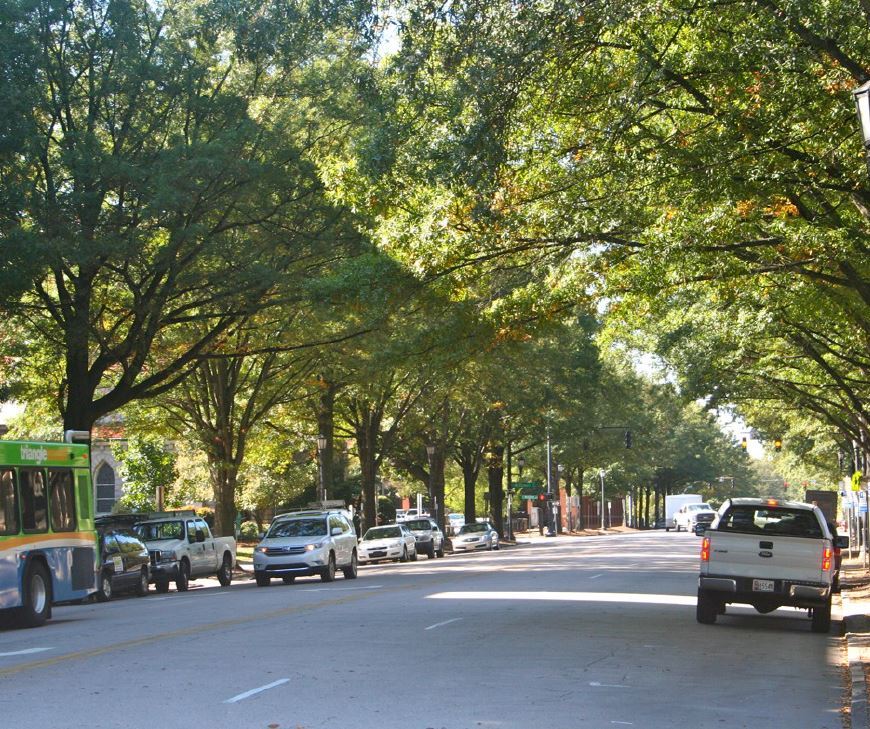
Warming, insect pests and water stress combine to reduce tree growth in the city

Emily Meineke comments on new research, Water availability drives urban tree growth responses to herbivory and warming  published today in Journal of Applied Ecology. Cities are getting warmer. This is due in part to global climate change. The more important factor for now, though, is the urban heat island effect; local warming in cities caused by sidewalks, asphalt, and reduced tree cover. In short, areas with less … Continue reading Warming, insect pests and water stress combine to reduce tree growth in the city

Issue 55:2

Issue 55:2 includes a Spotlight on Decision making under uncertainty. Other topics include urban ecology, population monitoring, tropical forest restoration and more. Here we take a look at some of the articles published in this issue. Decision making under uncertainty Senior Editor, Michael Bode on this issue’s selection of Spotlight papers How does grazing by wild ungulates and livestock affect plant richness? This issue’s Editor’s Choice Jaguar … Continue reading Issue 55:2

Editor’s Choice 54:6 – Managing urban green spaces to accommodate growth without sacrificing ecosystem services

The final Editor’s Choice of 2017 is written by Associate Editor, Joseph Bennett. The article chosen is Urban development, land sharing and land sparing: the importance of considering restoration by Collas et al. The land sparing versus land sharing debate is one of the best known and most controversial topics in conservation biology. Advocates for land sparing argue that ecological and human needs are best balanced … Continue reading Editor’s Choice 54:6 – Managing urban green spaces to accommodate growth without sacrificing ecosystem services

More than just a pretty cover – enhancing plant conservation on green roofs

Following Walker and Lundholm’s recent Journal of Applied Ecology paper, Designed habitat heterogeneity on green roofs increases seedling survival but not plant species diversity, Associate Editor Cate Macinnis-Ng discusses enhancing the ecological benefits of the green roof. Famed for their spectacular and lush green terraces of trees, shrubs and vines, the Hanging Gardens of Babylon were perhaps amongst the first green roofs. Modern-day green roofs are … Continue reading More than just a pretty cover – enhancing plant conservation on green roofs

Landscape structure influences urban vegetation vertical structure

In this post Matthew Mitchell discusses his recent paper ‘Landscape structure influences urban vegetation vertical structure‘. The importance of urban vegetation Odds are that you’re reading this in a city. More than half of humanity today lives in cities, and this is expected to increase to two-thirds by 2050. Living in a city, you almost certainly rely on urban vegetation for key ecosystem services like … Continue reading Landscape structure influences urban vegetation vertical structure

Ecological considerations for an urban marine environment

In this post Filippo Ferrario discusses his recent paper ‘The overlooked role of biotic factors in controlling the ecological performance of artificial marine habitats’ Summer is going to be over soon and many of us have spent the vacation enjoying sea beaches, practising aquatic sports or looking for a pristine marine landscape, where to hike or a wonderful sunset to cherish. Did you realize how … Continue reading Ecological considerations for an urban marine environment

Ecological traps in urban aquatic ecosystems: theory and practice

In this post Angela Strecker discusses a Review paper she recently handled by Robin Hale and colleagues ‘Identifying, preventing and mitigating ecological traps to improve the management of urban aquatic ecosystems’. Urbanization greatly alters ecosystems, yet management attempts to mitigate these effects can be confounded by incomplete information on the potential outcomes of management activities. In particular, the responses of organisms to management efforts to … Continue reading Ecological traps in urban aquatic ecosystems: theory and practice

Plant species diversity improves ecosystem multifunctionality on a green roof

In this post, Jeremy Lundholm writes about his recent paper “Green roof plant species diversity improves ecosystem multifunctionality”. We can improve the benefits provided by green roofs by planting more species. Green roofs offer an attractive and useful solution to wasted space on building rooftops. Green roof coverage is growing in major cities around the world and more ecologists are paying attention to this habitat. … Continue reading Plant species diversity improves ecosystem multifunctionality on a green roof

Bringing land sparing and land sharing to the city

This post was written by Jonathan Rhodes, @j_r_rhodes, on the recent paper by Masa Soga et al. on land sharing and land sparing in urban systems. In agricultural landscapes the idea of choosing between strategies that intersperse intensive land-uses with areas set aside for biodiversity (land sparing) versus less intensive agriculture without set-asides (land sharing) to maximise biodiversity is relatively well developed (Green et al. … Continue reading Bringing land sparing and land sharing to the city