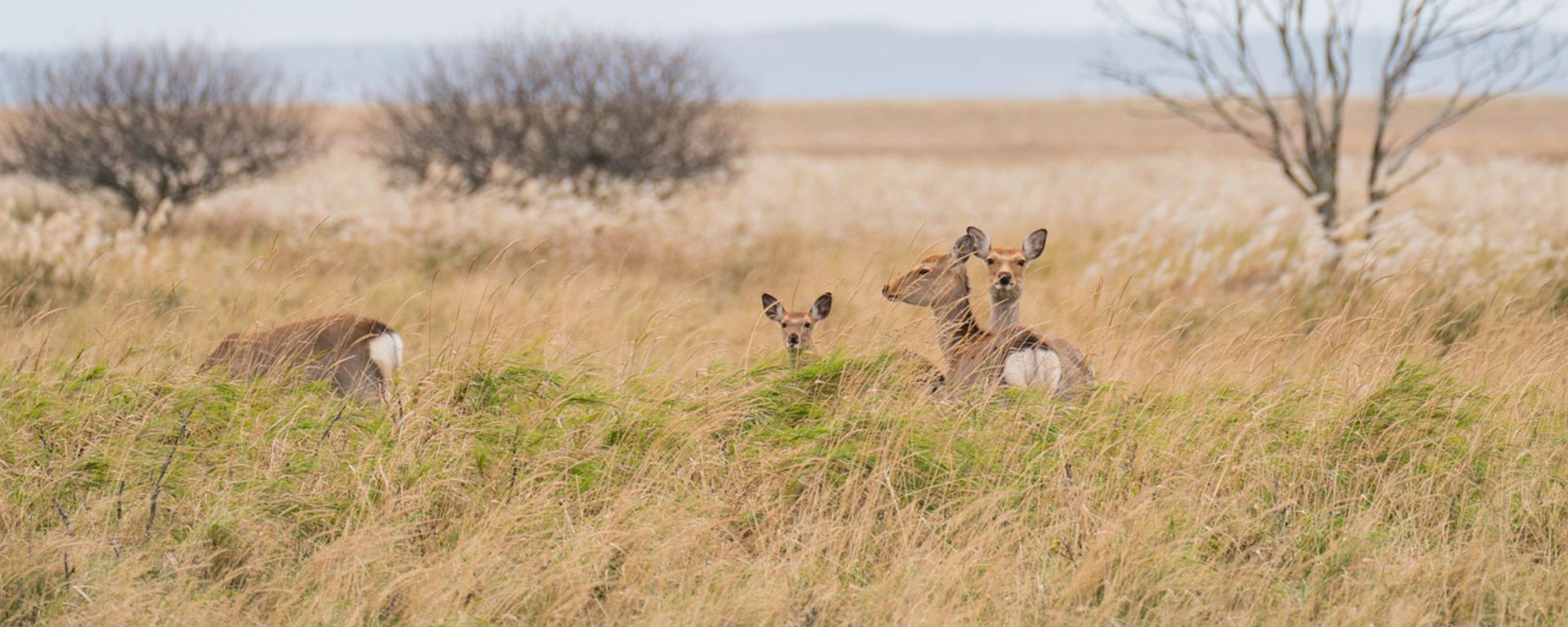
Some areas of the world – particularly rural areas – now have less people than they used to. In this Perspective, we:
- Show how this reduction in humans has led to the recovery of some large mammal species
- Discuss why these recoveries matters – both for the ecosystem and human society.
Although the human populations of many countries around the world are still growing, we are only 60-70 years away from a world with a shrinking total population. Understanding how biodiversity responds to a shrinking human population will be critical in the coming years. Drawing from examples in Europe and Japan, we show how a declining rural population has led to the recovery of large mammals.
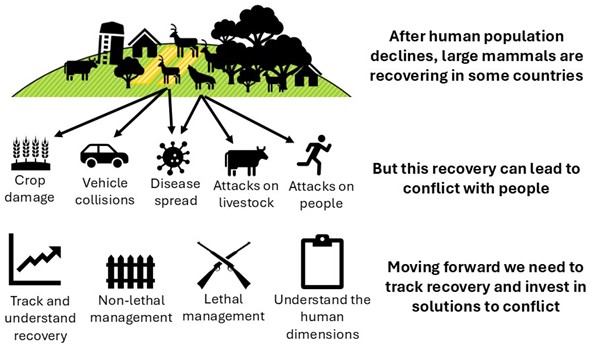
Although these recoveries are generally good news for conservation and ecosystem health, these large species also cause problems for people. For example, herbivores like deer and pigs damage crops and get hit by cars; carnivores like wolves and bears attack livestock and sometimes people. We highlight some ways to minimize these conflicts, including consolidating agriculture and educating people about how to coexist with large mammals. In some cases, lethally removing some individuals may be necessary to promote coexistence, in which case governments could incentivize hunting by the public. Indeed, hunting and large mammal ecotourism could both provide important sources of income for local communities facing depopulation.
Looking ahead, these patterns will likely occur in many other places around the world. Researchers should be tracking how biodiversity is responding to human depopulation and governments should take steps to prepare for large mammal recovery.
This is a Plain Language Summary discussing a recently-published article in Journal of Applied Ecology. Find the full article here.

