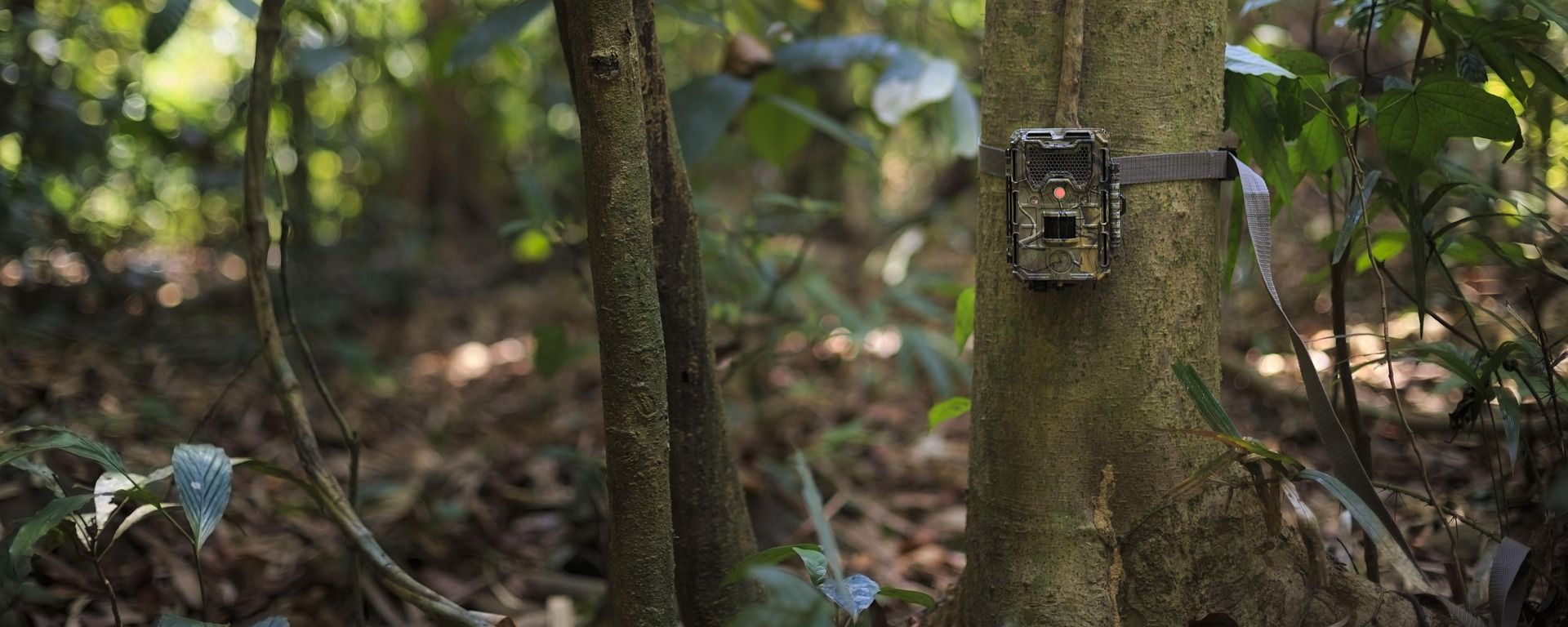
The use of remote game cameras to photograph elusive wildlife is one of the most commonly employed techniques in ecology and conservation, and is used to answer questions regarding population status of many threatened and endangered species. As the use of this technique expands in size and scope, and projects routinely generate millions of images, the time it takes to identify species in photos has become a challenge.
Although strides have been made in the use of artificial intelligence (AI) to identify species in photos, human review of images is still often used as a final verification step before any kind of analysis. In this paper, we compared how statistical models of species distribution (i.e., where species are present on the landscape) from AI-based identifications of species in photos compares to output from expert (human) identifications of the same set of images from 3 study sites and 2 highly diverse mammal communities.
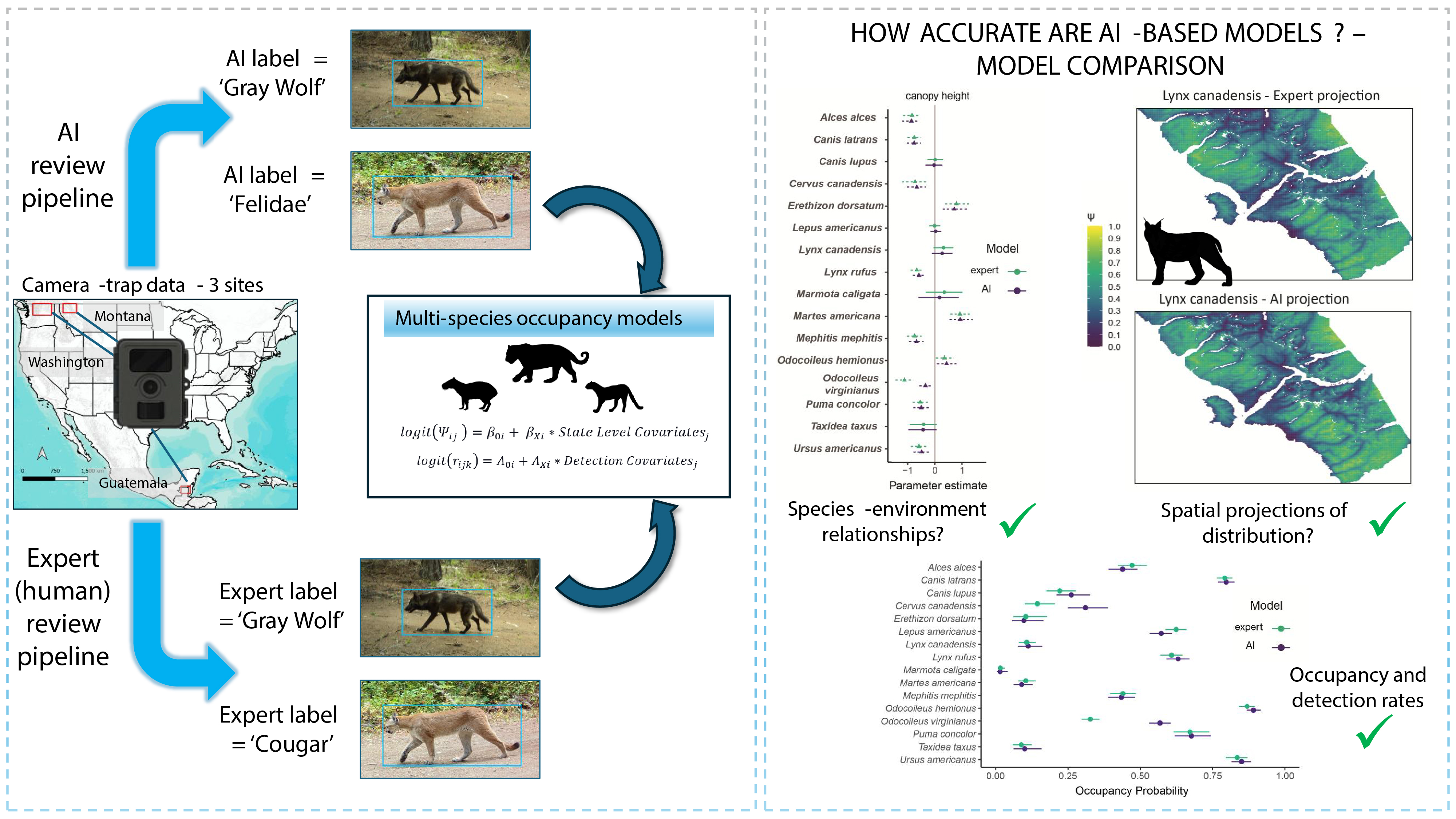
We found that for most species of mammal, AI-based models were remarkably similar to expert-based models. In essence, the AI-based models recovered many of the relationships between species distribution and environmental gradients (such as elevation) as expert-based models, resulting in similar understanding of how species were distributed on the landscape.
Because we used a general AI classifier that can identify species from a variety of ecosystems, along with easily reprodudicble processing steps, our approach should be widely applicable across many study areas. Our approach should be particularly beneficial for national and international monitoring programs that collect large amounts of photo data on threatened, at risk, or management sensitive species. A fully automated workflow will allow such programs to progress more rapidly from photo collection to analysis, inference, and decision-making.
This is a Plain Language Summary discussing a recently-published article in Journal of Applied Ecology. Find the full article here.

