Shortlisted for the 2025 Southwood Prize
About the research
Overview
Coastal areas are increasingly vulnerable to hazards such as erosion and flooding, and there is growing recognition that nature-based approaches can play an important role in coastal protection because they can adapt to changing environmental conditions. As new approaches are developed, it is important to test how well they perform under different environmental contexts and to ensure they maximise ecological benefits while avoiding unnecessary engineering.
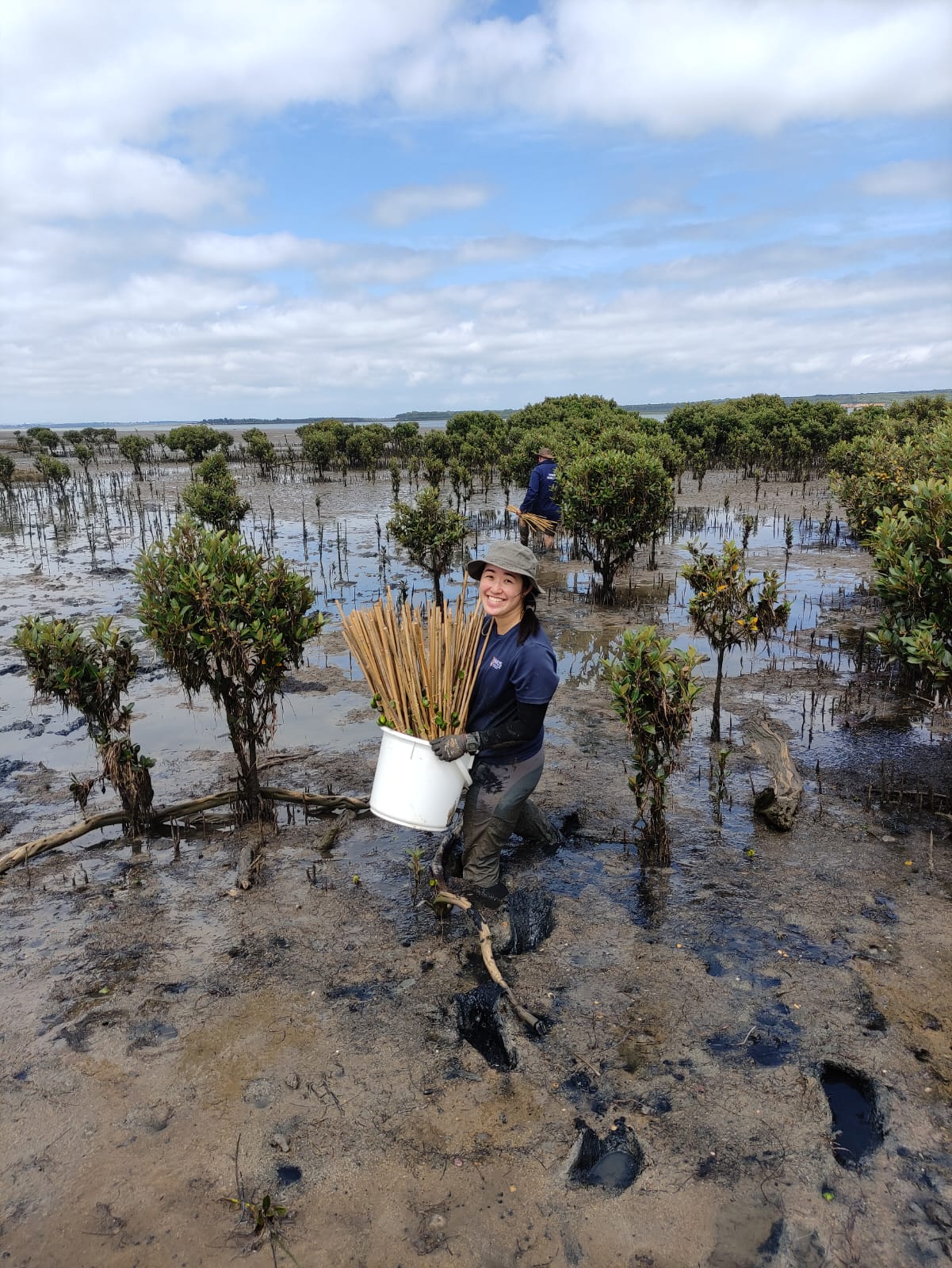
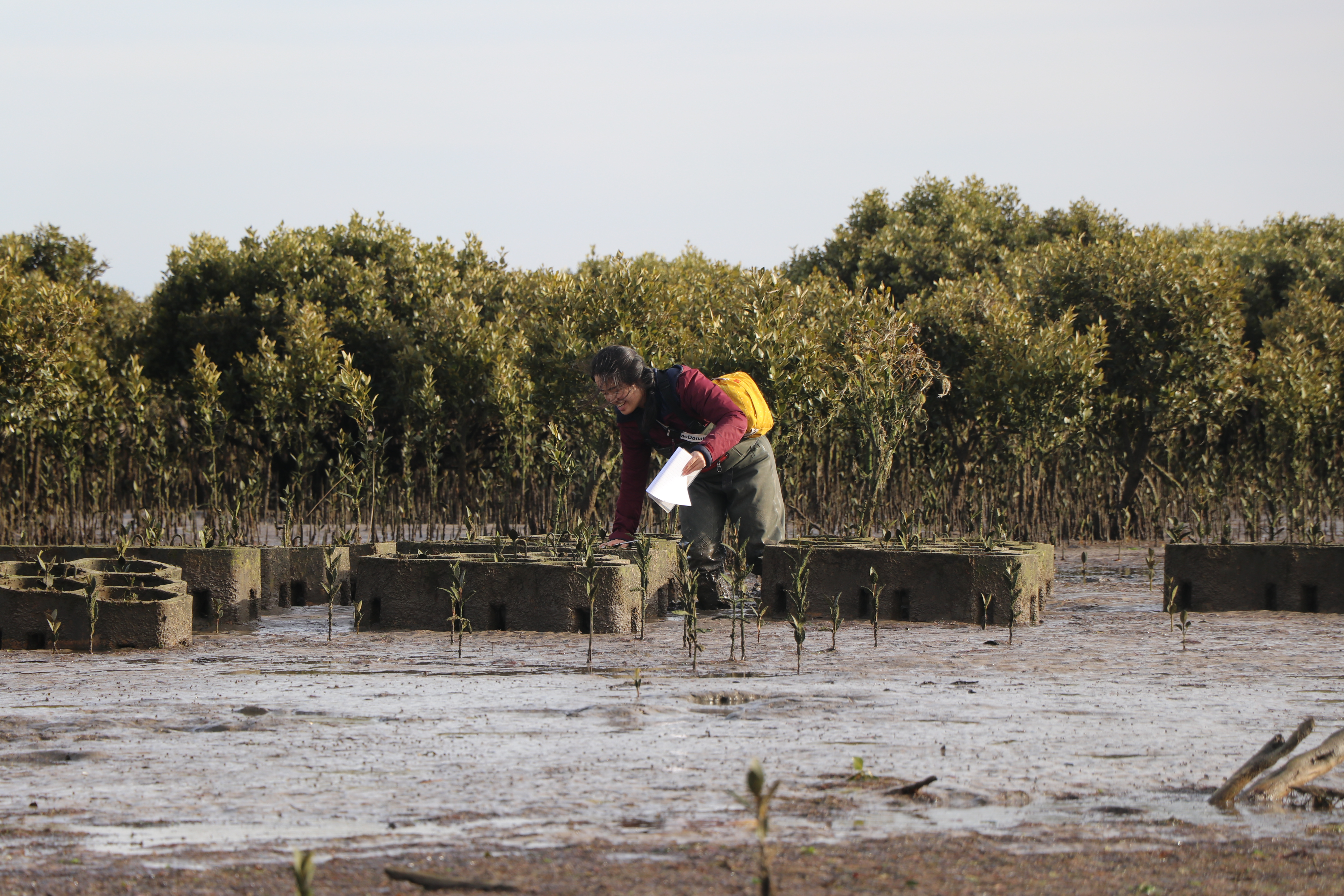
This paper was the first data chapter in my PhD thesis, which took place in Victoria, Australia, under the supervision of Drs. Rebecca Morris and Stephen Swearer. In the study, ecologically engineered concrete pods were deployed at three eroding sites, and Avicennia marina propagules and seedlings were planted both inside and behind these structures. We wanted to understand whether the pods could enhance mangrove survival and also facilitate natural recruitment.
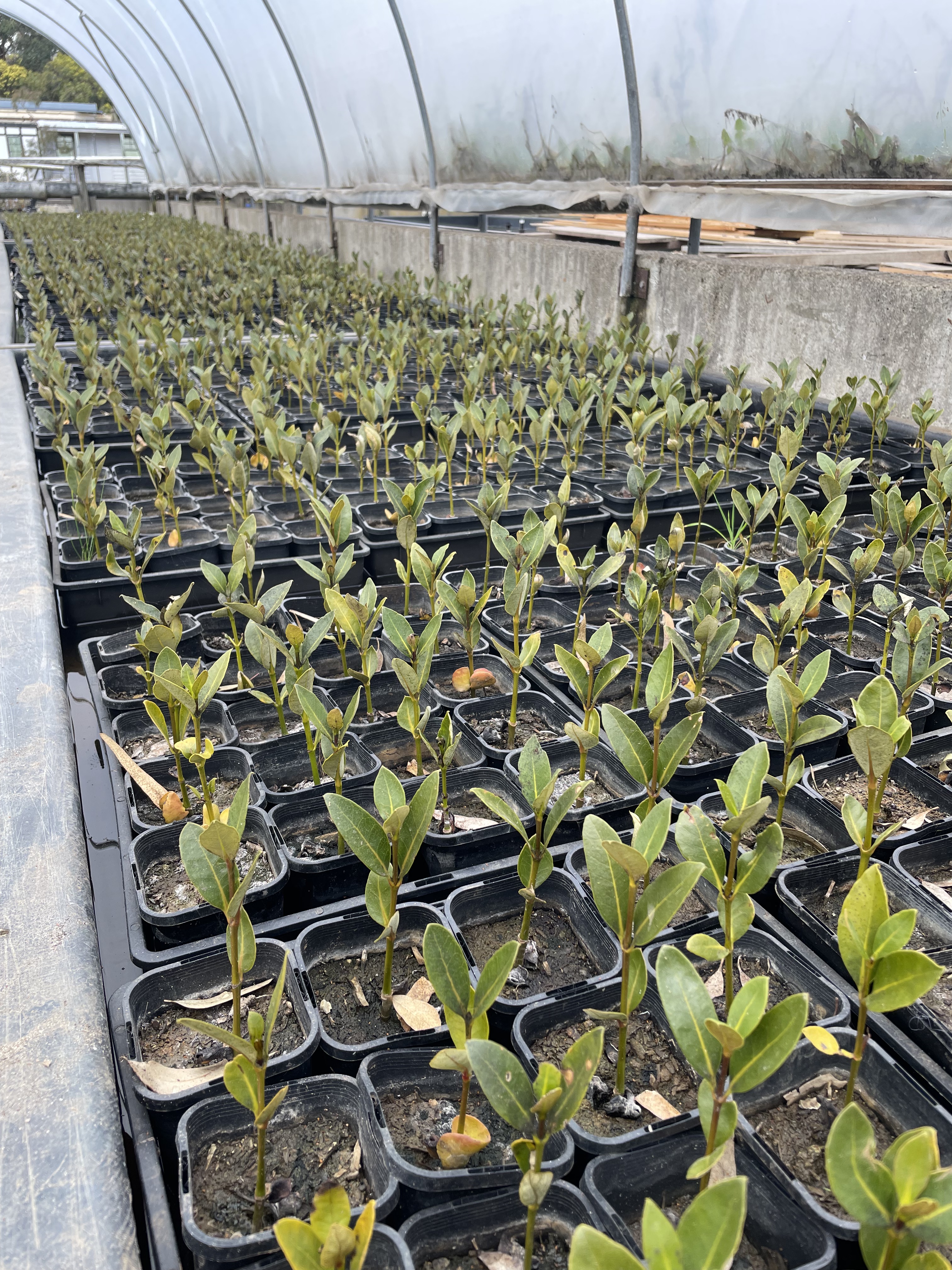
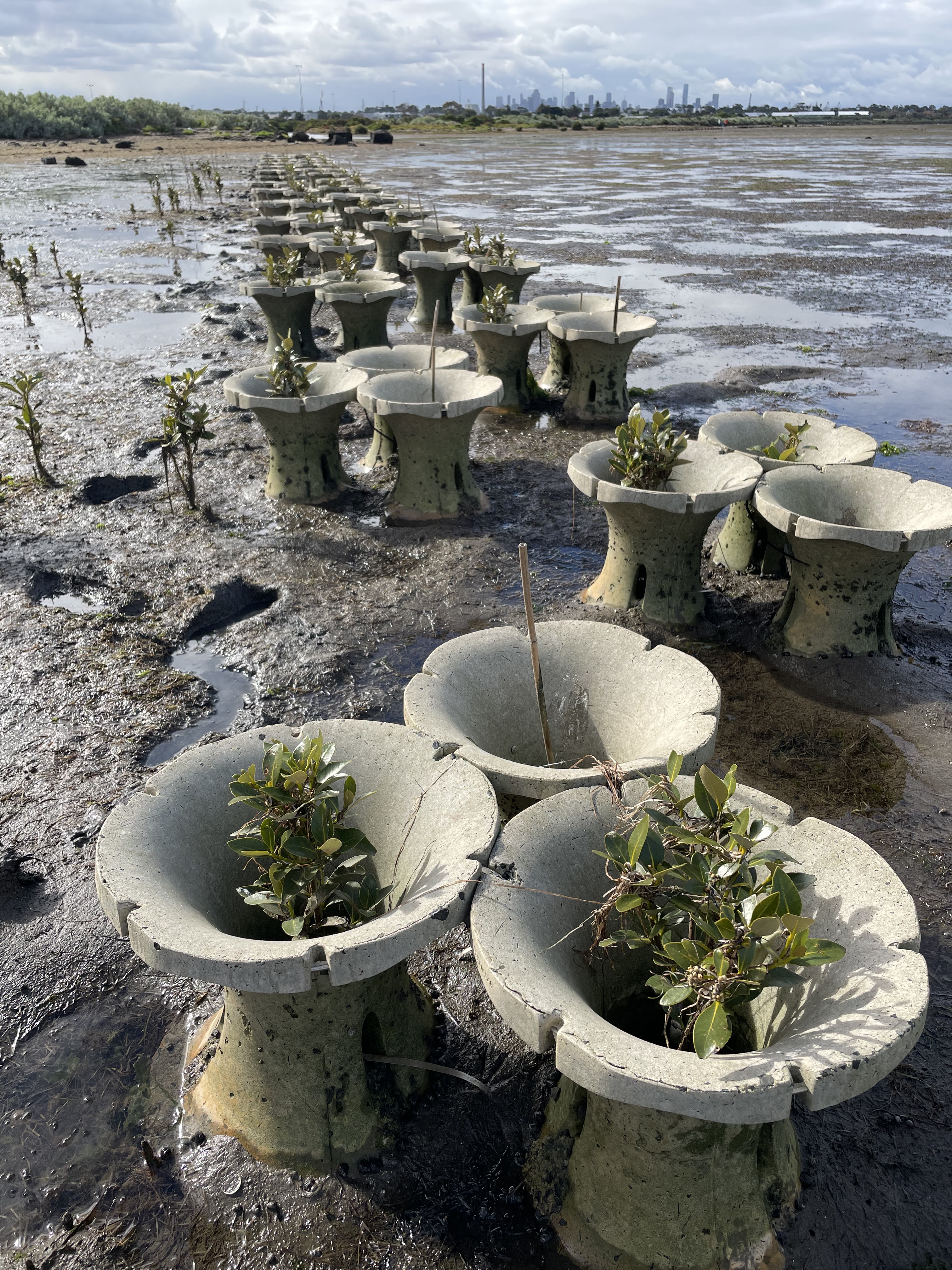
What we found was that the outcomes varied greatly between sites. Local environmental conditions strongly influenced survival and recruitment, often overriding the effects of structural design. This highlighted how difficult it can be to engineer around fundamental environmental constraints in dynamic coastal systems.
Next steps and broader implications
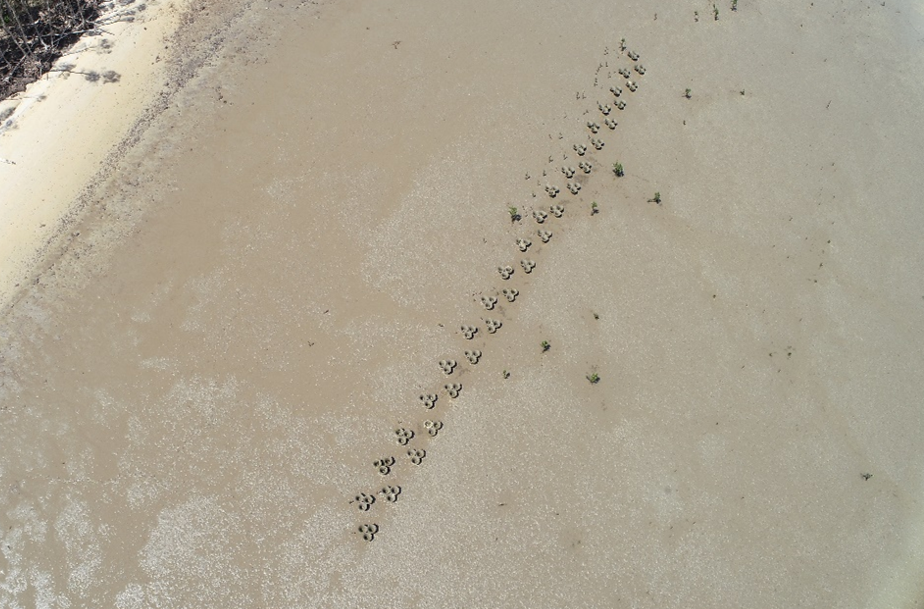
Although our study provides insights into how hybrid ecological engineering structures can support mangrove establishment, there are still important questions to explore. During the project, we collected additional data using drone surveys and surface elevation tables, which can be used to examine patterns of sediment accretion and erosion around the structures. Analysing these data could reveal whether the pods help stabilise sediments and support shoreline development, or whether they unintentionally promote erosion, as has been observed with hard coastal structures.
Our findings also have practical implications for coastal managers and policymakers who are exploring nature-based approaches to coastal protection. Protecting and restoring existing mangrove habitats remains the most effective strategy for maintaining ecosystem functioning and coastal resilience. However, relying solely on natural recovery may not always be feasible, particularly because mangrove forests take time to establish and reach densities that provide meaningful coastal protection.
Hybrid approaches may therefore play an important role in certain contexts, but their success is highly dependent on local environmental conditions. Integrating ecological understanding into existing coastal planning frameworks could help guide where and how hybrid solutions like mangrove pods can be applied most effectively.
About the author
Current position
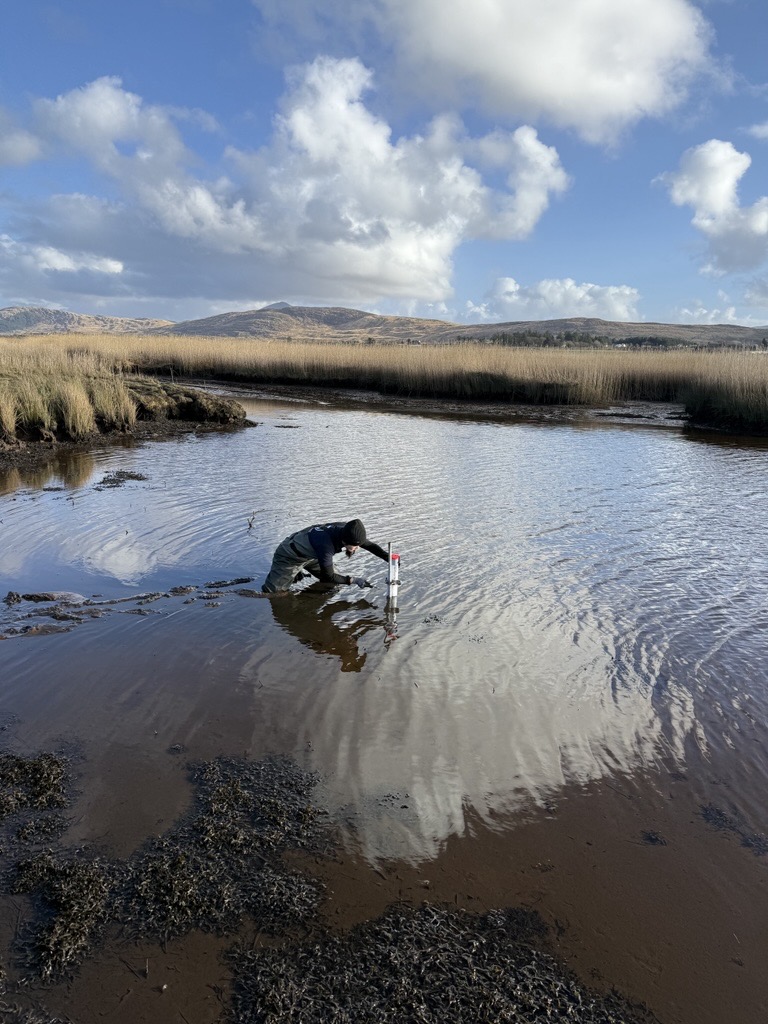
I am currently a postdoctoral researcher at University College Cork working with Drs. Louise Firth and Antony Knights. My current research continues to explore nature-based coastal protection, focusing on testing modular hybrid combinations of eco-engineering elements to reduce erosion and facilitate the rehabilitation of saltmarsh habitats. The project also aims to develop indicators to evaluate the ecological and engineering performance of these approaches, while promoting collaboration through multi-stakeholder co-design.
While much of my work focuses on evaluating hybrid approaches to coastal protection, I am particularly interested in the coastal processes that shape environmental outcomes. I hope that my research can contribute to refining the design and application of these approaches, so they can be more reliably integrated into broader coastal protection strategies.
Getting involved in ecology
My interest in ecology began during my Honours project at the National University of Singapore, where I studied how human-altered environmental conditions influence prawn behaviour. I later moved into the field of ecological engineering, working on ways to modify human-made coastal structures to enhance their ecological value.
Through this work, I became increasingly interested in the impacts of urbanisation on aquatic environments and in developing practical approaches to mitigate these impacts. For my PhD research, I focused on nature-based coastal protection across sites in Singapore and Victoria, Australia, and also examined the social factors that may influence the implementation of these approaches.
Read the full article ‘Effectiveness of novel hybrid mangrove living shorelines is context dependent’ in Journal of Applied Ecology.
Find the other early career researchers and their articles that have been shortlisted for the 2025 Southwood Prize here!
 The Applied Ecologist