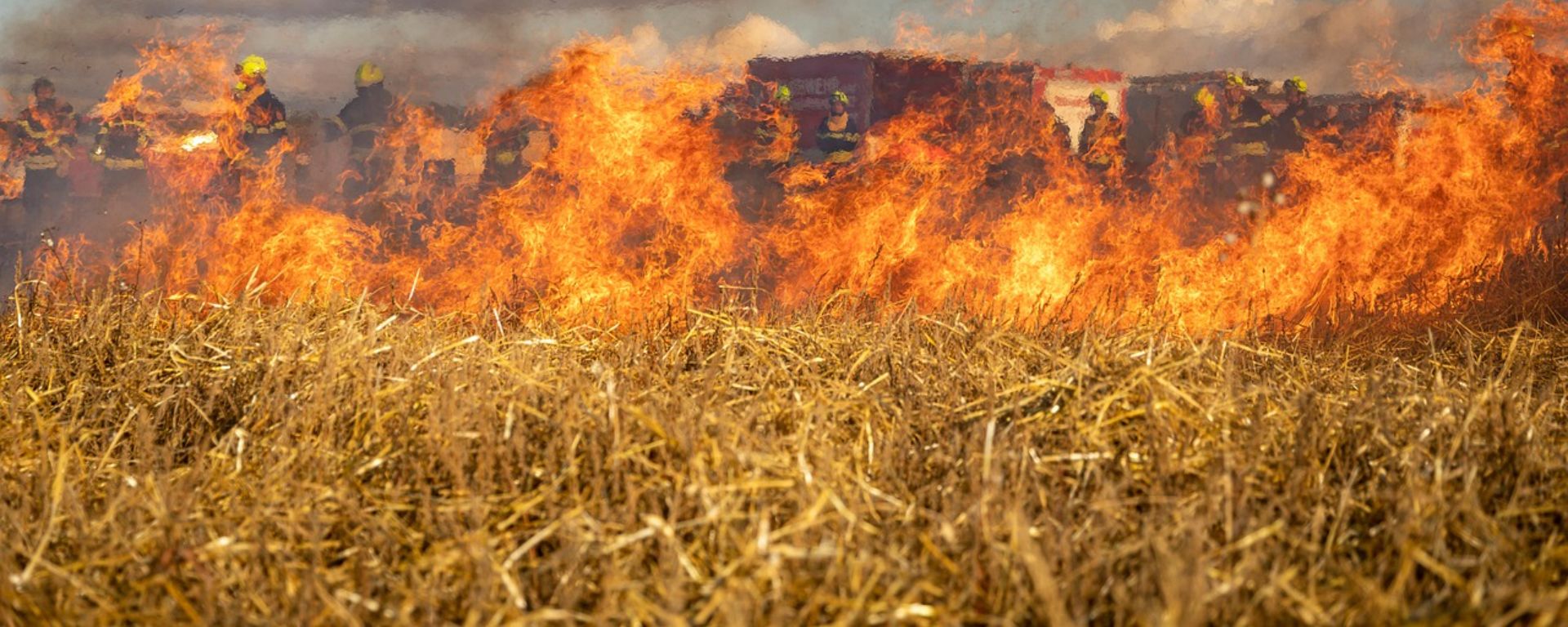
Fire has shaped mountain grasslands for thousands of years and remains essential for keeping them healthy. But as the climate warms, we need to understand how rising temperatures and fire together will affect these ecosystems. In our study, we tested how warming and different fire frequencies interact in the Drakensberg Mountains of South Africa.
In 2017, we added small open top chambers to a long-running fire experiment. These chambers gently increased air temperature, allowing us to mimic future warming under real field conditions. This is one of the first warming experiments carried out in an African mountain grassland. Over seven years, we measured near-ground temperature, soil moisture, plant growth and plant species.
The chambers successfully warmed the air by about 0.6 °C on average, with short periods more than 4 °C hotter. Warmer conditions increased plant growth. However, the effects of warming on soil temperature and soil moisture depended strongly on how often the grassland was burned. Where fires occurred every year, there was less plant cover to shade and protect the soil, and warming had a stronger effect on near-ground conditions. Where fires occurred less often, greater plant cover helped buffer the soil from temperature extremes.
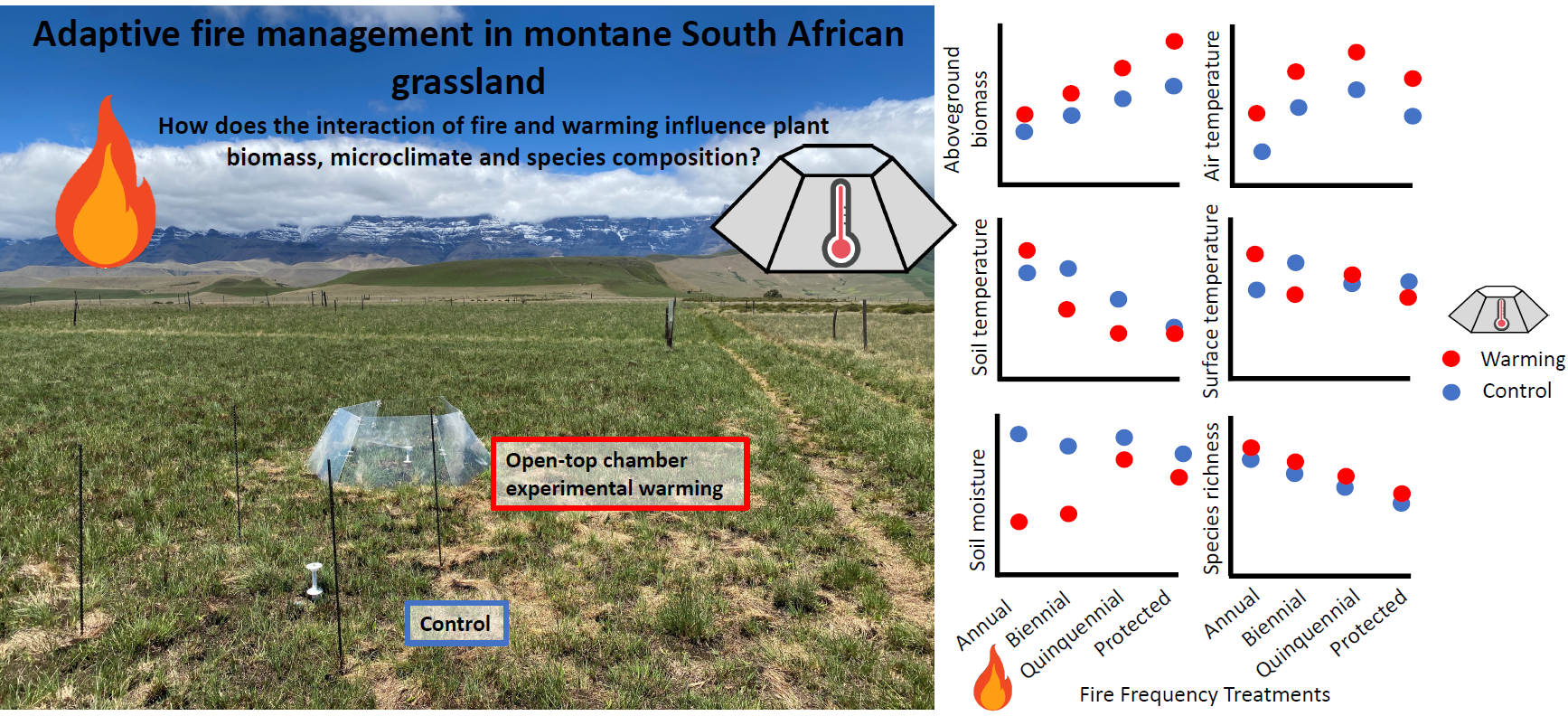
Importantly, plant species did not change over the seven years of warming. Instead, fire history played a much larger role than warming in shaping which species were present. This reinforces that fire is a natural and necessary process in these grasslands.
Our results show that the pattern of burning matters in a warming climate. Maintaining a mix of fire frequencies across the landscape can help balance plant growth, fuel build-up and protection from extreme heat. If we aim for a variation in fire effects across space and time, land managers may strengthen the resilience of mountain grasslands as temperatures rise.
This is a Plain Language Summary discussing a recently-published article in Journal of Applied Ecology. Find the full article here.

