International Women’s Day 2024: Journal of Applied Ecology

To celebrate International Women’s Day, Journal of Applied Ecology is excited to share a collection of short posts showcasing the work of some of our new Associate Editors. In each post, our Editors discuss their experiences in ecology, as well as what this year’s theme, ‘Inspire Inclusion’, means to them. Dr Raquel L. Carvalho What work do you do? I am a postdoctoral researcher at … Continue reading International Women’s Day 2024: Journal of Applied Ecology

Welcoming our 2024 Associate Editor Mentees!

Journal of Applied Ecology offers a two-year mentoring opportunity for early career researchers to gain experience of the Associate Editor role. Each mentee works with one of our five Senior Editors, who act as a mentor, as well as receives on-going support from the Editorial Office. Mentees have a great opportunity to learn more about the peer review process and publishing more widely through handling submissions to the … Continue reading Welcoming our 2024 Associate Editor Mentees!

My immersive experience at the BES Annual Meeting as an applied ecologist

Karen Castillioni is an Associate Editor mentee for Journal of Applied Ecology. She is also a Postdoctoral Research Associate at the University of Minnesota, USA. She is passionate about understanding the complex relationship between biodiversity and ecosystem functioning in the context of global change. In this blog post, she shares her experience of the 2023 BES Annual Meeting. The British Ecological Society (BES) Annual Meeting this … Continue reading My immersive experience at the BES Annual Meeting as an applied ecologist

Black History Month 2023 – Adaoyibo Denise Okpala

For Black History Month 2023, the British Ecological Society (BES) journals are celebrating the work of Black ecologists from around the world and sharing their stories. In this blog, Adaoyibo shares her story and journey in academia. Name: Adaoyibo Denise Okpala Affiliation: University College London/Economic Community of West African States Ecology interests: Marine, Biodiversity, Sustainability Links: You can find Adaoyibo on LinkedIn here. Your story – … Continue reading Black History Month 2023 – Adaoyibo Denise Okpala

Black History Month 2023 – Florent Noulekoun

For Black History Month 2023, the British Ecological Society (BES) journals are celebrating the work of Black ecologists from around the world and sharing their stories. In this blog, Florent shares his story and journey in academia. Name : Florent Anguilles Dehogbe Noulekoun Affiliation : Korea University / Seoul, Korea Ecology interests: Biodiversity and Ecosystem functioning, Land restoration, Global environmental changes Your story – How did you get … Continue reading Black History Month 2023 – Florent Noulekoun

Research stories: Building partners in high altitudes through participatory action research

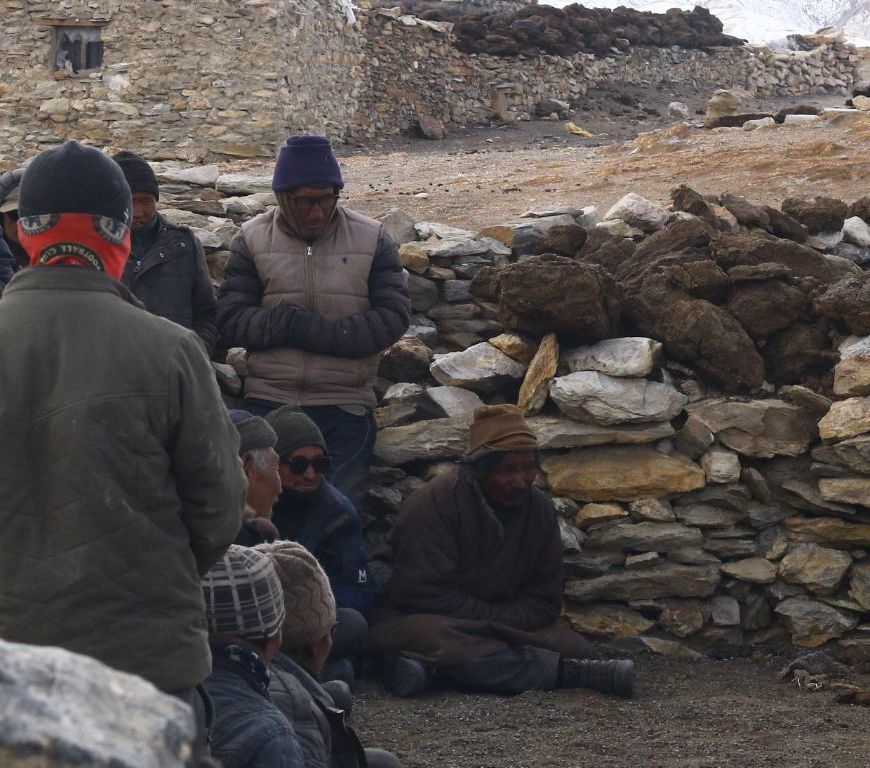
Shortlisted for the Chico Mendes Prize 2023 Lead author Munib Khanyari takes us through his team’s journey through the high altitudes of Changthang in trans-Himalayan India to co-design conservation interventions that benefit the communities who live alongside the wildlife. A video presentation about the study can also be found here. “We have solutions, but often we don’t have the ability to operationalise it”, whispered the Acho … Continue reading Research stories: Building partners in high altitudes through participatory action research

Associate Editor Mentoring: 2024 applications now open!

***Please note that applications for the 2024 scheme are now closed. If you would like to apply for the 2025 scheme, applications will reopen in September 2024*** Are you less than five years post-PhD, live in or are from the Global South, and looking to gain hands-on experience with an editorial board? Why not apply for the 2024 mentoring scheme with Journal of Applied Ecology! … Continue reading Associate Editor Mentoring: 2024 applications now open!

Cheap microclimate sensor networks in the wild

Shortlisted for the Georgina Mace Prize 2023 Author Lina K. Mühlbauer summarises her team’s latest study exploring the use of Arduinos as a novel cost-effective method for microclimate monitoring in remote systems. Why measure microclimate? A great challenge of our times is to predict and mitigate the impacts of global climate change on the world’s ecosystems. To do so, a lot of information is needed … Continue reading Cheap microclimate sensor networks in the wild