On the horizon: Deforestation expansion of plantations and infrastructure threaten Indo-Malay island species

The latest post in our ‘On the horizon’ series sees Nafeesa Esmail and Alice Hughes highlight the potential effects of a developing palm oil industry on Southeast Asisa’s forests.  Southeast Asia’s forests are some of the most diverse on Earth, representing a number of global biodiversity hotspots. Yet this region is also undergoing an unparalleled rate of deforestation. Given the small ranges of many species … Continue reading On the horizon: Deforestation expansion of plantations and infrastructure threaten Indo-Malay island species
Editor’s Choice 56:2 – A trait-based approach for forest ecosystem management

The Editor’s Choice for issue 56:2 is written by Associate Editor, Alex Fajardo.  The selected article, Maintaining ecosystem properties after loss of ash in Great Britain by Louise Hill et al, focuses on the importance of using plant functional traits to predict potential changes to an ecosystem, following the loss of a key species. In their study, Maintaining ecosystem properties after loss of ash in Great … Continue reading Editor’s Choice 56:2 – A trait-based approach for forest ecosystem management

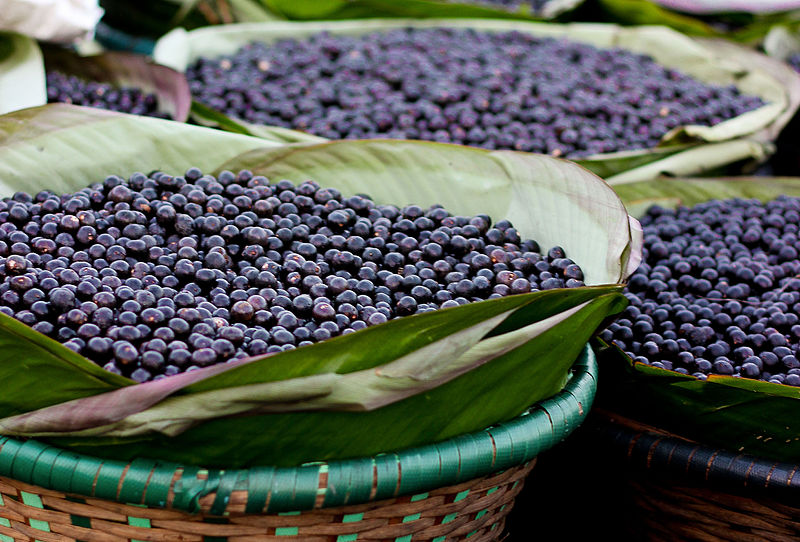
Ensuring sustainable açaí fruit production in the Amazon river delta

With açaí fruit becoming increasingly popular, it is important to understand how farming management practices are affecting vital pollination services. Associate Editor, Ainhoa Magrach comments on the recent article, Anthropogenic disturbance of tropical forests threatens pollination services to açaí palm in the Amazon river delta by Campbell et al. Worldwide the demand for the berries of the açaí palm is increasing. These anti-oxidant rich foods have … Continue reading Ensuring sustainable açaí fruit production in the Amazon river delta

Abandoned pastures regenerate to low diversity forests without intervention

To start the week, Associate Editor, Cate Macinnis-Ng comments on the recently published article, Abandoned pastures cannot spontaneously recover the attributes of old-growth savannas by Cava et al. Savanna ecosystems of the seasonally dry tropics cover almost 20% of the earth’s land area. Maintenance of biodiversity in savannas relies on the right amounts of grazing and fire. While overgrazing of savannas is a common threat, … Continue reading Abandoned pastures regenerate to low diversity forests without intervention

Forests as an important system for applied ecology

In this post, Associate Editor Akira Mori gives his personal perspective on organizing the recent Special Feature: Forest biodiversity and ecosystem services. One day, I suddenly got an idea to organize a Special Feature, which has a deep focus on several key terms of my research topics from the last several years. These key terms include biodiversity, climate change, ecosystem function, ecosystem services, and most … Continue reading Forests as an important system for applied ecology

We may be underestimating the negative impacts of logging on the biodiversity of tropical forests

In this post Filipe França & Hannah Griffiths discuss their recent paper ’Do space-for-time assessments underestimate the impacts of logging on tropical biodiversity? An Amazonian case study using dung beetles The difficulty in developing strong researcher-practitioner relationships is a central ‘stumbling block’ in conservation science. Unfortunately this means that more often than not the policy implications of ecological research don’t reach the people responsible for … Continue reading We may be underestimating the negative impacts of logging on the biodiversity of tropical forests

Forest cover change in the Greater Mekong sub-region

This blog post is part of the blog series ‘Authors in Asia’, to accompany the recent Virtual Issue in Journal of Applied Ecology. You can read other posts in this series here. Minerva Singh is a PhD Candidate at the University of Cambridge and she is involved with the BES Conservation Ecology Special Interest Group. Her research focuses on using high resolution airborne data for … Continue reading Forest cover change in the Greater Mekong sub-region