Editor’s choice 57:07 – An urgent need for standardised monitoring of Arctic freshwaters

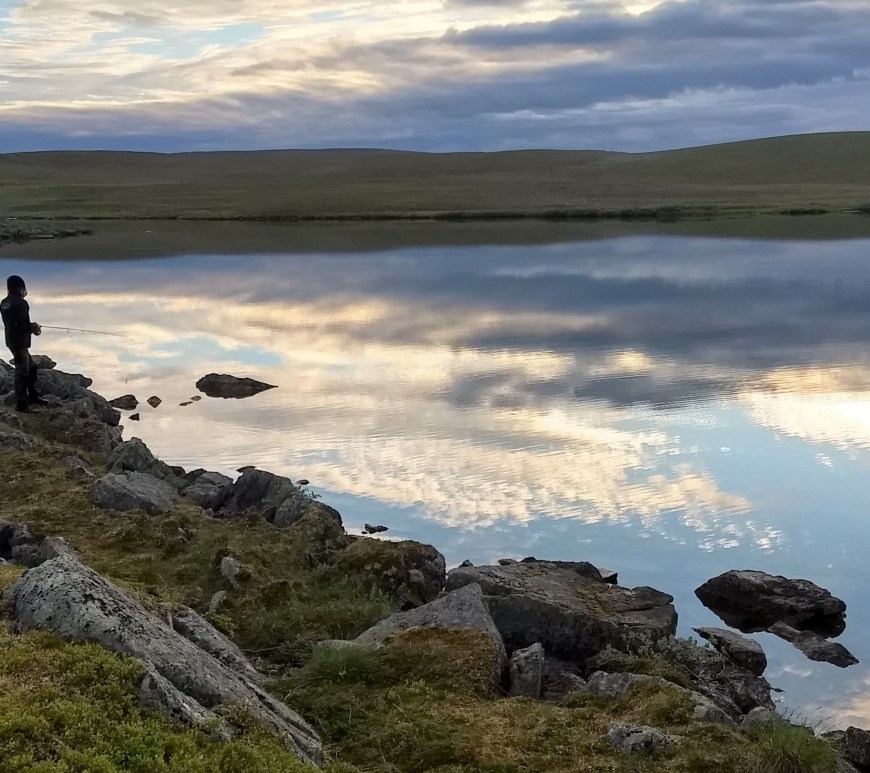
Heino et al.’s recent Policy Direction provides an approach to freshwater biomonitoring that could equip us to manage the effects of climate change in the Arctic. Associate Editor, Robert Britton highlights the work as our latest Journal of Applied Ecology Editor’s Choice. Anthropogenic climate change is not resulting in uniform warming rates across the world, with some regions increasing in temperature faster than others. This … Continue reading Editor’s choice 57:07 – An urgent need for standardised monitoring of Arctic freshwaters

eDNA snapshots of invasion, infection and extinction from a freshwater crayfish tragedy

For the first time, a devastating crayfish plague outbreak has been monitored from the onset to crayfish extinction using eDNA methodology. David A. Strand and colleagues surveyed a watercourse over three years and discovered a remarkable correlation between eDNA fluctuations and host-pathogen dynamics. Noble crayfish (Astacus astacus) are macroinvertebrates that can be found in both lotic and lentic freshwater systems across most of Europe. Previously … Continue reading eDNA snapshots of invasion, infection and extinction from a freshwater crayfish tragedy

Why quantifying riverine ecosystem services matters

Dalal Hanna, aquatic and landscape ecologist, talks about her article reviewing riverine ecosystem service quantification. This paper was on the 2018 list of highly commended papers for this year’s Southwood Prize early career researcher award. An additional video about Dalal’s research is available here. Read the full article, A review of riverine ecosystem service quantification: research gaps and recommendations in issue 55:3 of Journal of … Continue reading Why quantifying riverine ecosystem services matters

Go with the flow

Exploring the importance of autocorrelation in flow-ecology management, Associate Editor, Angela Strecker discusses the recent article by Bruckerhoff et al., Flow–ecology relationships are spatially structured and differ among flow regimes. In ecology, it is widely accepted that stream flow is a master variable for fishes. Human alterations to rivers have changed the flow regime significantly, often dampening the natural variability and changing the timing of … Continue reading Go with the flow

Tributaries may reset the legacy of dams in large rivers

Tributaries, river management and damming. In this post, Associate Editor Tadeu Siqueira comments the recent article by John Sabo and colleagues, Pulsed flows, tributary inputs, and food-web structure in a highly regulated river. The damming of large rivers has been common practice, probably since Thomas Edison built one of the first hydroelectric stations in 1882. Most important rivers in economically developed regions have already been … Continue reading Tributaries may reset the legacy of dams in large rivers

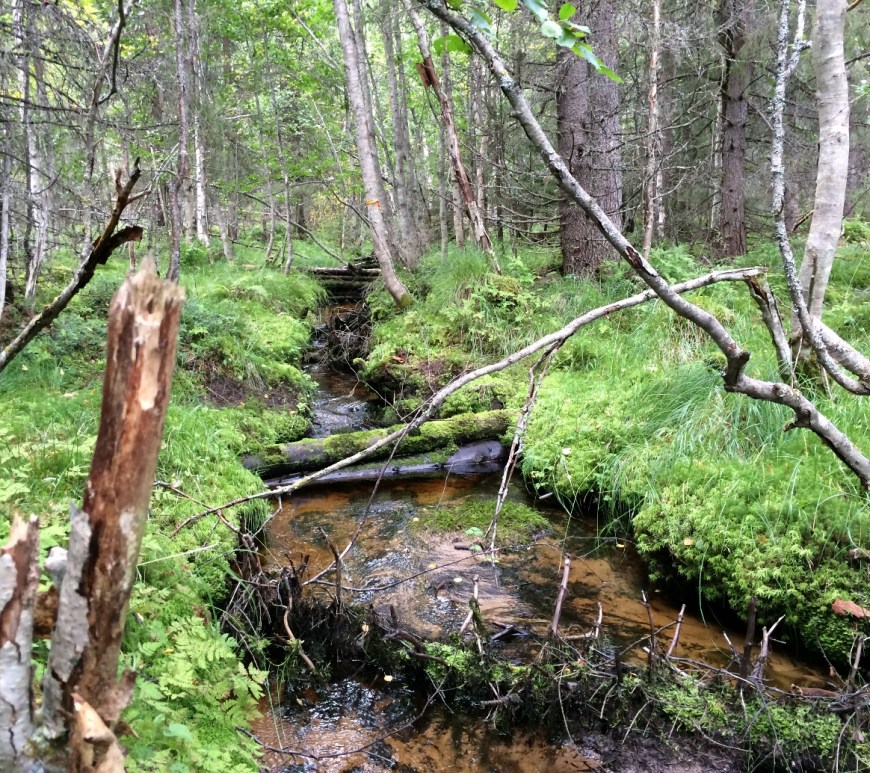
Looking beyond boulders and logs in boreal stream restoration

Our new latest issue features the article, Differential responses by stream and riparian biodiversity to in-stream restoration of forestry-impacted streams by Turunen and colleagues. Here, Associate Editor, David Moreno Mateos shares his views on the challenges of stream restoration. Stream restoration is just not possible today. At least, if your plan is to just drop a bunch of rocks or logs into the creek. Turunen … Continue reading Looking beyond boulders and logs in boreal stream restoration