Community science complements assessment of extinction risk

Understanding the probability of extinction is critical for effective management and conservation. While such assessment mainly depends on rigorous and standardized monitoring (the best of the best data), recent research from Acevedo-Charry et al (2025) features a complementary way that data gathered from volunteers can help estimate probability of extinction. A version of this post is also available in Spanish here. How do we assess … Continue reading Community science complements assessment of extinction risk

La ciencia comunitaria complementa la evaluación del riesgo de extinción

Comprender la probabilidad de extinción es fundamental para una gestión y conservación eficaces. Si bien dicha evaluación depende principalmente de un monitoreo riguroso y estandarizado (con los mejores datos disponibles), una investigación reciente de Acevedo-Charry et al (2025) presenta una forma complementaria en la que los datos recopilados por voluntarios pueden ayudar a estimar la probabilidad de extinción. Esta entrada de blog también está disponible … Continue reading La ciencia comunitaria complementa la evaluación del riesgo de extinción

Amidst the resplendence of Munnar’s sky islands

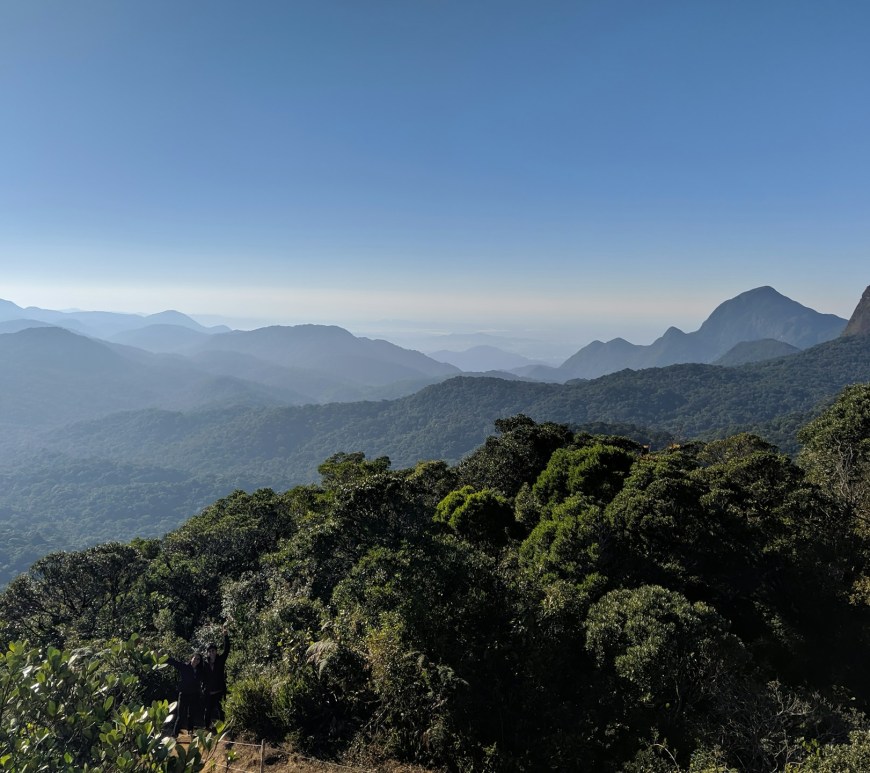
Madhumay Mallik from the Wildlife Trust of India recounts their experience researching grass frogs, and details what is being done to ensure that these and other frog species continue to thrive despite increasing challenges. Far away on the mountain peak were cotton clouds in restless sleep, tossing and turning. Before me, a lush pasture of smooth grass and wild flowers, blanketing a steep terrain and … Continue reading Amidst the resplendence of Munnar’s sky islands

Conspecific vocalisations as a Wryneck conservation tool: if you play it, will they settle? 

Paula Schatte and co-authors share insight from their recent study examining the relative importance of food availability and conspecific vocalisations for breeding habitat selection during both the prospecting and breeding periods of a regionally endangered woodpecker, the Eurasian Wryneck (Jynx torquilla).  What is the problem?  The Wryneck suffered a long-term decline in western and northern Europe until the beginning of the 21st century, mainly due … Continue reading Conspecific vocalisations as a Wryneck conservation tool: if you play it, will they settle? 

Field Diaries: Mariana Silva Ferriera

In our ‘Field Diaries’ series, The Applied Ecologist is sharing stories from a range of different fieldwork experiences. Mariana Silva Ferreira shares being involved in the largest long-term monitoring study on small mammals based in Brazil. About the Author Mariana Silva Ferreira, she/her Affiliation: Ecology interests: Population ecology, life histories, mammals Overview of fieldwork For over 10 years, I was part of the team at the Vertebrate … Continue reading Field Diaries: Mariana Silva Ferriera

Maja Bradarić: Forecasting nocturnal bird migration for dynamic aeroconservation

Shortlisted for the 2024 Southwood Prize Maja Bradarić details how, alongside colleagues, utilising radar data, weather and phenological variables allowed for the development of seasonal near-term forecasts of low-altitude nocturnal bird migration over the southern North Sea. About the research Overview Our research explores environmental drivers and spatiotemporal patterns of nocturnal bird migration over the North Sea to predict migration intensity for conservation frameworks. The … Continue reading Maja Bradarić: Forecasting nocturnal bird migration for dynamic aeroconservation

AI and population monitoring; does it really make a difference?

Emily A. Jordan discusses the use of AI in population monitoring and her team’s experience using it to assess the Kapitia skink. In population monitoring, using unique markings to identify individuals is a practical solution when species are challenging to tag. We can camera trap elusive snow leopards, drone-photograph whales, and happily snap our tiniest amphibians. Yet these photographic records bring a fresh challenge. Each … Continue reading AI and population monitoring; does it really make a difference?

Grizzly bears and wolves avoid busy hiking trails more than previously thought

Peter Thompson explains how, alongside colleagues, the spatial distribution and interactions of grizzly bears (Ursus arctos), grey wolves (Canis lupus), and humans within the central Canadian Rocky Mountains were monitored and assessed in their latest study. Human recreation and wildlife The Bow River Valley in Alberta, Canada is a global hotspot for outdoor recreation, attracting millions of visitors annually to enjoy the spectacular landscapes of … Continue reading Grizzly bears and wolves avoid busy hiking trails more than previously thought

Remote sensing: A key to monitoring tropical forest restoration

Laura Vedovato introduces readers to a range of remote sensing tools, explaining how they can be applied to topical forests to monitor the effectiveness of restoration efforts. Read more in the original Review article. Introduction In recent years, global commitments to forest restoration, like the UN Decade on Restoration and the Global Biodiversity Framework, have highlighted the need for scalable, effective ways to track progress. … Continue reading Remote sensing: A key to monitoring tropical forest restoration

Revealing the hidden lives of non-breeding Black-tailed Godwits

In this blog post, Taylor Craft discusses the use of GPS tracking and satellite imagery to uncover the lives of Black-tailed Godwits in the Senegal Delta. You can read their latest study, published alongside co-authors, here. A pressing challenge The landscapes of the endangered continental Black-tailed Godwit face increasing pressures at nearly every key site along their migratory route. With poor recruitment limiting population growth, … Continue reading Revealing the hidden lives of non-breeding Black-tailed Godwits