Every restoration is unique

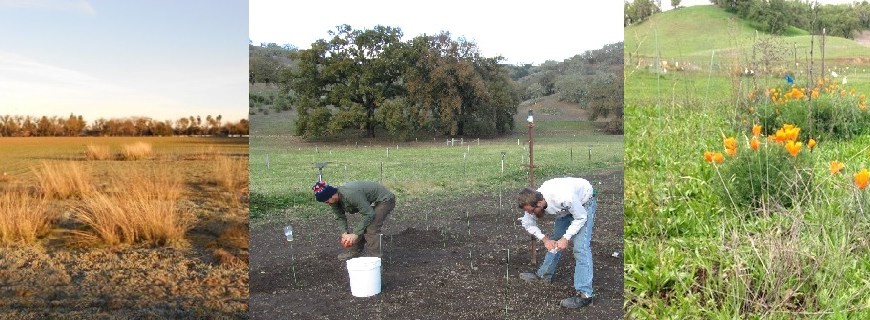
In the second of our series of blogs to accompany the recently-published Special Feature, Toward prediction in the restoration of biodiversity, Katharine Stuble describes her work in Every restoration is unique: testing year effects and site effects as drivers of initial restoration trajectories. Restoration practitioners are acutely aware that the outcomes of their efforts are strongly contingent on a slew of factors.  Some are well … Continue reading Every restoration is unique

Research, management and local knowledge: an innovative approach to invasive species control

Executive Editor, Marc Cadotte shares his thoughts on Jennifer Firn and colleagues’ new article, Integrating local knowledge and research to refine the management of an invasive non-native grass in critically endangered grassy woodlands and why utilising local knowledge is vital if we’re to provide successful solutions to environmental issues.  While many hurdles hamper the successful application of ecological concepts and theories to developing solutions to environmental … Continue reading Research, management and local knowledge: an innovative approach to invasive species control

Greater than the sum of its parts: a holistic approach to wildlife trade

In this post, Daniel Bergin discusses issue 54.3’s Practitioner’s Perspective, Holistic management of live animals confiscated from illegal wildlife trade by Dr. Thomas Gray and colleagues. Armed detectives burst through the door. Traffickers are arrested, media coverage generated, and live animals are rescued from the illegal wildlife trade. But what happens next? What happens next is the focus of a new paper by Gray et. al., … Continue reading Greater than the sum of its parts: a holistic approach to wildlife trade

How does one effectively engage communities for conservation? Try becoming PARTNERS

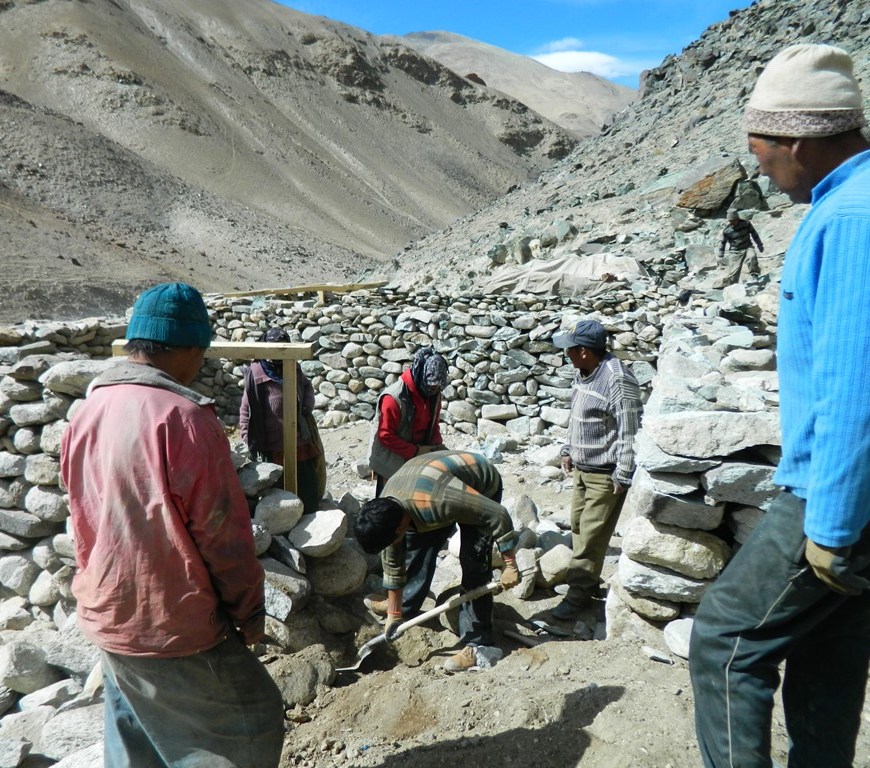
With a focus on community engagement, Matthias Fiechter, Charudutt Mishra, Steve Redpath, Brad Rutherford and Juliette Young, discuss the PARTNERS principle and importance of working with people towards conservation efforts. This post supports their recent Journal of Applied Ecology Practitioner’s Perspective, Building partnerships with communities for biodiversity conservation: lessons from Asian mountains. We’re currently witnesses to – and in many ways complicit in – the sixth mass … Continue reading How does one effectively engage communities for conservation? Try becoming PARTNERS

Video: Managing animals confiscated from the illegal wildlife trade with the Wildlife Rapid Rescue Team

Following his work for the recent Practitioner’s Perspective, Holistic management of live animals confiscated from illegal wildlife trade, Wildlife Alliance’s Director of Science, Dr. Thomas Gray  describes the policy recommendations and conclusions from the paper from the Cardamom Rainforest Landscape in Cambodia. Watch the video and read Tom’s post below. Our Practitioner’s Perspective piece in the Journal of Applied Ecology addresses an often over-looked aspect of the war against … Continue reading Video: Managing animals confiscated from the illegal wildlife trade with the Wildlife Rapid Rescue Team

We may be underestimating the negative impacts of logging on the biodiversity of tropical forests

In this post Filipe França & Hannah Griffiths discuss their recent paper ’Do space-for-time assessments underestimate the impacts of logging on tropical biodiversity? An Amazonian case study using dung beetles The difficulty in developing strong researcher-practitioner relationships is a central ‘stumbling block’ in conservation science. Unfortunately this means that more often than not the policy implications of ecological research don’t reach the people responsible for … Continue reading We may be underestimating the negative impacts of logging on the biodiversity of tropical forests

VIDEO: Saving seagrass isn’t just a pipefish dream – strategies to enhance its resilience

In this post Richard Unsworth discusses his recent Practitioner’s Perspective article with Leanne Cullen-Unsworth ‘Strategies to enhance the resilience of the world’s seagrass meadows‘ Over the last few years we’ve been increasingly interested by the #oceanoptimism movement on Twitter. It seeks to try and reframe the marine conservation story from a narrative of doom and gloom to one that seeks to see the positives in conservation around … Continue reading VIDEO: Saving seagrass isn’t just a pipefish dream – strategies to enhance its resilience

Jazz-band ecosystem monitoring

In this post Adel Heenan and Kelvin Gorospe discuss their recent Practitioner’s Perspective article ‘Ecosystem monitoring for ecosystem-based management: using a polycentric approach to balance information trade-offs‘ Long-term ecosystem monitoring can be used to take the pulse of an ecosystem, much like a routine check-up with your doctor. Medical analogies like this are common in our field, as we work for the Pacific Reef Assessment and Monitoring Program (RAMP) … Continue reading Jazz-band ecosystem monitoring

Building better models for environmental decision-making: how can modellers & practitioners collaborate?

In this post, Kevin Wood describes a Practitioner’s Perspective article on the joint development of individual-based models between modellers and practitioners: “Co-creation of individual-based models by practitioners and modellers to inform environmental decision-making” by Wood, Stillman & Goss-Custard. We live in an age of environmental change unprecedented in human history. Such change is due to an array of factors including climate change, growing human population … Continue reading Building better models for environmental decision-making: how can modellers & practitioners collaborate?