Cover stories: recovering beauty

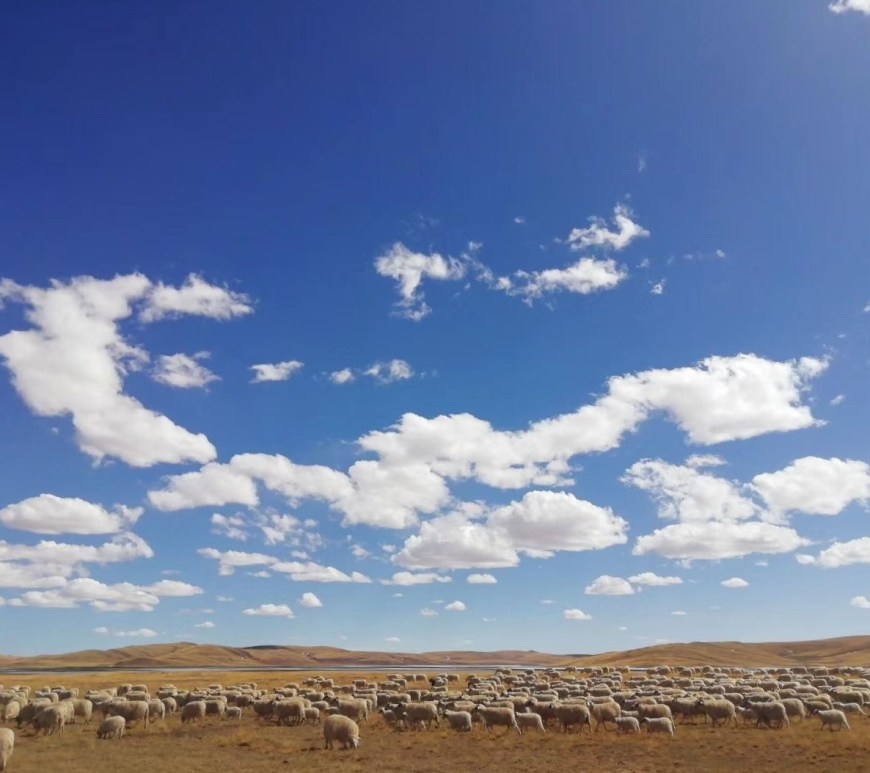
Our August cover image by Guiyao Zhou (East China Normal University) shows how livestock grazing activities potentially alter many ecosystem functions such as carbon sequestration. But these effects can be markedly regulated by the associated global change factors (e.g., warming, nitrogen addition and drought). Here Guiyao shares the story behind the cover image and the grassland ecosystem work it represents.  These photos were taken in Wayan mountain, a very beautiful alpine meadow … Continue reading Cover stories: recovering beauty

Measuring ecosystem functioning to assess river restoration success

Shortlisted for this year’s Southwood Prize early career researcher award, André Frainer talks us through his work on river restoration and habitat heterogeneity. When rivers are drained, dredged, channelised, or altered in a thousand different ways, they face an almost imminent loss of biodiversity and important ecological functions. This is often a consequence of the loss of habitat diversity and the fauna and flora that … Continue reading Measuring ecosystem functioning to assess river restoration success

Rewilding in Britain: a case study

Over the past few weeks, The Applied Ecologist’s Blog and Relational Thinking have been exploring the hot topic of rewilding from a number of different interdisciplinary and management angles.  Now Sophie Wynne-Jones and Chris Sandom turn their focus to the UK as a, perhaps unexpected, example of where rewilding has grown. If you ask someone in Britain whether or not they have heard of rewilding, … Continue reading Rewilding in Britain: a case study

Good fences make good neighbours

For the latest post in our joint series with Relational Thinking, Stephen Carver compares passive and active approaches to rewilding and discusses his contribution to the new book in the Ecological Reviews series. The opening paragraphs of my chapter on land abandonment neatly mirror some of the online discussions I’ve been having about rewilding recently, the latest of which concerns the origins of rewilding in … Continue reading Good fences make good neighbours

Trophic rewilding: restoring top-down food web processes to promote self-managing ecosystems

Continuing our series on rewilding, Jens-Christian Svenning from the Center for Biodiversity Dynamics in a Changing World, Aarhus University, focuses in on trophic rewilding. Here he considers the foundations and open-ended nature of this approach, and explains why there is still plenty of room for more research in this area. There is rapidly increasing interest in rewilding as an alternative to more human-controlled approaches to … Continue reading Trophic rewilding: restoring top-down food web processes to promote self-managing ecosystems

Getting everyone on board with rewilding

To celebrate the release of the latest Ecological Reviews, Rewilding, we’ve invited some of the book’s authors and editors to share their insights into this hotly debated topic from both applied and interdisciplinary perspectives. The posts will be shared here on The Applied Ecologist’s Blog and over at Relational Thinking. Kicking off the series, Nathalie Pettorelli (Zoological Society of London) explores the challenging concept of reaching … Continue reading Getting everyone on board with rewilding

A new method for predicting time to recovery during restoration

Associate Editor, Lars Brudvig looks at the recently published Review, Advancing restoration ecology: A new approach to predict time to recovery by Rydgren et al. Restoring degraded ecosystems is a global priority, hailed for its potential to recover biodiversity and promote ecosystem functioning and services. Yet successful restoration doesn’t happen overnight. It may take years, decades, or longer for restoration projects to meet their goals … Continue reading A new method for predicting time to recovery during restoration

Abandoned pastures regenerate to low diversity forests without intervention

To start the week, Associate Editor, Cate Macinnis-Ng comments on the recently published article, Abandoned pastures cannot spontaneously recover the attributes of old-growth savannas by Cava et al. Savanna ecosystems of the seasonally dry tropics cover almost 20% of the earth’s land area. Maintenance of biodiversity in savannas relies on the right amounts of grazing and fire. While overgrazing of savannas is a common threat, … Continue reading Abandoned pastures regenerate to low diversity forests without intervention

Finding evidence for land restoration strategies

Restoration has never been more important, with almost a third of the world’s land surface degraded. But what exactly is restoration? And how do we know if it works? Madelon Lohbeck continues our Special Feature series on Functional traits in agroecology. Read the full article, Trait-based approaches for guiding the restoration of degraded agricultural landscapes in East Africa. More than 1.5 billion of the world’s poorest … Continue reading Finding evidence for land restoration strategies

Tracking restoration of population diversity via the portfolio effect

In this week’s blog, Associate Editor, Andre Punt comments on the recent paper by Yamane et al. Tracking restoration of population diversity via the portfolio effect. Many fisheries are managed to avoid populations dropping below threshold levels, and closing them to harvest when this happens. The implications of closures can be substantial for those who gain commercial or recreational benefits from harvest, as well as … Continue reading Tracking restoration of population diversity via the portfolio effect