On the horizon: Deforestation expansion of plantations and infrastructure threaten Indo-Malay island species

The latest post in our ‘On the horizon’ series sees Nafeesa Esmail and Alice Hughes highlight the potential effects of a developing palm oil industry on Southeast Asisa’s forests.  Southeast Asia’s forests are some of the most diverse on Earth, representing a number of global biodiversity hotspots. Yet this region is also undergoing an unparalleled rate of deforestation. Given the small ranges of many species … Continue reading On the horizon: Deforestation expansion of plantations and infrastructure threaten Indo-Malay island species
Getting everyone on board with rewilding

To celebrate the release of the latest Ecological Reviews, Rewilding, we’ve invited some of the book’s authors and editors to share their insights into this hotly debated topic from both applied and interdisciplinary perspectives. The posts will be shared here on The Applied Ecologist’s Blog and over at Relational Thinking. Kicking off the series, Nathalie Pettorelli (Zoological Society of London) explores the challenging concept of reaching … Continue reading Getting everyone on board with rewilding

Complex landscapes and complex decisions for farmland conservation

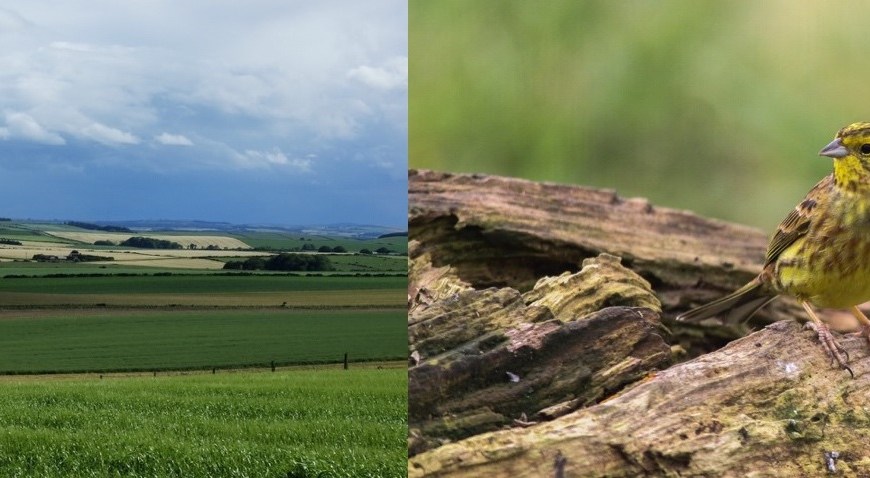
In this post, discover how farmland birds and agri-environmental schemes went from dissertation topic, to British Ecological Society Annual Meeting talk, to published paper for one early career researcher. Gergana Daskalova (University of Edinburgh) describes the evolution of Population responses of farmland bird species to agri‐environment schemes and land management options in Northeastern Scotland. Farmland birds: decades of decline and mixed benefits of agri-environmental schemes … Continue reading Complex landscapes and complex decisions for farmland conservation

Editor’s Choice 56:2 – A trait-based approach for forest ecosystem management

The Editor’s Choice for issue 56:2 is written by Associate Editor, Alex Fajardo.  The selected article, Maintaining ecosystem properties after loss of ash in Great Britain by Louise Hill et al, focuses on the importance of using plant functional traits to predict potential changes to an ecosystem, following the loss of a key species. In their study, Maintaining ecosystem properties after loss of ash in Great … Continue reading Editor’s Choice 56:2 – A trait-based approach for forest ecosystem management

Associate Editor Mentoring – welcome to our new mentees 2019-20

Journal of Applied Ecology offers a two-year mentoring opportunity for early career researchers to gain experience of the Associate Editor role on a journal. Each mentee works with an assigned Senior Editor mentor and the Editorial Office. They have the opportunity to gain insights into the publishing and review processes as they handle submissions in an Associate Editor capacity. We’re pleased to welcome nine new … Continue reading Associate Editor Mentoring – welcome to our new mentees 2019-20

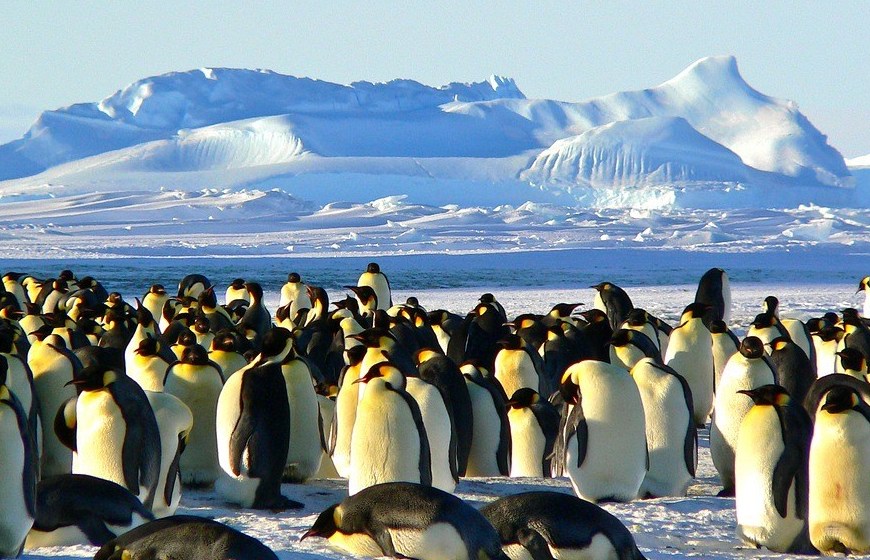
On the horizon: Climate change and the capacity of Antarctic benthos to store carbon

Kicking off our On the horizon series of posts about emerging issues in conservation and applied ecology, Nathalie Pettorelli explores how climate change and melting ice in the Antarctic could affect carbon storage on a global scale. Just a few days ago, news outlets around the world were reporting on the findings from a study published in the Proceedings of the National Academy of Sciences … Continue reading On the horizon: Climate change and the capacity of Antarctic benthos to store carbon

Conservation issues on the horizon

Following the recent publication of Sutherland et al.’s A Horizon Scan of Emerging Issues for Global Conservation in 2019, a selection of the authors have come together to produce a series of posts on key issues emerging within conservation and applied ecology. Over the coming few weeks, we will be sharing ‘On the horizon’ commentaries on the future of conservation and management related to climate … Continue reading Conservation issues on the horizon

Deer prevent severe canopy fires, save oak trees and contribute to ecosystem carbon storage

While deer may impact tree regeneration, they can also help prevent the spread of severe wildfires. Given increased likelihood of extreme climatic events, such as droughts, Miguel Bugalho explains how we need to consider both the positive and negative effects of wild ungulate grazing.  Deer mitigate severe wildfires Wild ungulate herbivores, namely deer, may negatively affect tree regeneration through consumption and damage of young seedlings … Continue reading Deer prevent severe canopy fires, save oak trees and contribute to ecosystem carbon storage

Welcome to our new Associate Editors – 2019

Towards the end of last year and the start of this, we welcomed some new faces to our Editorial Board. Get to know our new Associate Editors: Amy J. Dickman Wild Conservation Research Unit, Department of Zoology, University of Oxford Amy has more than 20 years’ experience working on large carnivores in Africa, specialising in human-carnivore conflict. She has an MSc from Oxford University and … Continue reading Welcome to our new Associate Editors – 2019

Cover stories: standing out in the sagebrush

The cover photo for issue 56:1 was taken by Rick McEwan. It features a male sage grouse displaying in sagebrush. Many sage grouse breeding habitats fall on private rangeland, and therefore partnerships between ranchers and conservationists are crucial for this species. The image accompanies the article, Unintended habitat loss on private land from grazing restrictions on public rangelands, by Runge et al, which is a … Continue reading Cover stories: standing out in the sagebrush