Video: What is the future of peer review in ecology?

It’s Peer Review Week and many are thinking about the course peer review may take in the future. What better time to watch the video of our panel discussion on the future of peer review in ecology from the British Ecological Society Annual Meeting, 2016? This post was original shared by Alice Plane on the BES website. Peer review is critical to the research process but … Continue reading Video: What is the future of peer review in ecology?

If you build it, will it work?

Following the recent article, Evaluating the success of wildlife crossing structures using genetic approaches and an experimental design: Lessons from a gliding mammal by Kylie Soanes et al., Associate Editor, Yolanda Wiersma explores the world of wildlife crossing structures. Large-scale restoration projects represent human optimism in the face of anthropogenic change. In response to the negative effects of human activities on habitat loss and fragmentation, … Continue reading If you build it, will it work?

More than just a pretty cover – enhancing plant conservation on green roofs

Following Walker and Lundholm’s recent Journal of Applied Ecology paper, Designed habitat heterogeneity on green roofs increases seedling survival but not plant species diversity, Associate Editor Cate Macinnis-Ng discusses enhancing the ecological benefits of the green roof. Famed for their spectacular and lush green terraces of trees, shrubs and vines, the Hanging Gardens of Babylon were perhaps amongst the first green roofs. Modern-day green roofs are … Continue reading More than just a pretty cover – enhancing plant conservation on green roofs

INTECOL 2017 – One week in China: Insights from Marc Cadotte

As advertised in a previous blog post, the international conference of ecology INTECOL 2017 was held last week in Beijing, China. This year’s conference theme was Ecology and Civilization in a Changing World. Marc Cadotte, Senior Editor of Journal of Applied Ecology, attended the conference and wrote a nice blog post for the EEB and Flow blog, in which he shares his views and thoughts about INTECOL 2017. The… Continue reading INTECOL 2017 – One week in China: Insights from Marc Cadotte

Finding missing branches: Phylogenetic patterns of plant community diversity in restored and remnant tallgrass prairies

Originally posted on The Applied Ecologist:
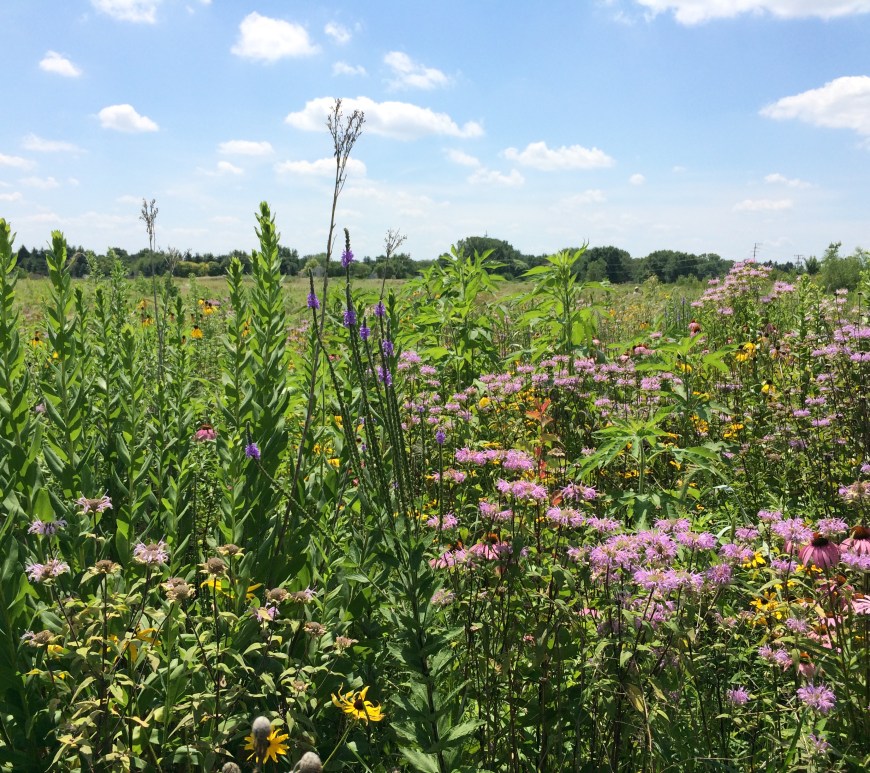
To round off our series of posts from the Special Feature, Toward prediction in the restoration of biodiversity, we’re sharing Rebecca Barak’s post from earlier this year on her article Restored tallgrass prairies have reduced phylogenetic diversity compared with remnants.  Tallgrass prairie is one of the most endangered habitats on earth. In my home state of Illinois, USA, back in 1820,… Continue reading Finding missing branches: Phylogenetic patterns of plant community diversity in restored and remnant tallgrass prairies

Landscape structure and human management influence biodiversity value of livestock production systems

In this post Associate Editor, Elizabeth Nichols  and student, Jordan Reyes comment on the recent paper by Alvarado et al.,The role of livestock intensification and landscape structure in maintaining tropical biodiversity, published in Journal of Applied Ecology. The United Nations predicts that by the year 2050 the world population will have increased by 34%, reaching nearly 9.7 billion people. How can we support this growing human … Continue reading Landscape structure and human management influence biodiversity value of livestock production systems

Tree islands for tropical forest restoration: the outlook is rosy after 10 years

Source: Tree islands for tropical forest restoration: the outlook is rosy after 10 years Shared from Natural history of Ecological Restoration, Leighton Reid comments on his article, Local tropical forest restoration strategies affect tree recruitment more strongly than does landscape forest cover. The article was recently published as part of the Toward prediction in the restoration of biodiversity Special Feature in Journal of Applied Ecology. Planting tree … Continue reading Tree islands for tropical forest restoration: the outlook is rosy after 10 years

Poaching problems? More rangers, please…

Sharing his insights into on-the-ground conservation, Maarten Hofman (University of Goettingen, Germany & Bangor University, UK) discusses Moore et al.’s recent article, Are ranger patrols effective in reducing poaching-related threats within protected areas, and the wider implications for tackling illegal poaching. Rangers are the heavy duty machinery in every protected area management’s human resource arsenal. Their list of duties ranges from public outreach and environmental … Continue reading Poaching problems? More rangers, please…

Variation in soil microbial communities leads to variation in plant communities

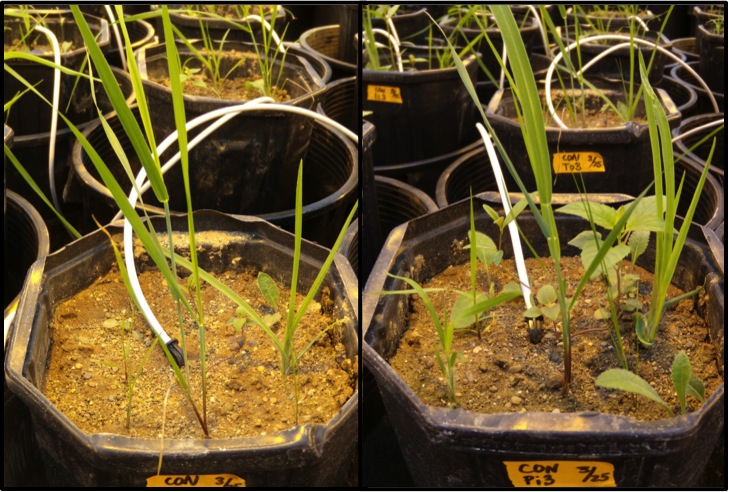
In the latest in our series of blogs for the Toward prediction in the restoration of biodiveristy Special Feature, Jonathan Bauer discusses his article, Effects of between-site variation in soil microbial communities and plant-soil feedbacks on the productivity and composition of plant communities. All articles from the Special Feature are available in issue 54.4 of Journal of Applied Ecology. Microorganisms in the soil have strong effects on plant … Continue reading Variation in soil microbial communities leads to variation in plant communities

Video: Population density – a new method using remote cameras and radio collars

In this latest post, Jesse Whittington shares insights into new models for monitoring wildlife, including grizzly bears. Don’t forget to watch the video of some bears captured on camera! Whittington and colleagues’ Open Access article, Generalized spatial mark–resight models with an application to grizzly bears is available in the Journal of Applied Ecology. Wildlife managers around the world strive to estimate population abundance and the related … Continue reading Video: Population density – a new method using remote cameras and radio collars