When to burn and where?

Commentary on Brooke Williams’ article, Optimising the spatial planning of prescribed burns to achieve multiple objectives in a fire-dependent ecosystem by Associate Editor, Cate Macinnis-Ng. Following on from Brooke’s own blog post, Cate gives a personal spin on her own experience of fire events and of editing the paper. This manuscript arrived in my inbox within days of the Port Hills fire outside Christchurch. When it comes to … Continue reading When to burn and where?

Prescribed burns for multiple needs – is optimising spatial planning the solution to conflicting fire management objectives?

Following our recent Editor’s Choice that looked at prescribed burns in African savanna, this latest blog by Brooke Williams turns to fire management and prescribed burns in Australia. The blog supports Williams’ recent paper, Optimising the spatial planning of prescribed burns to achieve multiple objectives in a fire-dependent ecosystem. Fire management is an important aspect of ensuring the safety of Australians living within fire-prone environments. It … Continue reading Prescribed burns for multiple needs – is optimising spatial planning the solution to conflicting fire management objectives?

Wet wetlands restore better

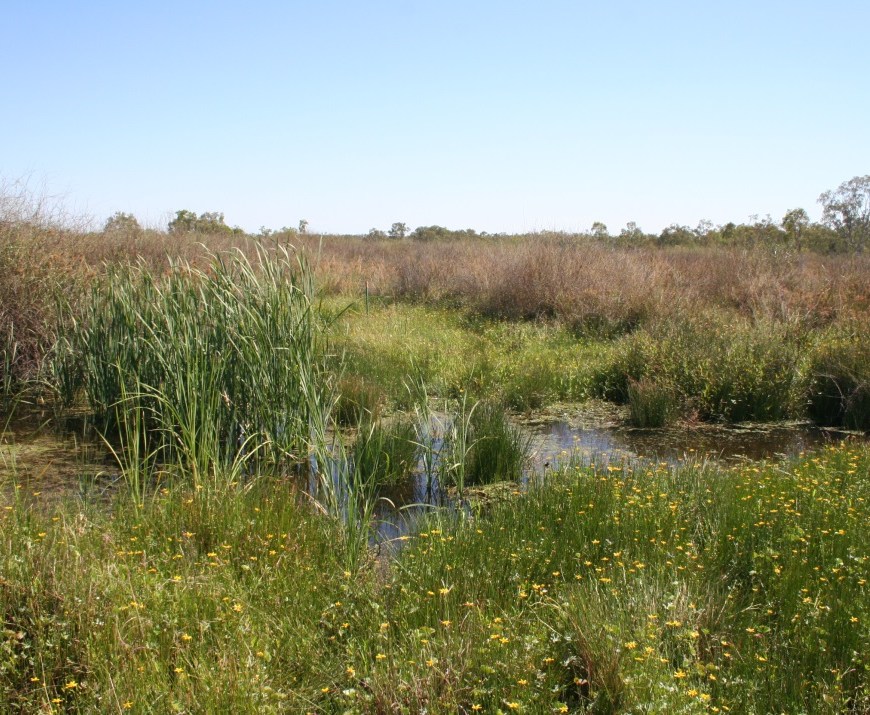
With Plant Conservation Day in mind, Samantha Dawson’s post discusses characteristics of wetland plants and her new paper, Plant traits of propagule banks and standing vegetation reveal flooding alleviates impacts of agriculture on wetland restoration. Many of the world’s wetlands are highly degraded and they are one of the most threatened types of ecosystems. To attempt to halt or reverse this trend, there are lots of … Continue reading Wet wetlands restore better

The Yellow Sea – a rapidly narrowing bottleneck for migrating shorebirds

The shrinking of mudflats along the coasts of the Chinese Yellow Sea is an increasing problem for birds trying to migrate between Siberia (for breeding) and Australia and New Zealand (for survival when not breeding). Research by an international team of ecologists from The Netherlands, Australia and China, led by the Chair in Global Flyway Ecology at the University of Groningen and staff member of … Continue reading The Yellow Sea – a rapidly narrowing bottleneck for migrating shorebirds

A simple recipe for regenerating floodplain forests: add water and exclude browsers

In this post Gillis Horner, Shaun Cunningham, James Thomson, Patrick Baker and Ralph Mac Nally discuss their recent paper ‘Recruitment of a keystone tree species must concurrently manage flooding and browsing’ Floodplain forests are threatened by the three-pronged attack of land-use change, river regulation and climate change. Establishing new seedlings – a fundamental component of any strategy to sustain these vital forests – depends mainly … Continue reading A simple recipe for regenerating floodplain forests: add water and exclude browsers

The importance of small patches of habitat for conservation

In this post Associate Editor Akira Mori discusses a paper he recently handled by Ayesha Tulloch and colleagues ‘Understanding the importance of small patches of habitat for conservation’ Landscape perspectives are important for land management in human-modified ecosystems, and the related development of land-clearing policy. Informed by a large body of macroecological theory and field research, scientists as well as practitioners have long discussed and … Continue reading The importance of small patches of habitat for conservation

Bird communities in a land of droughts and flooding rains: riparian tree cover as climate refugia

In this post Dale Nimmo, Angie Haslem and Andrew Bennett discuss their recent paper ‘Riparian tree cover enhances the resistance and stability of woodland bird communities during an extreme climatic event’ You can also watch a slide cast about this research and related papers, in the form of an Australian bush poem. Something alarming happened in the woodlands of southern Australia last decade. The birds … Continue reading Bird communities in a land of droughts and flooding rains: riparian tree cover as climate refugia

Species assignment from trace DNA – evaluating the reliability of DNA tests

In this post Anna MacDonald discusses her recent paper with Stephen Sarre ‘Species assignment from trace DNA sequences: an in silico assessment of the test used to survey for foxes in Tasmania’ Which species occur in an area and how do they interact with one another? These are crucial questions for ecologists and wildlife managers to address, yet answering them is rarely straightforward. Many animals … Continue reading Species assignment from trace DNA – evaluating the reliability of DNA tests

Fighting fire with fire – using prescribed burning to protect threatened plant communities

In this post Brett Murphy discusses his recent paper with colleagues Mark Cochrane and Jeremy Russell-Smith ‘Prescribed burning protects endangered tropical heathlands of the Arnhem Plateau, northern Australia’ In many fire-prone landscapes, wildfires threaten a range of societal and ecological values, including human life and property, crops and domestic livestock, as well as biodiversity and ecosystem services. One of the most important tools humans have … Continue reading Fighting fire with fire – using prescribed burning to protect threatened plant communities

Managing uncertainties associated with global declines of apex predators

Over three days we have posted a collection of blog posts on a topical Forum discussion published in Issue 2 about the methods used in wildlife conservation and in particular the role of dingoes in conservation. Following acceptance of a peer-reviewed Forum critique of another article in the Journal it is the Journal’s process to invite the original authors to write a peer-reviewed response to … Continue reading Managing uncertainties associated with global declines of apex predators