LGBTQ+ inclusion in science and society: Resilience in uncertain times and the importance of community

To celebrate Pride Month 2025, we are excited to share a series of blogs and podcasts highlighting useful articles and resources for LGBTQIA+ ecologists and researchers. In each post, the authors behind these resources explain what they are, how they came to produce them, and why they are important. The authors Nathan Alexander (he/him)  ResearchGate: https://www.researchgate.net/profile/Nathan-Alexander   Bluesky: smammalbio@bsky.social  Jaime Coon (they/them, she/her)  ResearchGate: https://www.researchgate.net/profile/Jaime-Coon   Instagram: … Continue reading LGBTQ+ inclusion in science and society: Resilience in uncertain times and the importance of community

Agostina Torres: The order and timing of removal of invasive species influence community reassembly

Shortlisted for the 2024 Southwood Prize Agostina Torres introduces us to her latest research which evaluated the dependence of community reassembly on inverse priority effects by experimentally removing the target invasives in field and mesocosm communities. About the research Overview The study emerged as part of my PhD doctorate. Along with my supervisors, Drs. Martin Nuñez and Mariano Rodriguez-Cabal, we were trying to understand why … Continue reading Agostina Torres: The order and timing of removal of invasive species influence community reassembly

Contributing to the conversation on community engagement in ecosystem restoration

Authors Judy Kingsbury and Marian Farrior share proven practices developed from existing community-based restoration programmes to foster similar programmes around the world. Our article, co-authored with Bradley Herrick, was inspired by the UN Decade on Ecosystem Restoration and the call to halt and reverse the degradation of Earth’s ecosystems. We share the principles, practices and frameworks behind the Arboretum’s ‘Restoration Team Leader Program’, for volunteers, … Continue reading Contributing to the conversation on community engagement in ecosystem restoration

Rainbow Research: Life

The Rainbow Research series returns to the British Ecological Society to celebrate Pride month 2022! These special posts promote visibility and share stories from STEM researchers who belong to the LGBTQIA2S+ community. Each post is connected to one of the themes represented by the colours in the Progress Pride flag (Daniel Quasar 2018). In this post, Daniel Trotter shares his story on the theme of ‘Life’. It took … Continue reading Rainbow Research: Life

Rainbow Research: A Colour Prism

The Rainbow Research series returns to the British Ecological Society to celebrate Pride Month 2022! These special posts promote visibility and share stories from STEM researchers who belong to the LGBTQIA2S+ community. Each post is connected to one or more of the themes represented by the colours in the Progress Pride flag (Daniel Quasar 2018). In this post, Luiz Felipe Cordeiro Serigheli shares their story on a prism … Continue reading Rainbow Research: A Colour Prism

Rainbow Research: Life

To celebrate UK Pride Month, the British Ecological Society journals have launched ‘Rainbow Research’ – a blog series which aims to promote visibility of STEM researchers form the LGBTQ+ community by connecting each post to a theme represented by one of the colours shown in the Progress Pride flag. In this post, Lewis Bartlett uses ‘Life’ as inspiration to write about being a queer ecologist … Continue reading Rainbow Research: Life

Putting ecology theory to work: trends and opportunities in ecological restoration

Following her recently published Review, Links between community ecology theory and ecological restoration are on the rise, author Claire E. Wainright discusses taking a global perspective on restoration ecology. Community ecology and restoration ecology are often considered complementary fields. Ecologists recognize that the science of ecology provides solid conceptual foundations on which to construct hypothesis-driven restoration research. By extension, restoration offers unique opportunities to empirically … Continue reading Putting ecology theory to work: trends and opportunities in ecological restoration

How does one effectively engage communities for conservation? Try becoming PARTNERS

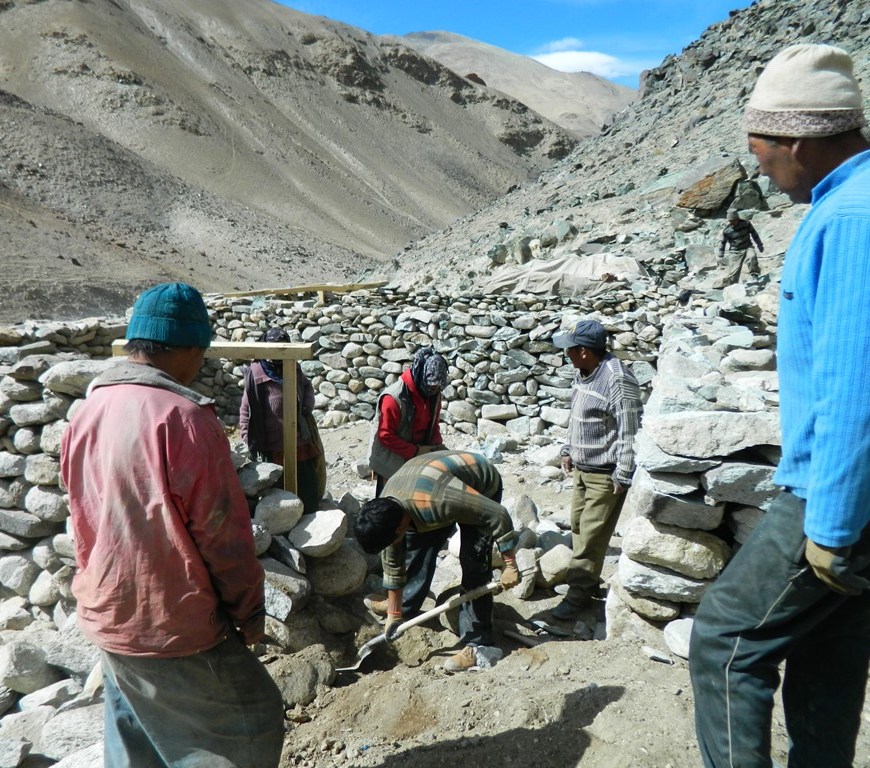
With a focus on community engagement, Matthias Fiechter, Charudutt Mishra, Steve Redpath, Brad Rutherford and Juliette Young, discuss the PARTNERS principle and importance of working with people towards conservation efforts. This post supports their recent Journal of Applied Ecology Practitioner’s Perspective, Building partnerships with communities for biodiversity conservation: lessons from Asian mountains. We’re currently witnesses to – and in many ways complicit in – the sixth mass … Continue reading How does one effectively engage communities for conservation? Try becoming PARTNERS

Northern mixed-grass prairie bounces back, but slowly: reflections on a 33 year long grazing experiment

In this post Julie Kray, Agricultural Science Research Technician, USDA-ARS & Lauren Porensky, Ecologist, USDA-ARS discuss the recent paper ‘Thresholds and gradients in a semi-arid grassland: long-term grazing treatments induce slow, continuous and reversible vegetation change’ How do we strike a balance between an economically sustainable amount of grazing, and an ecologically sustainable amount? This is the central challenge in managing grazed landscapes around the … Continue reading Northern mixed-grass prairie bounces back, but slowly: reflections on a 33 year long grazing experiment

Showing the way for carnivore conservation: lions can survive without fences with the help of Community Conservancies

In this post Sara Blackburn discusses her paper ‘Human–wildlife conflict, benefit sharing and the survival of lions in pastoralist community-based conservancies‘ Recent work on African lions indicates that they’re in trouble. Widespread declines have been identified across the continent, except in intensively managed fenced reserves, signposting a bleak future for free-ranging lions. This is due to conflict with people; lions kill livestock and, understandably, they … Continue reading Showing the way for carnivore conservation: lions can survive without fences with the help of Community Conservancies