Strawberry fields forever – with Spanish translation

In this post, Associate Editor, Cristina Garcia comments on the effects of pesticides on pollinators and the recent article by Horth & Campbell, Supplementing small farms with native mason bees increases strawberry size and growth rate. Cristina has also provided a Spanish translation of this post. Most plant species, including crops, require mutualistic interactions with animals to pollinate their flowers and fulfill their demographic cycle. The … Continue reading Strawberry fields forever – with Spanish translation

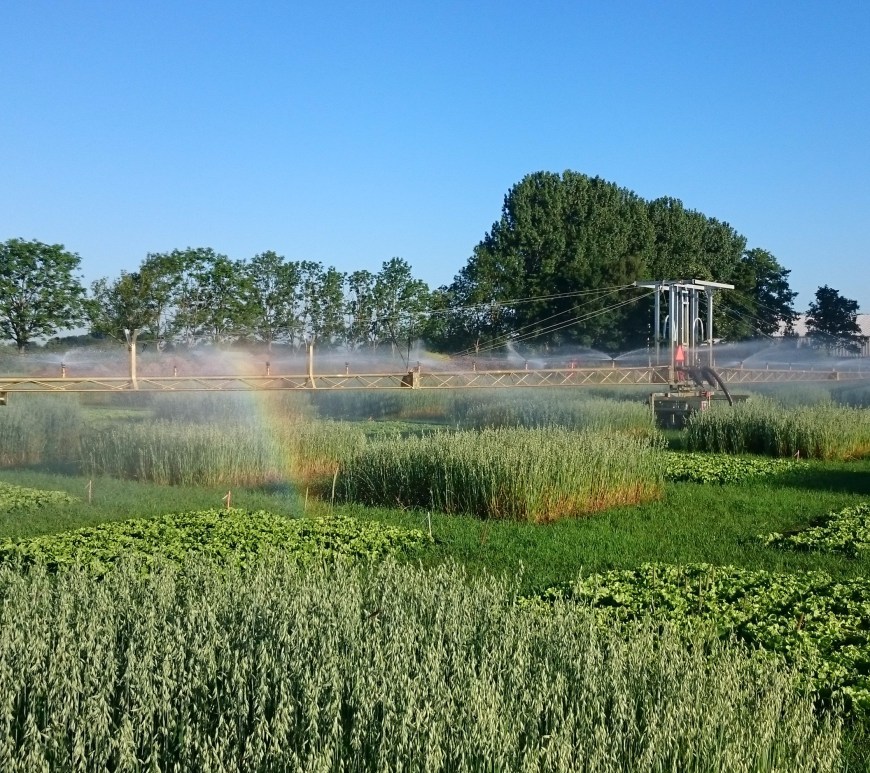
Testament of cover crops – with Dutch translation

In this post, Janna Barel shares thoughts on the legacies plants leave, the benefits of cover crops and insights from her recent Journal of Applied Ecology paper, Legacy effects of diversity in space and time driven by winter cover crop biomass and nitrogen concentration. Janna has also included a Dutch translation of this post. Journal of Applied Ecology is dedicated to making papers more accessible and … Continue reading Testament of cover crops – with Dutch translation

Honeybees and the boom and bust cycle of mass flowering crops

In this post Associate Editor Romina Rader discusses a recent paper she handled from Fabrice Requier and colleagues ‘The carry-over effects of pollen shortage decrease the survival of honeybee colonies in farmlands‘ When we think about pollinators within intensive agricultural systems, mass flowering crops (MFCs) seemingly act as both heroes and villains.  On the upside, many pollinators congregate at local mass flowering crops during the … Continue reading Honeybees and the boom and bust cycle of mass flowering crops

Climate change and food security

In this post, Adam Frew discusses his paper ‘Increased root herbivory under elevated atmospheric carbon dioxide concentrations is reversed by silicon-based plant defences‘ As the global climate changes the global population continues to rise, we are faced with the daunting challenge of achieving sustainable crop production to meet the increasing demand for food. Professor John Beddington in 2009, UK chief scientist at the time, highlighted … Continue reading Climate change and food security

Silent Spring redux? Insecticides cascade up a food chain to poison carnivores

In this post, Ian Kaplan discusses a paper he recently handled by Margaret Douglas, Jason Rohr and John Tooker “Neonicotinoid insecticide travels through a soil food chain, disrupting biological control of non-target pests and decreasing soybean yield.“. The authors have also written a practitioner summary  and a press release “Insecticides foster ‘toxic’ slugs, reduce crop yields” for this paper. Despite being published >50 years ago, almost everyone … Continue reading Silent Spring redux? Insecticides cascade up a food chain to poison carnivores