
A decadal study reveals that restoration guided by an umbrella species does not reach target levels

Author Albin Larsson Ekström discusses how their latest research evaluates the decadal effects of restoration aimed at the white-backed woodpecker on the biodiversity of saproxylic beetles. The study suggests that, for restoration to be successful, both continuous and repeated restoration efforts are needed. Restoration guided by the umbrella species concept A long history of intensive forest management has transformed the forests of Sweden into well-managed … Continue reading A decadal study reveals that restoration guided by an umbrella species does not reach target levels
Natural recruitment should be a key goal of tree planting projects

Anna Gee, a PhD student at Imperial College London, talks us through ways in which we can help to restore forests through natural recruitment in this standalone piece. How do we decide what trees to plant for forest restoration? The approach of many restoration projects is to find what is known as a reference forest, a forest that has not been disturbed much by humans, … Continue reading Natural recruitment should be a key goal of tree planting projects

Exotic eucalypts in restoration? It can work

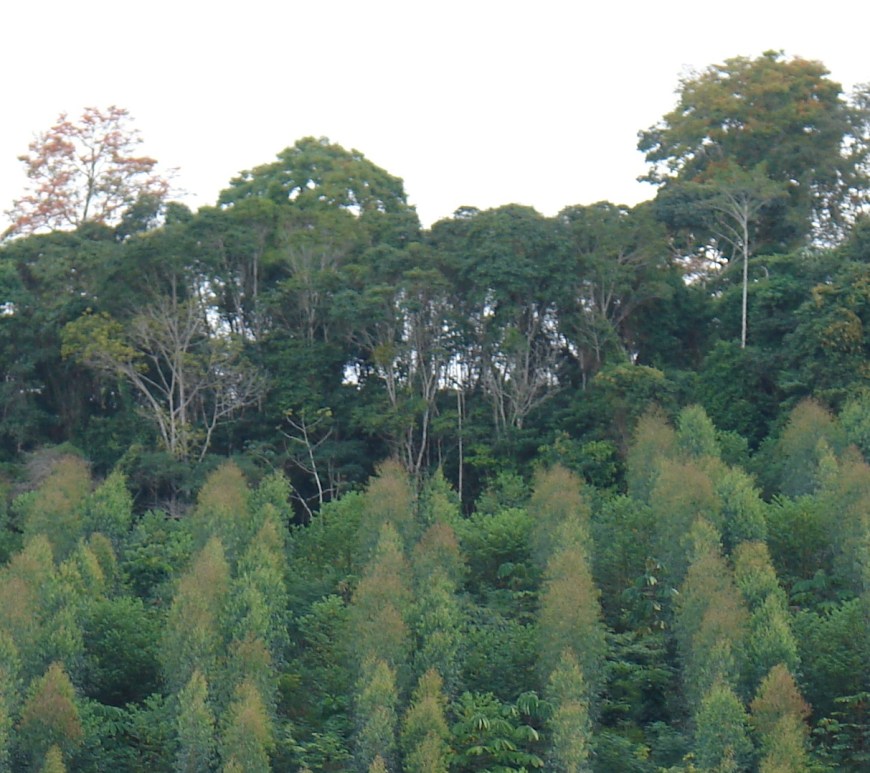
Achieving ambitious, yet cost-effective, global forest restoration goals requires creative approaches. Nino T. Amazonas, Pedro H. S. Brancalion & Karen D. Holl present a novel strategy from Brazil, using mixed plantations of exotic eucalypts and native tree species as a transitional stage for tropical forest restoration. Many countries worldwide have committed large portions of their territory to forest landscape restoration, which has been widely advertised … Continue reading Exotic eucalypts in restoration? It can work

How to reduce the financial risks associated with restoration efforts?

High variation in biodiversity recovery in restored forests at landscape scale can increase the risk associated with investments in restoration programmes. Crouzeilles  et al. summarise their new approach, which aims to predict and map landscape variation in forest restoration success and thus reduce the unpredictability associated with financial risk. Investors operating in different businesses usually avoid high-risk transactions, which likely constrains the flow of financial resources … Continue reading How to reduce the financial risks associated with restoration efforts?

How to keep the mycorrhizae? The more hosts you leave, the more symbionts you get

How can tree retention mediate the effects of human-introduced disturbance on ectomycorrhizal fungi? Nahuel Policelli  and Senior Editor, Martin Nuñez discuss the recent article, The significance of retention trees for survival of ectomycorrhizal fungi in clear‐cut Scots pine forests. One of the most important above-belowground interactions is that between plants and mycorrhizal fungi. Acting as symbionts, mycorrhizal fungi are involved in plants’ nutrient uptake and … Continue reading How to keep the mycorrhizae? The more hosts you leave, the more symbionts you get