A stark warning for UK blanket bog

Jonny Ritson talks us through the latest modelling study, conducted alongside colleagues, aiming to determine how suitable future conditions will be for both peat accumulation and Sphagnum survival in the UK. Bioclimatic envelope models have been used as a tool to map the climate conditions under which specific habitats occur. By defining the conditions suitable for peat formation, for example, we can then use projections of future … Continue reading A stark warning for UK blanket bog

Wide-scale rangeland condition monitoring: Measurement of increased vegetation cover following stock removal and conservation management

Angus Retallack explains how, using remote sensing data over a 22-year observation period, vegetation recovery after the removal of livestock and the introduction of conservation-focused management can be assessed. Arid and semi-arid rangelands cover close to 50% of the Earth’s land surface and are relied upon by a diverse range of stakeholders including Indigenous people, pastoralists and environmental conservationists. Sustainable use and conservation of these … Continue reading Wide-scale rangeland condition monitoring: Measurement of increased vegetation cover following stock removal and conservation management

Do we really need to plant a trillion trees? Tree islands are an ecologically and economically sound strategy for tropical forest recovery

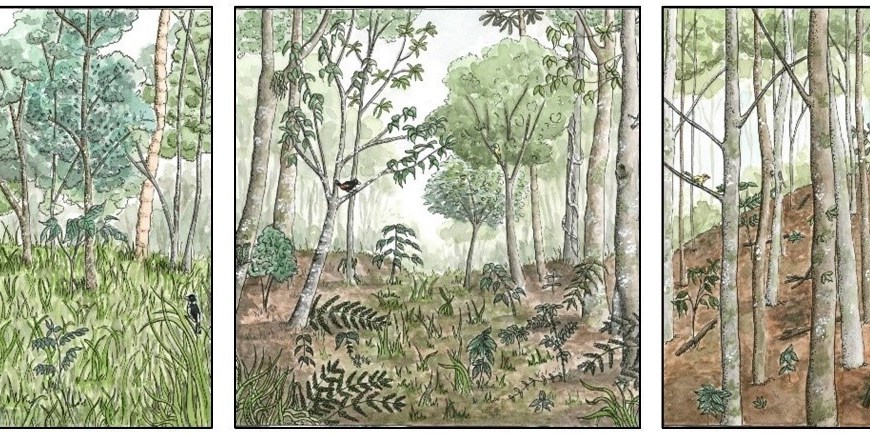
In their new research, Karen Holl, Leighton Reid and colleagues compare the use of tree islands to other strategies for tropical forest restoration. Here they share their findings, including ecological and economic benefits, as well as lessons to carry forward. A video summary of the research is also available in English and Spanish. A version of this blog was originally shared by Natural History of … Continue reading Do we really need to plant a trillion trees? Tree islands are an ecologically and economically sound strategy for tropical forest recovery