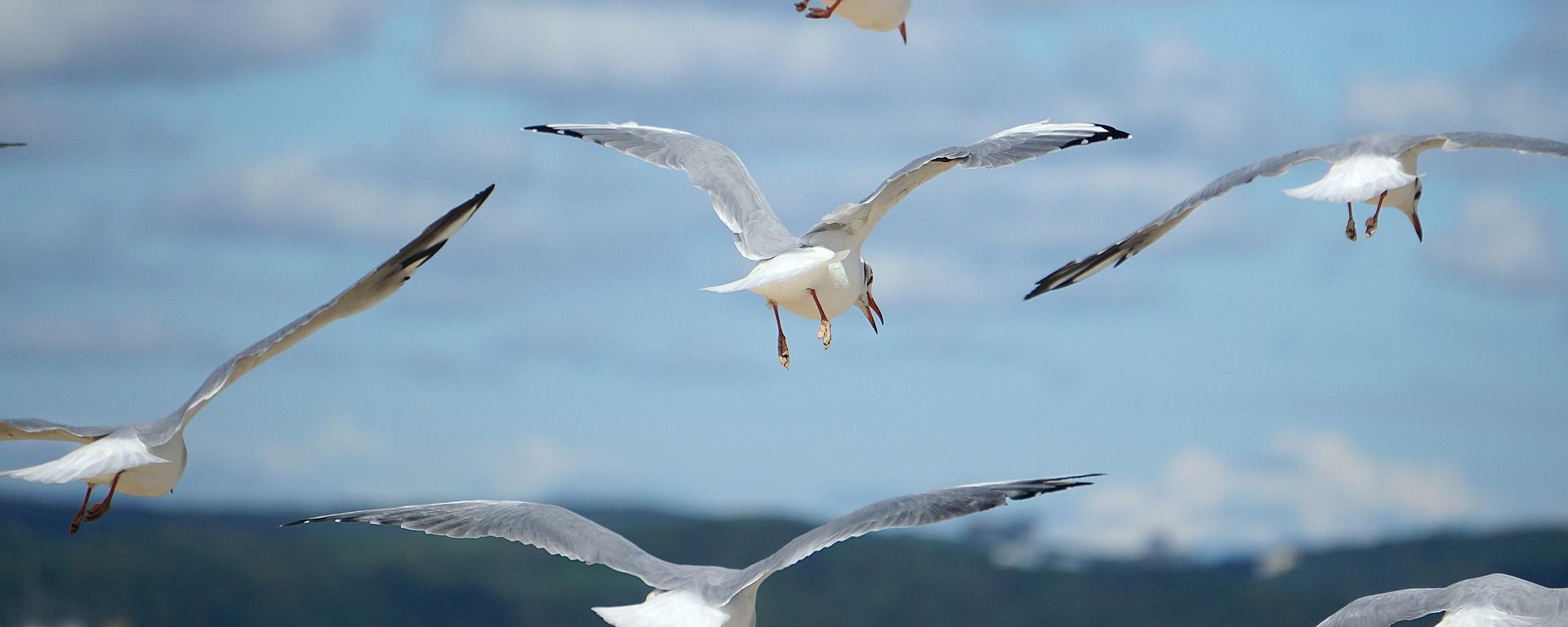
Protecting migratory species requires countries to work together across the full routes these animals travel each year. For land and waterbirds, the idea of “global flyways”, the broad paths birds follow between breeding and non‑breeding areas, has been an effective way to organise international conservation. Flyways help unite governments, researchers, and conservation groups, guide research and funding, and coordinate long‑term action. Recently, scientists have identified similar routes for seabirds across the ocean, termed the marine flyways. This creates an important opportunity to apply the flyways approach in the ocean, to support the conservation of the most threatened groups of birds.
In this work, we bring together existing, relevant information on the six marine flyways and the seabirds that use them. This includes identifying
- which countries have responsibility for key parts of the flyways
- which species are using the flyways
- where globally important sites have been identified
- the main pressures facing seabirds in each flyway.
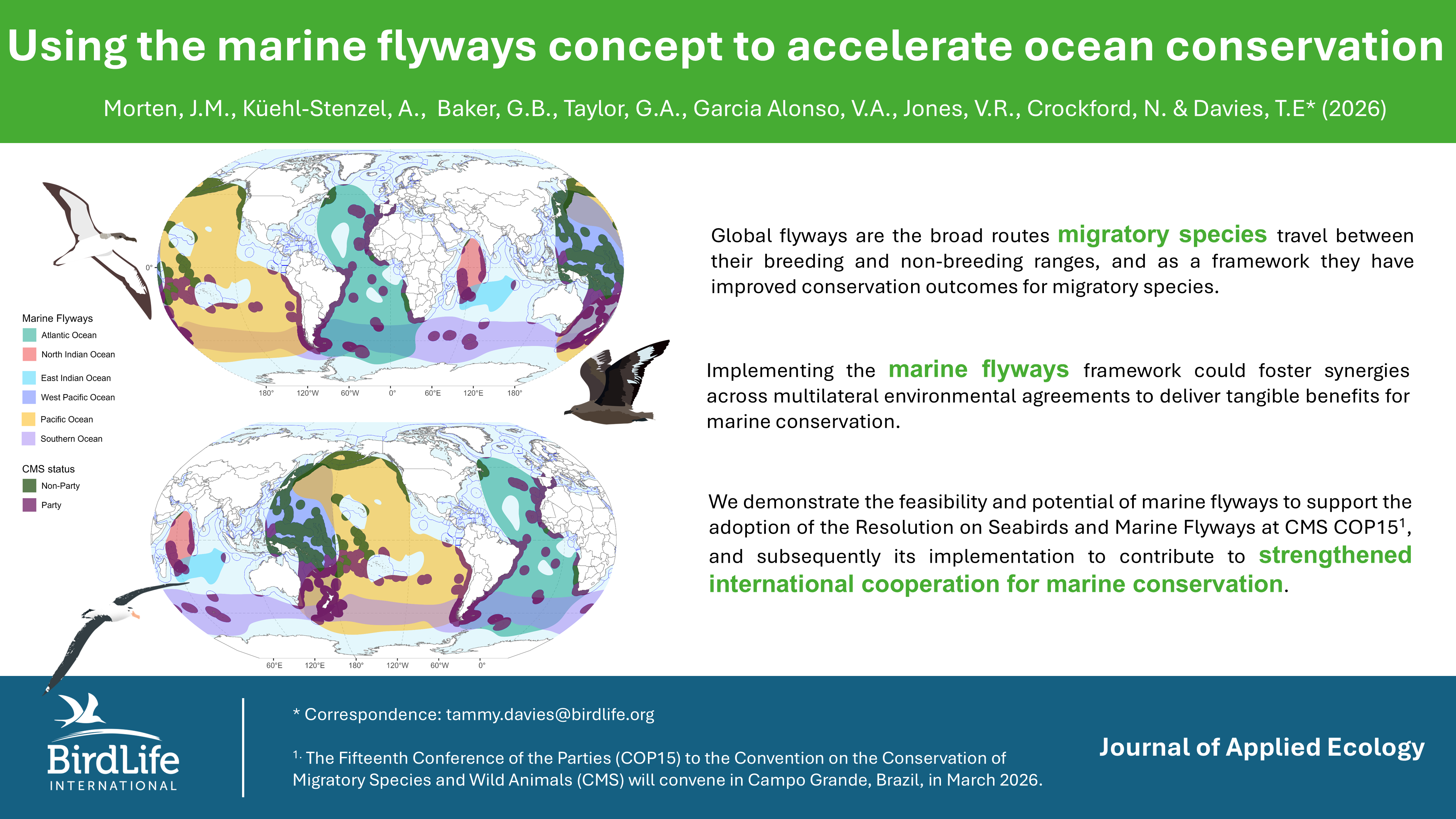
This information is intended to support a new Resolution on Seabirds and Marine Flyways that will be discussed at the fifteenth Conference of the Parties (COP15) to the Convention on the Conservation of Migratory Species (CMS) in March 2026. The Resolution aims to formally recognise marine flyways and promote stronger international cooperation to safeguard seabirds.
Our analysis shows that marine flyways overlap extensively with the national waters of CMS Parties, making the Convention a particularly suitable platform for action. We identify 151 migratory and pelagic seabird species that use these flyways, nearly half of which are globally threatened. By summarising existing important site networks and major threats, we provide a practical framework to guide conservation priorities and highlight where more information is urgently needed.
Using a marine flyways approach can help maintain ecological connections across the ocean and strengthen cooperation across global environmental agreements to accelerate ocean conservation and improve outcomes for migratory seabirds.
This is a Plain Language Summary discussing a recently-published article in Journal of Applied Ecology. Find the full article here.
 The Applied Ecologist