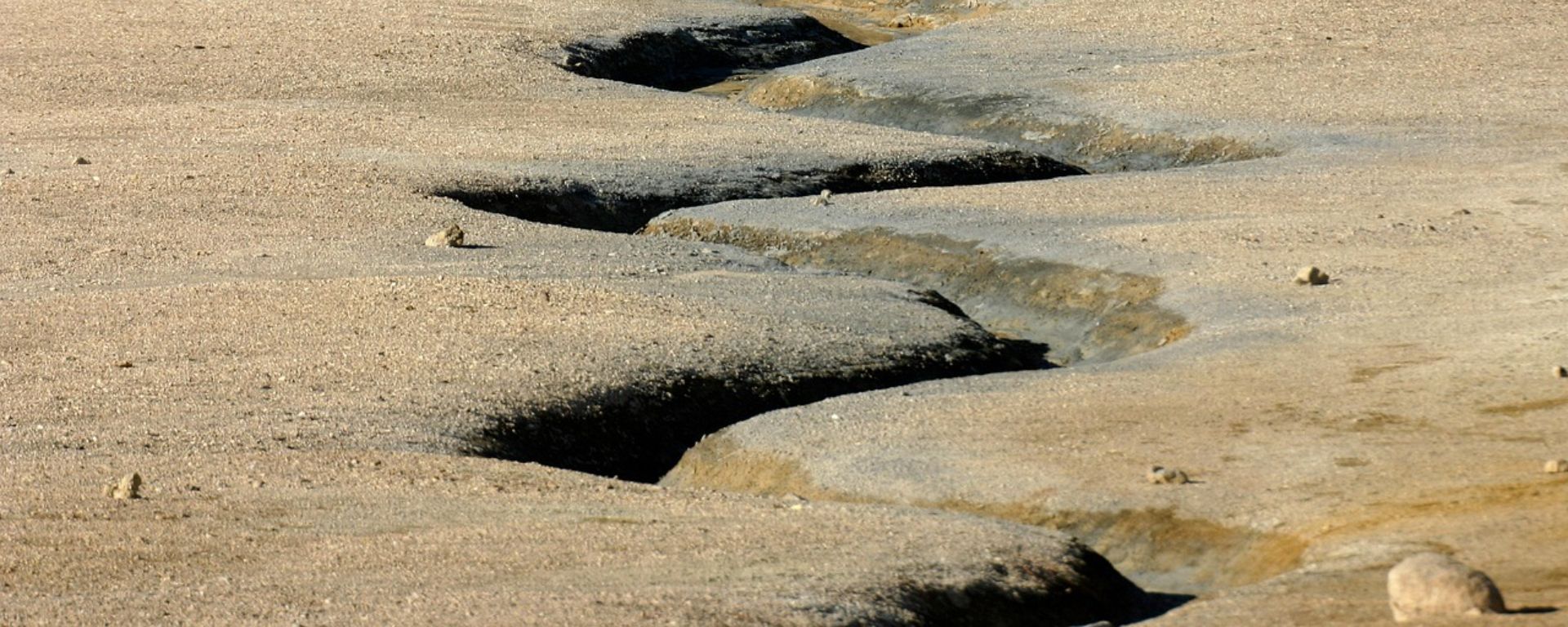
Rivers are increasingly drying up worldwide due to ongoing global change. This poses a major challenge for how we effectively protect them. We often assess the health of a river using a scoring system where higher scores of sensitive species show a healthier river, while their absence together with lower scores from tolerant taxa suggests the river is under human impact (e.g., pollution). However, these biological quality indices were mostly designed for rivers that flow all the time, missing the effects that drying has on river species, either sensitive or tolerant.
In this study, we address how these indices may fail when rivers dry. We used computer simulations to create “virtual rivers” where we could control how much the river dries, how intense the drying is, and how much human impacts are affecting the catchment. This work allowed us to see how species move or fail to move along the river when the water disappears. From this, we could identify under how much drying we can expect a failure in biological quality indices.
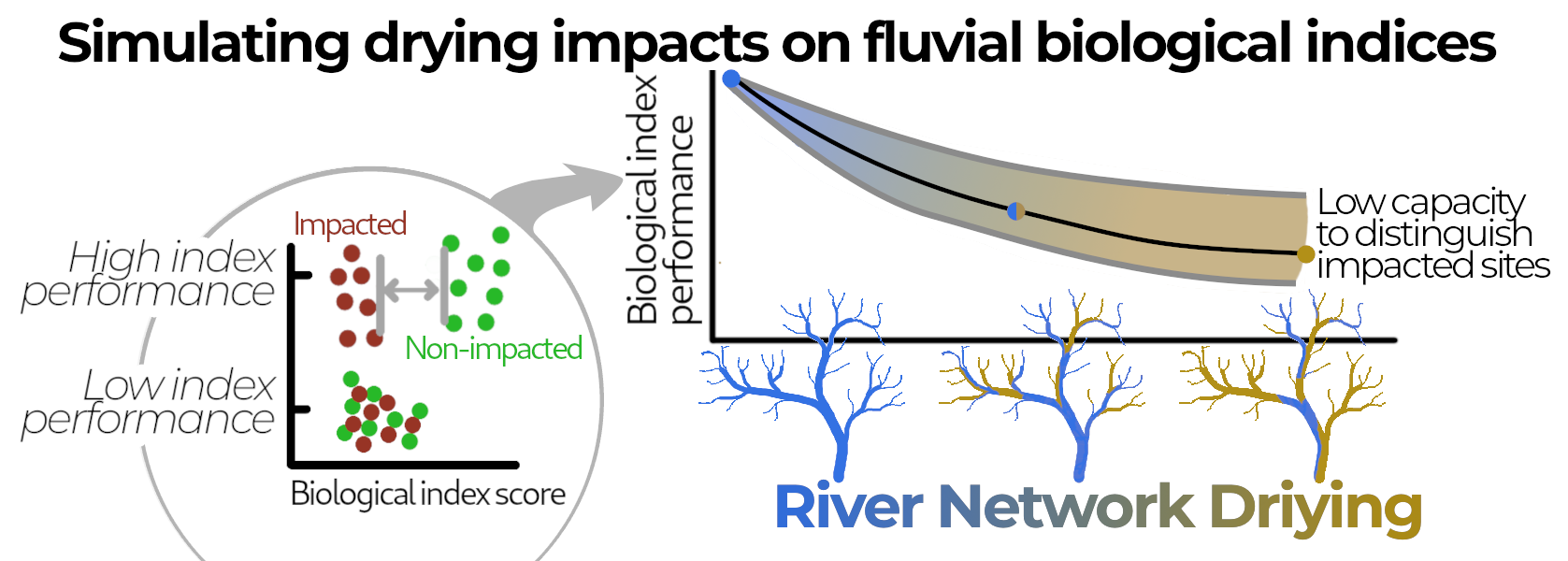
We found that when species cannot move across the river due to drying fragmentation, biological index scores drastically drop both in impacted and non-impacted river sections. Thanks to our simulations, we could quantify the relation between drying and this drop in the scores, also known as the performance decrease. For example, we showed that when drying impacts half of the river, this decrease in performance is around 60%, which implies that under these drying conditions, the current monitoring tools will give us a false picture of water quality.
Our work advances our understanding of how drying interacts with human impacts by incorporating drying-driven fragmentation. However, it also represents a first step towards the usage of simulation tools that could prove highly useful for water managers to more accurately assess the health of drying rivers. Ultimately, these tools will boost our capacity to efficiently conserve impacted ecosystems and target our efforts based on a complete understanding of how drying rivers function.
This is a Plain Language Summary discussing a recently-published article in Journal of Applied Ecology. Find the full article here.
 The Applied Ecologist