
Artificial intelligence (AI) is rapidly entering our daily lives. As the world begins to rely on it for small decisions, such as choosing which furniture suits our garden décor, scientists are witnessing a much larger shift quietly unfolding. AI is now entering ecology, and more importantly, applied ecology, a field that supports real-time high-stakes decision-making for our planet and posterity. AI-based tools can identify species from images and sounds, track wildlife, and summarize large volumes of information to support decision-making. But as these tools become more common, an important question arises: are we using AI in ways we can trust?
In this paper, we explore how AI is already being used in applied ecology by looking across areas such as wildlife monitoring, conservation assessments, and tools that support policy and management. While AI offers clear benefits, such as speed and scale, we also highlight important risks. These include the by-passed errors in predictions and models, lack of transparency in how results are produced, unequal access to tools, and concerns about who owns and benefits from ecological data.
To ground these ideas, we further draw on examples like the British Bat Survey to understand how AI can, and is being, used responsibly. In this case, AI is not used as the sole commander acting in isolation, but a tool-in-use alongside human expertise, with careful checks, clear reporting, and attention to ethical and legal considerations. This is one of the best examples we can take things forward from.
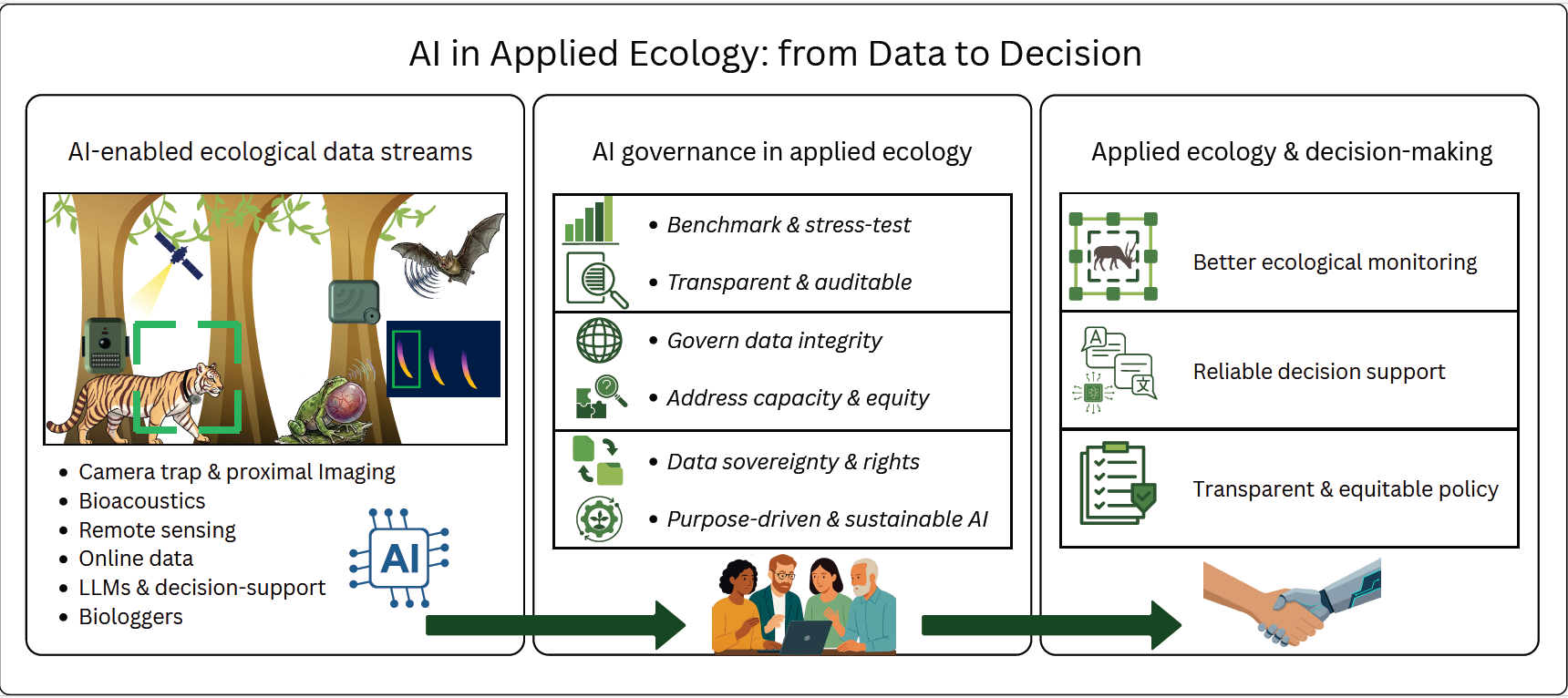
Building on this, we propose a set of practical principles and policy directions to guide the best use of AI in applied ecology. These include defining clear goals, testing tools thoroughly, being transparent about how they work, and ensuring that different groups, including local communities, are fairly included.
Our key message is simple: AI can support better environmental decisions, but only if it is used thoughtfully. As these technologies become more accessible, the choices we make now will shape how they influence conservation and policy. By setting clear standards and working collaboratively across sectors, we can ensure that AI helps build more reliable, fair, and effective decisions for both people and ecosystems – a future proofing necessary for AI-enabled decision support.

