
When conservation managers count birds, a stable total can look like good news. But in places used by many species, the total number can hide important changes. Some species may be declining while others are increasing, so the overall number stays similar even though the needs of individual species are changing.
We studied this problem using nine years of spring shorebird counts from six important migration sites on the Jiangsu coast of China, in the southern Yellow Sea. This coast is a key refuelling area for shorebirds migrating along the East Asian–Australasian Flyway. Each spring, large numbers of birds stop there to feed before continuing their journey north.
At first, the system looked stable. The total number of birds using the six sites did not show a clear change over time, and the overall centre of bird use and the average timing of migration also appeared stable. But when we looked at individual species, a different pattern emerged. Species that were declining tended to become more concentrated in the northern part of the coast and passed through earlier in spring. Species that were increasing tended to spread further south and pass through later.
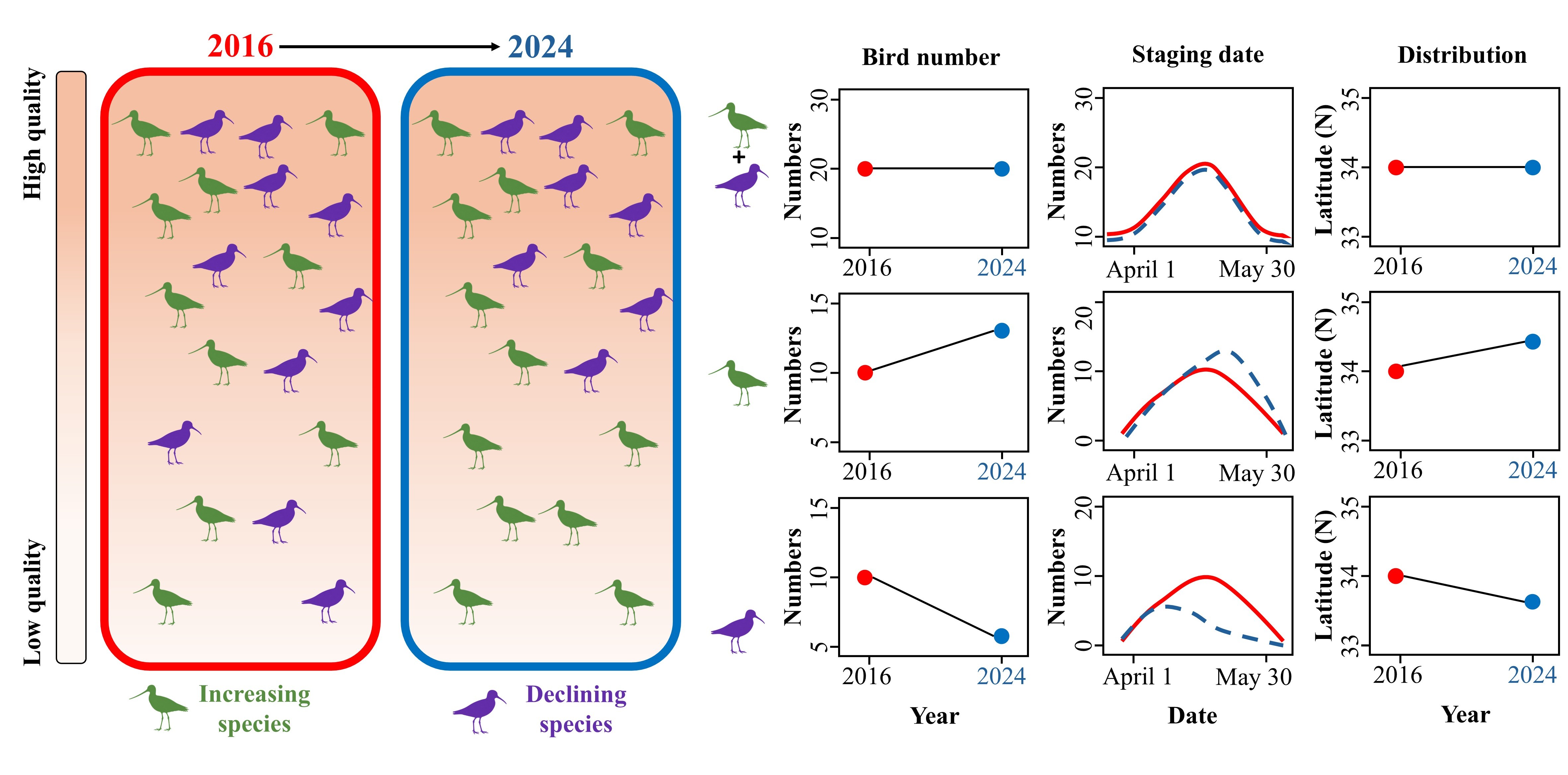
This means that stable totals can be misleading. They can hide the fact that declining species are becoming more dependent on a smaller number of high-quality sites. On the Jiangsu coast, these northern sites have rich food resources and may now be especially important for species under pressure.
Our study shows how long-term bird counts can be used for more than reporting whether numbers are up or down. They can help identify which species are becoming more constrained, which sites are becoming bottlenecks, and when protection is most needed. Conservation plans should therefore not rely only on total bird numbers. They should also consider how different species are changing in space and time, so that actions can protect the right places during the right weeks.

