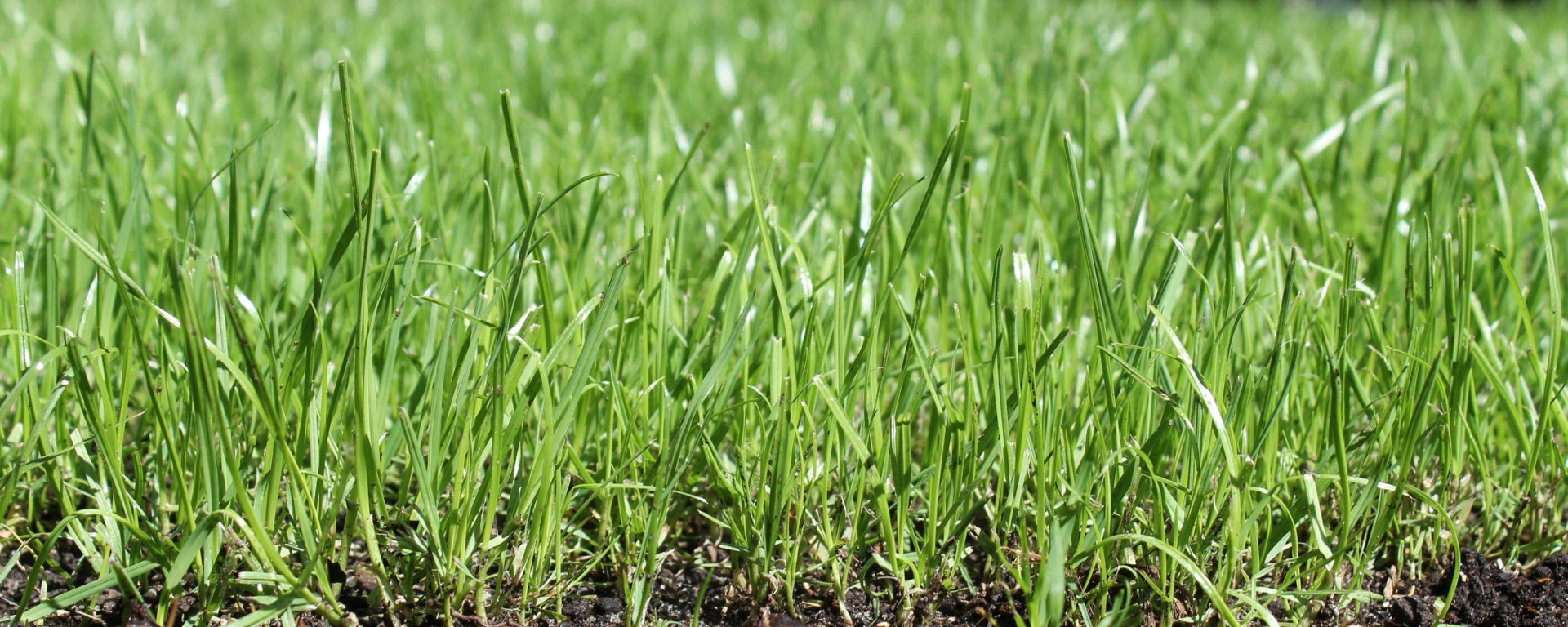
Partial lawn mowing, that consists of reduced mowing frequency in dedicated sectors of a greenspace, is gaining in popularity in cities driven largely by interest in increasing pollinator diversity and conservation campaigns such as “No mow May”. Despite the astounding proportion of biodiversity living in our soils, studies into reduced lawn mowing practices have generally focused on aboveground indicators. Consequences for belowground diversity and urban soil functions remain largely unknown.
In 2021-2022, we conducted an observational study across 10 sites in Montreal (Qc, Canada) where partial mowing was practiced. We sought to determine the effects of reduced lawn mowing frequency on multiple indicators related to soil diversity (from small nematodes to big spiders) and soil functionality (compaction, nutrient concentrations, organic matter content, hydraulic conductivity, microbial activity). At seven of these sites, we also investigated short- (< 2 years), mid- (2-5 years) and long-term (6-11 years) effects of mowing reduction on soils.
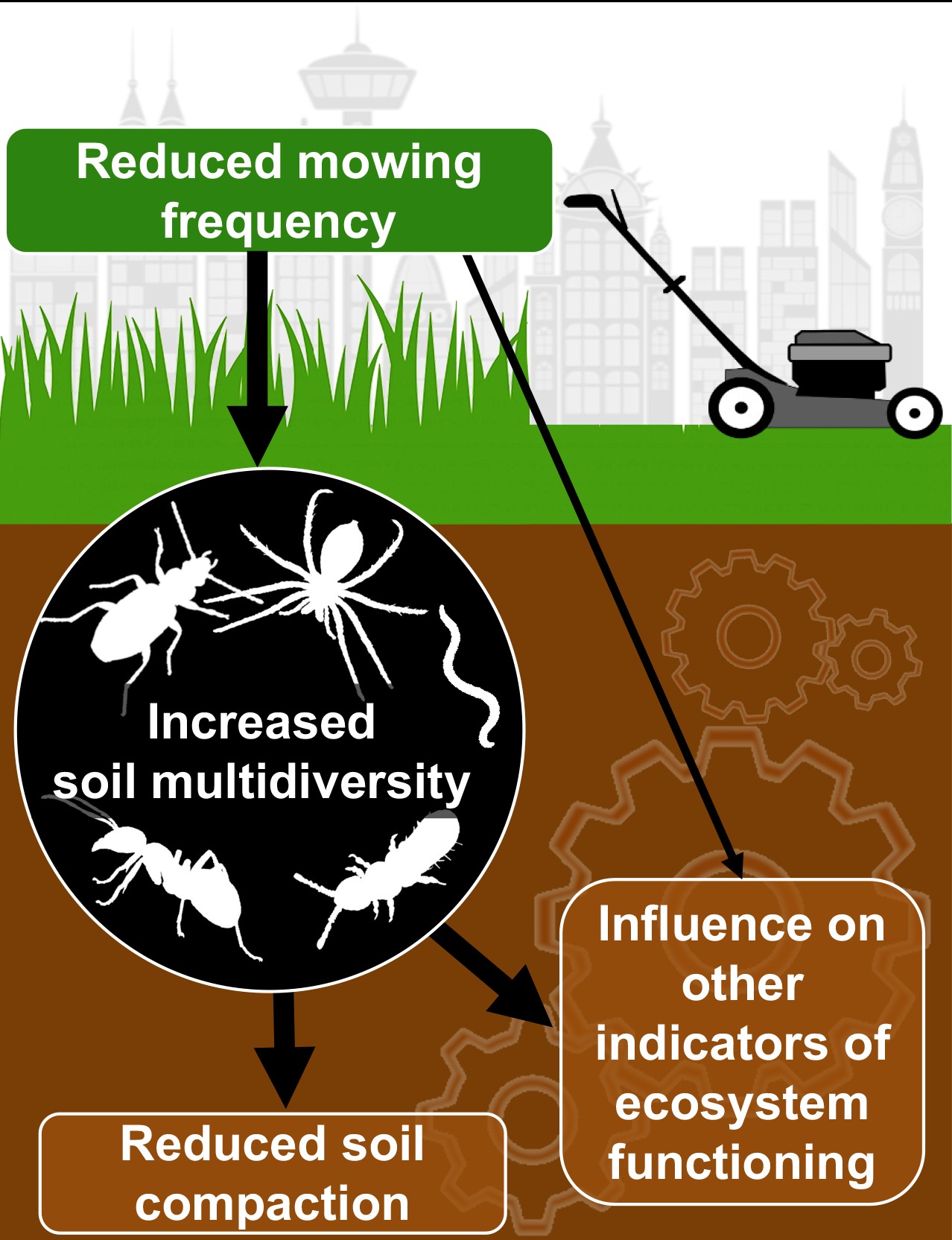
Our results showed that urban soil biodiversity doubled as quickly as 2 years following partial mowing implementation and found 8 times more species that were exclusively inhabiting lawns under low mowing frequency (vs high frequency). If the different types of organisms responded differently with time, no negative effect of reduced mowing frequency on any of them was observed. Moreover, we demonstrated that lowering mowing frequency helped to reduce soil compaction and impacted other soil function indicators, mainly through effects mediated by soil biodiversity. We bring evidence that switching from intensive to partial lawn mowing is effective to better support urban soils. We also developed a website with different outreach tools in French for local urban stewards and the public to understand the effects or partial mowing on urban biodiversity and guide decisions regarding lawn management (www.laissepousserunbrin.ca).

