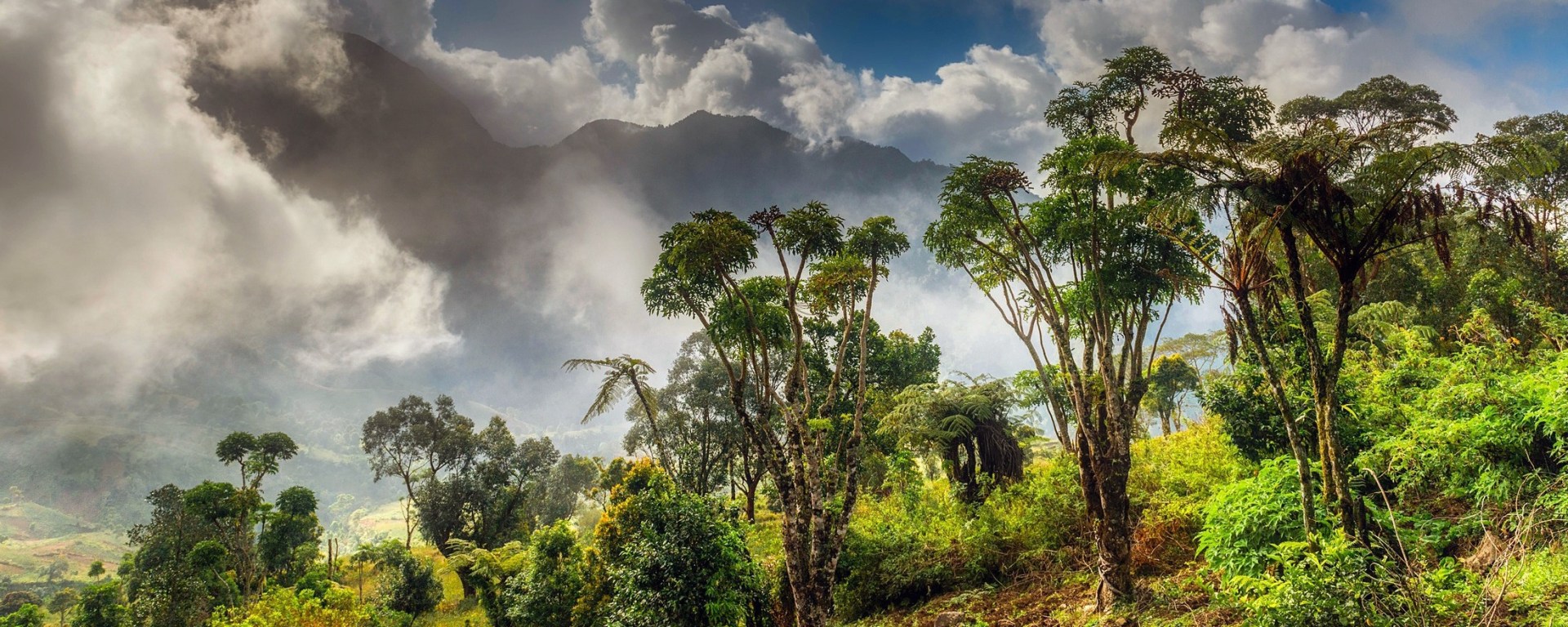
Mountain forests provide many benefits, including storing carbon, protecting water supplies, reducing soil erosion, and supporting biodiversity. In Ethiopia’s Dry Evergreen Afromontane forests, two tree species – African pencil cedar (Juniperus procera) and African wild olive (Olea europaea subsp. cuspidata) – play particularly important ecological and cultural roles. However, rising temperatures and changing rainfall patterns can alter where these species can survive in the future.
Computer models were used to predict how suitable habitat for these two tree species may change during the period 2061–2080 under moderate and high greenhouse gas emission scenarios. The models combined climate information, elevation, and topographic characteristics to estimate current and future habitat suitability across the Dry Afromontane forests of Ethiopia.
The results of the study show that the two species are likely to respond very differently to climate change. J. procera appears to be highly vulnerable. Areas with highly suitable habitat are projected to decline substantially and remaining habitats are expected to become more fragmented. In contrast, O. europaea shows greater tolerance to future climatic conditions. Although some highly suitable habitat may be lost, the species is expected to maintain a larger proportion of its current range and may expand into newly suitable areas.
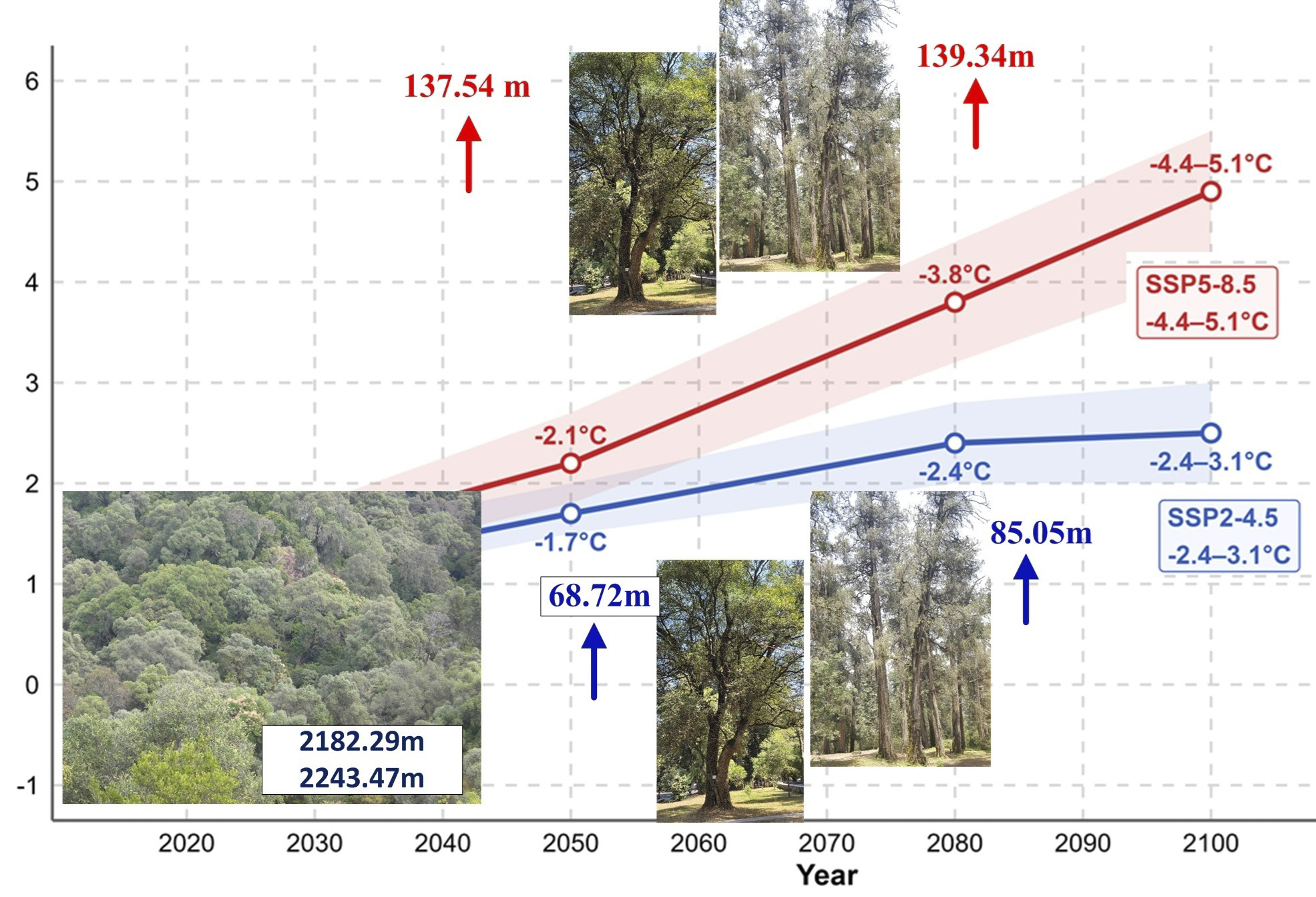
Both species are projected to move upslope, but the shift is generally greater for J. procera, indicating a stronger sensitivity to warming. Although the two species may continue to occur in many of the same regions, their environmental requirements are likely to become increasingly different under future climates.
These findings suggest that climate change could alter the composition and functioning of mountain forests in Ethiopia. Conservation strategies should therefore move beyond uniform forest management approaches and instead consider the different vulnerabilities of individual species. Protecting high-elevation refuges, maintaining habitat connectivity, and targeting restoration efforts in climatically suitable areas will be important to maintain forest biodiversity and ecosystem services under future climate change.

