Rivers around the world are under pressure because we extract water and change river flows. To help protect wildlife, managers release “environmental flows” to support ecosystems. But decisions about how to release environmental flows are often based on long-term predictions, which can be uncertain and hard to test.
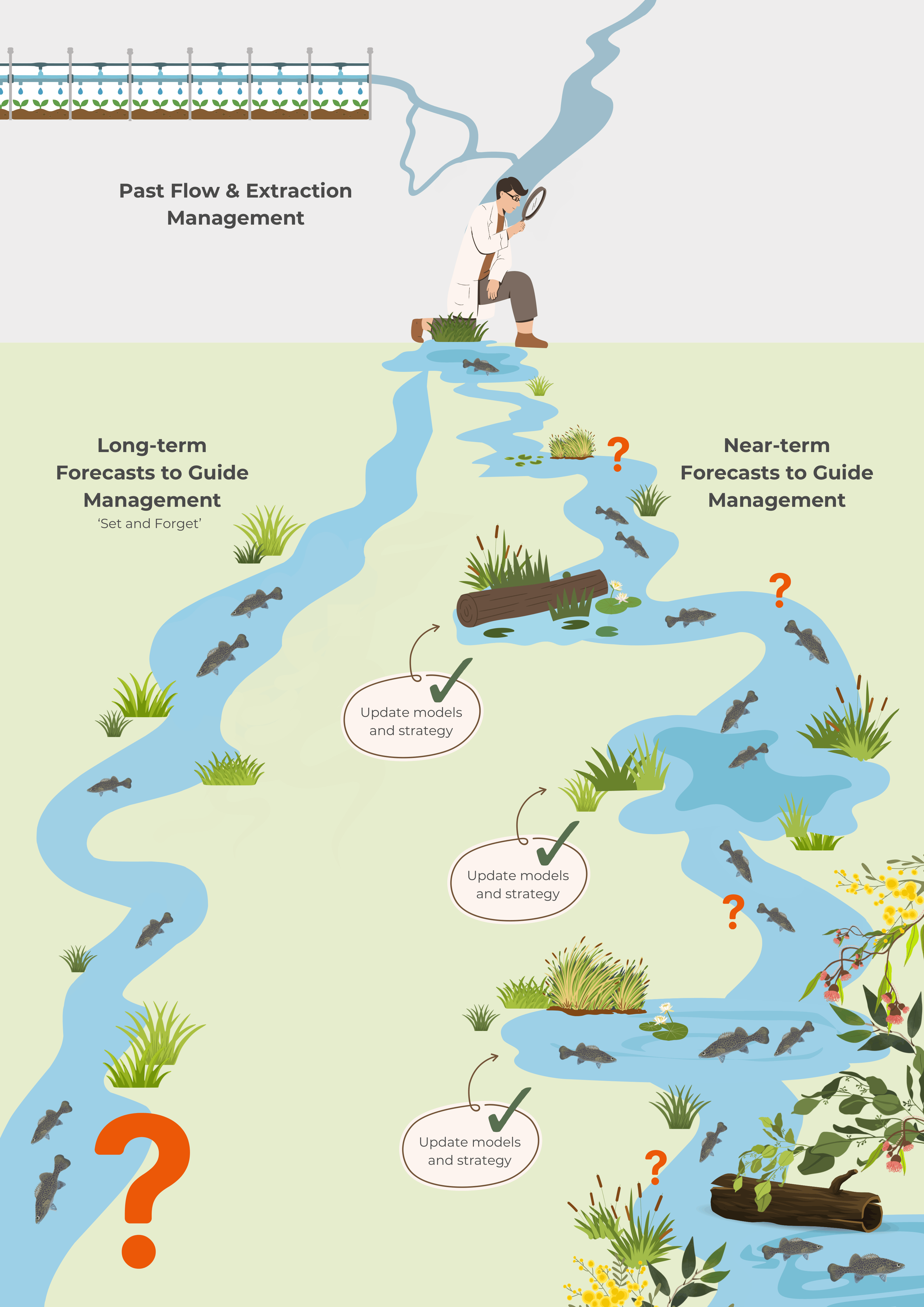
In this study, we took a different approach: using short-term forecasts to guide decisions. Instead of asking what will happen decades into the future, we focused on what might happen over the next few years. We tested this idea using Murray cod, a large native fish in south-eastern Australia that has declined due to changes in river flows.
We built a model that simulates how fish populations change under different flow conditions. We tested many possible future scenarios, such as dry or wet years, and different types of water releases. We also tested the model’s predictions with real field data collected over time.
The results showed that some types of water delivery, particularly consistent, low flows, can help fish populations in certain rivers. However, the effects were often small and took time to appear. In some cases, the model’s predictions did not match real data, highlighting the need to keep improving our models.
One important finding is that fish populations may respond slowly, meaning short-term decisions are less risky than we might think. This creates an opportunity for managers to test new approaches and adapt as conditions change.
Overall, we show that short-term forecasts can support more flexible and responsive river management. By regularly updating predictions with new data, we can learn as we go and make better decisions for freshwater ecosystems.

