Every restoration is unique

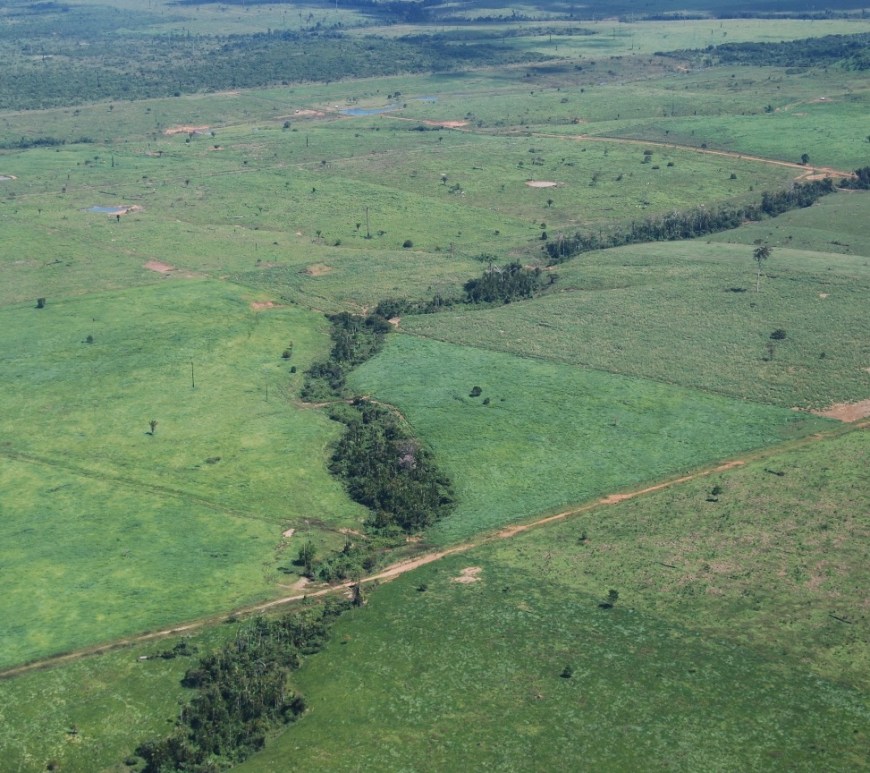
In the second of our series of blogs to accompany the recently-published Special Feature, Toward prediction in the restoration of biodiversity, Katharine Stuble describes her work in Every restoration is unique: testing year effects and site effects as drivers of initial restoration trajectories. Restoration practitioners are acutely aware that the outcomes of their efforts are strongly contingent on a slew of factors.  Some are well … Continue reading Every restoration is unique

Toward prediction in the restoration of biodiversity

Issue 54:4 of the Journal of Applied Ecology features a Special Feature, Toward prediction in the restoration of biodiversity. In the first of a series of blogs accompanying the feature, Guest Editor, Lars Brudvig introduces the work and the ecological ideas behind this collection of articles. By repairing ecosystems damaged through human activities, ecological restoration plays an important role in biodiversity conservation efforts. Furthermore, restoration … Continue reading Toward prediction in the restoration of biodiversity

Editor’s choice 54:4 – The identification of critical catchments for freshwater conservation

Issue 54:4’s Editor’s Choice post is written by Shelley Arnott. The article chosen is Critical catchments for freshwater biodiversity conservation in Europe: identification, prioritisation and gap-analysis by Savrina F. Carrizo and colleagues. Aquatic ecosystems around the world are threatened with environmental changes resulting in critical loss of biodiversity; 81% of freshwater populations monitored for the Living Planet Index have declined in abundance between 1970 and … Continue reading Editor’s choice 54:4 – The identification of critical catchments for freshwater conservation

The Journal of Applied Ecology Editorial board is looking for new Associate Editor mentees

If you are less than five years post-PhD and looking to develop your editorial experience alongside a revered board of Senior Editors, why not apply for the Journal of Applied Ecology Associate Editor mentoring opportunity? Each year the board welcomes new mentee Associate Editors with little or no editorial experience to take up this training post and gain experience of working on a relevant and … Continue reading The Journal of Applied Ecology Editorial board is looking for new Associate Editor mentees

Research, management and local knowledge: an innovative approach to invasive species control

Executive Editor, Marc Cadotte shares his thoughts on Jennifer Firn and colleagues’ new article, Integrating local knowledge and research to refine the management of an invasive non-native grass in critically endangered grassy woodlands and why utilising local knowledge is vital if we’re to provide successful solutions to environmental issues.  While many hurdles hamper the successful application of ecological concepts and theories to developing solutions to environmental … Continue reading Research, management and local knowledge: an innovative approach to invasive species control

Greater than the sum of its parts: a holistic approach to wildlife trade

In this post, Daniel Bergin discusses issue 54.3’s Practitioner’s Perspective, Holistic management of live animals confiscated from illegal wildlife trade by Dr. Thomas Gray and colleagues. Armed detectives burst through the door. Traffickers are arrested, media coverage generated, and live animals are rescued from the illegal wildlife trade. But what happens next? What happens next is the focus of a new paper by Gray et. al., … Continue reading Greater than the sum of its parts: a holistic approach to wildlife trade

For the love of trees: the benefits of vegetation and paddock management for reptiles in grazing landscapes

Following her recent paper in the Journal of Applied Ecology, ‘Remnant vegetation, plantings and fences are beneficial for reptiles in agricultural landscapes’, Stephanie Pulsford explores the balancing act of supporting both agriculture and biodiversity conservation. In a recent study of reptiles in grazing landscapes we demonstrated the importance of maintaining and promoting native vegetation within agricultural land for improved biodiversity conservation outcomes. We also showed that … Continue reading For the love of trees: the benefits of vegetation and paddock management for reptiles in grazing landscapes

Spotlight: Forecasting and preventing the next outbreak – perspectives on infectious disease management

The Spotlight for issue 54:3 is on wildlife diseases. This post is written by Samantha Rumschlag and Jeremy Cohen. All five Spotlight papers are available to read here. In an ever-changing world, the risk of disease emergence is on the rise. As the climate warms, ranges of parasites and disease vectors are predicted to shift, exposing naïve populations to new threats. Humans are put in closer … Continue reading Spotlight: Forecasting and preventing the next outbreak – perspectives on infectious disease management

How does one effectively engage communities for conservation? Try becoming PARTNERS

With a focus on community engagement, Matthias Fiechter, Charudutt Mishra, Steve Redpath, Brad Rutherford and Juliette Young, discuss the PARTNERS principle and importance of working with people towards conservation efforts. This post supports their recent Journal of Applied Ecology Practitioner’s Perspective, Building partnerships with communities for biodiversity conservation: lessons from Asian mountains. We’re currently witnesses to – and in many ways complicit in – the sixth mass … Continue reading How does one effectively engage communities for conservation? Try becoming PARTNERS

Testament of cover crops – with Dutch translation

In this post, Janna Barel shares thoughts on the legacies plants leave, the benefits of cover crops and insights from her recent Journal of Applied Ecology paper, Legacy effects of diversity in space and time driven by winter cover crop biomass and nitrogen concentration. Janna has also included a Dutch translation of this post. Journal of Applied Ecology is dedicated to making papers more accessible and … Continue reading Testament of cover crops – with Dutch translation