When to burn and where?

Commentary on Brooke Williams’ article, Optimising the spatial planning of prescribed burns to achieve multiple objectives in a fire-dependent ecosystem by Associate Editor, Cate Macinnis-Ng. Following on from Brooke’s own blog post, Cate gives a personal spin on her own experience of fire events and of editing the paper. This manuscript arrived in my inbox within days of the Port Hills fire outside Christchurch. When it comes to … Continue reading When to burn and where?

Prescribed burns for multiple needs – is optimising spatial planning the solution to conflicting fire management objectives?

Following our recent Editor’s Choice that looked at prescribed burns in African savanna, this latest blog by Brooke Williams turns to fire management and prescribed burns in Australia. The blog supports Williams’ recent paper, Optimising the spatial planning of prescribed burns to achieve multiple objectives in a fire-dependent ecosystem. Fire management is an important aspect of ensuring the safety of Australians living within fire-prone environments. It … Continue reading Prescribed burns for multiple needs – is optimising spatial planning the solution to conflicting fire management objectives?

Wet wetlands restore better

With Plant Conservation Day in mind, Samantha Dawson’s post discusses characteristics of wetland plants and her new paper, Plant traits of propagule banks and standing vegetation reveal flooding alleviates impacts of agriculture on wetland restoration. Many of the world’s wetlands are highly degraded and they are one of the most threatened types of ecosystems. To attempt to halt or reverse this trend, there are lots of … Continue reading Wet wetlands restore better

Editor’s Choice 54:3 – Prescribing burns to increase forage for cattle: are managers ‘biting off more than they can chew’?

Issue 54:3’s Editor’s Choice is written by Associate Editor, Jennifer Firn. The article chosen by the Editors is Fire-induced negative nutritional outcomes for cattle when sharing habitat with native ungulates in an African savanna by Wilfred O. Odadi and colleagues. Ecological science is increasingly being applied to understand species interactions and to identify thresholds of degradation in more traditional agricultural landscapes (Scherr & McNeely 2008). This … Continue reading Editor’s Choice 54:3 – Prescribing burns to increase forage for cattle: are managers ‘biting off more than they can chew’?

Video: Managing animals confiscated from the illegal wildlife trade with the Wildlife Rapid Rescue Team

Following his work for the recent Practitioner’s Perspective, Holistic management of live animals confiscated from illegal wildlife trade, Wildlife Alliance’s Director of Science, Dr. Thomas Gray  describes the policy recommendations and conclusions from the paper from the Cardamom Rainforest Landscape in Cambodia. Watch the video and read Tom’s post below. Our Practitioner’s Perspective piece in the Journal of Applied Ecology addresses an often over-looked aspect of the war against … Continue reading Video: Managing animals confiscated from the illegal wildlife trade with the Wildlife Rapid Rescue Team

Mapping risk: new method to synthesize spatial data on human and animal use of coastal waters

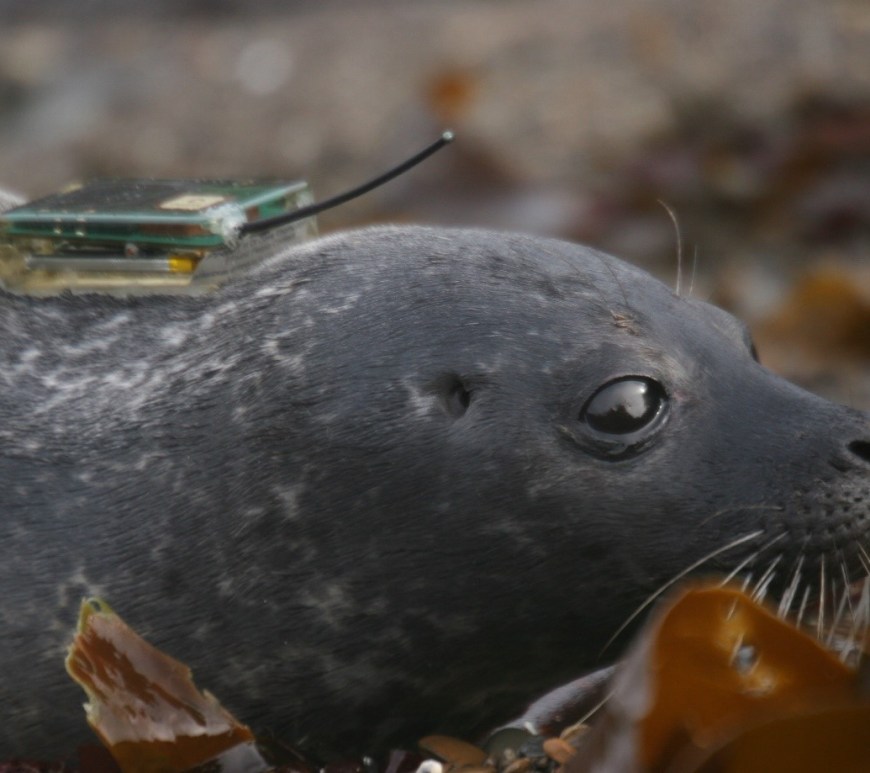
In this post Erin Ashe discusses a new article from Esther Jones and colleagues ‘Seals and shipping: quantifying population risk and individual exposure to vessel noise‘ An exciting new paper (Jones et al. 2017) outlines a rigorous and widely applicable framework to predict ship noise levels in coastal waters, assess noise exposure for two seal species, and explicitly incorporate these results into risk assessments and … Continue reading Mapping risk: new method to synthesize spatial data on human and animal use of coastal waters

Designing waterfronts that work for fish and people

In this post Stuart Munsch discusses his new article ‘Effects of shoreline armouring and overwater structures on coastal and estuarine fish: opportunities for habitat improvement‘ Shallow ecosystems facilitate the development and survival of juvenile fish. These areas are productive and provide fish with an abundance of small invertebrates produced in intertidal substrate, backshore vegetation, and the water column. In addition, predators are rare or ineffective … Continue reading Designing waterfronts that work for fish and people

PODCAST: Forest restoration as a double-edged sword

In this podcast Simon Kärvemo discusses his paper ‘Forest restoration as a double-edged sword: the conflict between biodiversity conservation and pest control’ published today in Journal of Applied Ecology. Forest fires create open patches and dead wood – both factors that favour biodiversity, but using fire as a restoration tool is both risky and requires a lot of work and planning. What if we could … Continue reading PODCAST: Forest restoration as a double-edged sword

Conservation practitioners’ perspectives on decision triggers for evidence-based management

In this webinar recording, for the Chartered Institute of Ecology and Environment Management, Prue Addison, author of Journal of Applied Ecology Practitioner’s Perspective ‘Conservation practitioners’ perspectives on decision triggers for evidence-based management‘ discusses the use of decision triggers in evidence-based conservation management and provides guidance on how to develop these. The article from Prue Addison, Carly Cook and Kelly de Bie is free to read … Continue reading Conservation practitioners’ perspectives on decision triggers for evidence-based management

Forests in 3D

In this post Markus Eichhorn discusses his new article ‘Effects of deer on woodland structure revealed through terrestrial laser scanning‘ About the video: Three-dimensional reconstruction of a transect from Wyre Forest, an area of high deer density. The central 10 X 50 m plot is surrounded by a large number of points which were not used in the analyses. Survey apparatus is still visible. Points … Continue reading Forests in 3D