Seals avoid an operating tidal turbine

Authors of a recently published study discuss how their research discovered that seals exhibit avoidance of turbines during operation. This finding is important for industry developers and regulators, as lower numbers of seals close to the turbine reduces the potential for fatal collisions and injuries. The rise of the tidal energy industry The marine renewable energy sector is growing rapidly. Offshore wind is well established, … Continue reading Seals avoid an operating tidal turbine


Elizabeth Tinsley: Bats are avoiding solar sites

Shortlisted for the 2023 Southwood Prize Elizabeth Tinsley talks us through how she and colleagues conducted a paired study at 19 ground-mounted solar PV developments in southwest England. Through the use of static detectors to record bat echolocation calls and the development of generalised linear mixed-effect models, it was determined that ground-mounted solar photovoltaic developments have a significant negative effect on bat activity. Bats and … Continue reading Elizabeth Tinsley: Bats are avoiding solar sites

Humans drive spatial variation in mortality risk for a threatened wolf population in a Canis hybrid zone

John Benson shares recent research, conducted alongside colleagues, which monitored the movement of eastern wolves in Algonquin Provincial Park, Canada. Results suggest that eastern wolves and dispersing canids survive poorly outside of APP, primarily due to human-caused mortality. Thus, expanding the threatened population outside of APP is unlikely under current management conditions. The challenge of human-caused mortality for threatened, hybridizing wolves in Canada When large … Continue reading Humans drive spatial variation in mortality risk for a threatened wolf population in a Canis hybrid zone

Forestry raises the predation risk to caribou – we found ways to reduce it

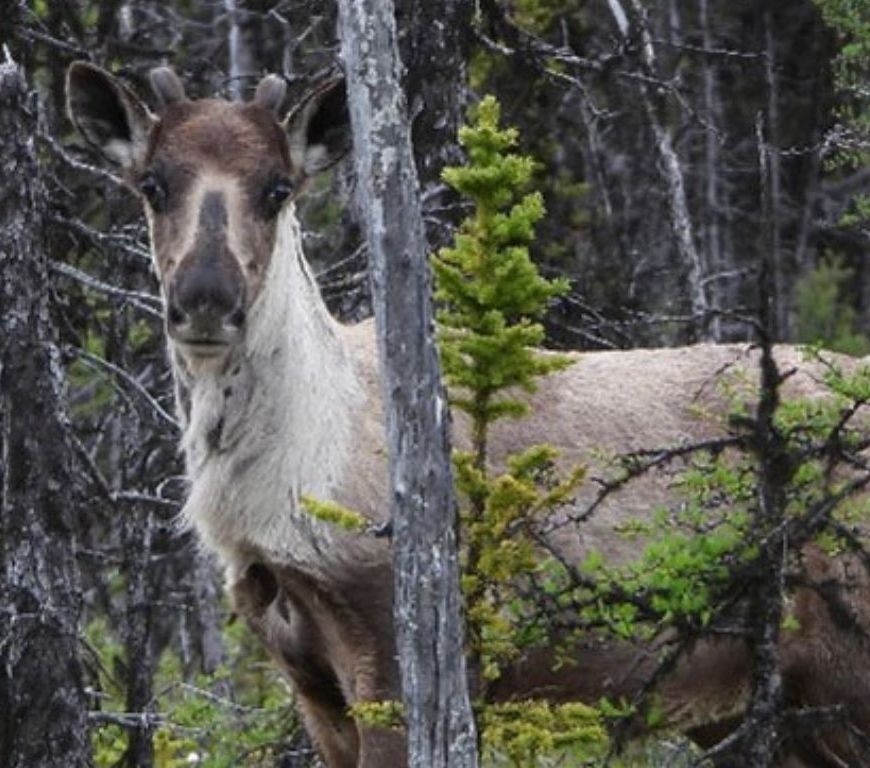
Tracy McKay and Laura Finnegan share their latest research investigating what affects ungulate occurrence  in forest harvest blocks in west-central Alberta, Canada. Five years ago, our research group developed an idea with forest companies to help conserve woodland caribou – Rangifer tarandus, the same species as the Eurasian reindeer – in western Canada. Summer after summer, our crews drove the mud and gravel roads spiderwebbing … Continue reading Forestry raises the predation risk to caribou – we found ways to reduce it