A new method for assessing the age of old-growth forests

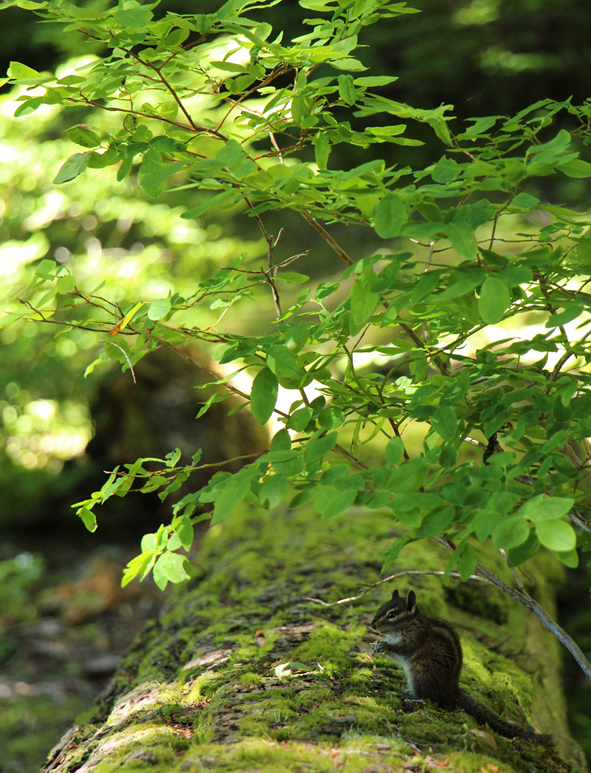
In this post, Associate Editor Nathalie Butt discusses a recent paper ‘Tree-ring based metrics for assessing the functional naturalness of forests‘ by Alfredo Di Filippo, Franco Biondi, Gianluca Piovesan and Emanuele Ziaco. Valuable ecosystems Primeval forest, or ancient woodland in the UK, is an integral part of many epic stories and myths throughout human history, especially in Europe:  just think of all those old tales … Continue reading A new method for assessing the age of old-growth forests

Caring for and sharing data created by volunteers

In this post Quentin Groom discusses his recent Commentary paper ‘Is citizen science an open science in the case of biodiversity observations?‘ Volunteers are the single largest source of biodiversity observations. Without their work we could not monitor the declines of native species nor the spread of invasive species. Their work provides data on the diversity of life, its geography, the migration of animals and … Continue reading Caring for and sharing data created by volunteers

Getting people working on ecosystem functions connected

There’s news for people working on ecosystem functions and their monitoring: the Ecosystem Function Working Group has been recently launched by the Group on Earth Observations Biodiversity Observation Network (GEO BON), and the group is looking for its members. You may wonder what GEO BON is: GEO BON is an international networking platform part of GEO, the Group on Earth Observations. Within the GEO family, … Continue reading Getting people working on ecosystem functions connected

Landscape structure influences urban vegetation vertical structure

In this post Matthew Mitchell discusses his recent paper ‘Landscape structure influences urban vegetation vertical structure‘. The importance of urban vegetation Odds are that you’re reading this in a city. More than half of humanity today lives in cities, and this is expected to increase to two-thirds by 2050. Living in a city, you almost certainly rely on urban vegetation for key ecosystem services like … Continue reading Landscape structure influences urban vegetation vertical structure

Taxonomic and functional diversity in Mediterranean pastures: Insights on the biodiversity – productivity trade-off

In this post Victor Rolo discusses his recent paper ‘Taxonomic and functional diversity in Mediterranean pastures: Insights on the biodiversity – productivity trade-off ‘ There is a shepherds’ saying in Spain that goes: “below a shrub, you can raise a lamb”. But, if that were true, why is the presence of semi-natural features perceived as a negative element for herbage productivity in grasslands? The answer … Continue reading Taxonomic and functional diversity in Mediterranean pastures: Insights on the biodiversity – productivity trade-off

Fine-scale salmon diversity sustains fisheries and supports food security of indigenous communities

A new study from Holly Nesbitt and Jonatahn Moore at Simon Fraser University shows that high biodiversity in salmon fisheries supports the food security of indigenous people. Salmon-folios Instead of analyzing market returns of different financial portfolios, this study examined indigenous fisheries with different “salmon-folios”. Like a well-balanced financial portfolio that can smooth market fluctuations, fisheries that caught a more diverse portfolio of salmon populations … Continue reading Fine-scale salmon diversity sustains fisheries and supports food security of indigenous communities

Maintaining diverse bee communities on farmland: the importance of floristic diversity

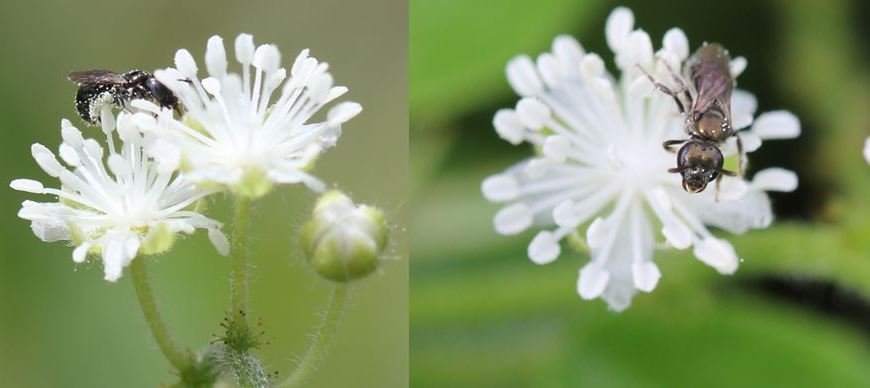
In this post Thomas Wood discusses his recent paper ‘Providing foraging resources for solitary bees on farmland: current schemes for pollinators benefit a limited suite of species‘ Farmland biodiversity was negatively affected across most European nations throughout the 20th century, predominantly due to a period of rapid agricultural intensification following the Second World War. Flowery hay meadows were ploughed up and herbicides, fertilisers and other … Continue reading Maintaining diverse bee communities on farmland: the importance of floristic diversity

The rise and fall of a simple solution

In this post Anna-Sara Liman discusses her recent paper ‘Predator refuges for conservation biological control in an intermediately disturbed system: the rise and fall of a simple solution‘ The first so called willow “energy forests” were planted in Sweden (and the UK) in the early nineties and represent among the first steps towards development of a bioenergy sector and a future bioeconomy. Willows are fast-growing … Continue reading The rise and fall of a simple solution

More accurate mapping of coastal wetlands is vital for their management and conservation

In this post, Associate Editor Nathalie Butt discusses a recent paper ‘Habitat mapping of coastal wetlands using expert knowledge and Earth Observation data’ by Maria Adamo, Cristina Tarantino, Valeria Tomaselli, Guiseppe Veronico, Harini Nagendra and Palma Blonda. Habitats at risk What do we usually think of when we hear ‘wetland’ or ‘coastal wetland’? A flat marshy area by the sea somewhere, perhaps with a bird … Continue reading More accurate mapping of coastal wetlands is vital for their management and conservation

Understanding the distribution of a terrestrial mammal community

Associate Editor Matt Hayward discussed the importance of the recent paper from Lindsey Rich and colleagues ‘Using camera trapping and hierarchical occupancy modelling to evaluate the spatial ecology of an African mammal community’ with his PhD student, Lilian Sales (supervised by Rafael Loyola of the Conservation Biogeography Lab at the Federal University of Goias, Brazil) and below are her views on this paper. Monitoring wildlife … Continue reading Understanding the distribution of a terrestrial mammal community