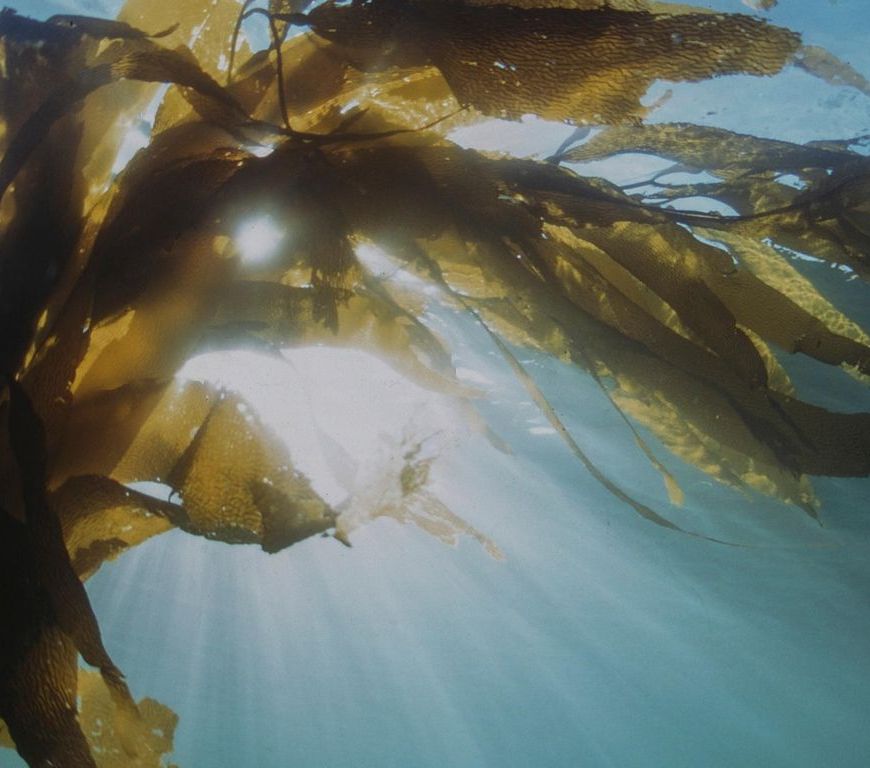
Understanding the harvest of Chilean kelp forests: Moving toward sustainability

Blog post written by Alejandro Pérez Matus to discuss their latest study which aimed to help us understand kelp recovery after harvesting. This blog post is also available in Spanish here. Humans have been connected to kelp forests for more than 16,000 years. It is hypothesized that these underwater forests helped early coastal communities migrate from northeast Asia to the Americas. Today, the ecosystem services … Continue reading Understanding the harvest of Chilean kelp forests: Moving toward sustainability

Entendiendo la cosecha de los bosques de macroalgas en Chile: Avanzando hacia la sostenibilidad

Entrada de blog escrita por Alejandro Pérez Matus para discutir su último estudio, que tenía como objetivo ayudarnos a entender la recuperación del alga después de la cosecha. Esta publicación del blog también está disponible en inglés aquí. Los humanos hemos estado conectados con los bosques de algas pardas por más de 16.000 años. Se hipotetiza que estos bosques submarinos ayudaron a las comunidades costeras … Continue reading Entendiendo la cosecha de los bosques de macroalgas en Chile: Avanzando hacia la sostenibilidad

Leaving trees behind during forest harvesting protects soil fungi and helps forests retain stored carbon

Boreal forest soils are home to diverse fungal communities that break down dead material from plants and fungi. Two key groups drive this process: ectomycorrhizal fungi, which partner with tree roots and receive carbon from trees in exchange for nutrients, and saprotrophic fungi, which break down dead material to acquire both carbon and nutrients. When forests are harvested, ectomycorrhizal fungal communities are disrupted by the … Continue reading Leaving trees behind during forest harvesting protects soil fungi and helps forests retain stored carbon

Recovery of grassland butterflies requires high plant diversity by implementing high-quality restoration methods

To reverse the decline in plant and animal biodiversity, it is urgent to restore species-rich grasslands. Identifying successful restoration strategies is therefore highly relevant, especially with regard to the national implementation of the EU nature restoration regulation. In this context, butterflies can be used as sensitive indicators that allow for a holistic assessment of restoration success and take the landscape context into account. Our study … Continue reading Recovery of grassland butterflies requires high plant diversity by implementing high-quality restoration methods

Toward prediction in the restoration of biodiversity

Issue 54:4 of the Journal of Applied Ecology features a Special Feature, Toward prediction in the restoration of biodiversity. In the first of a series of blogs accompanying the feature, Guest Editor, Lars Brudvig introduces the work and the ecological ideas behind this collection of articles. By repairing ecosystems damaged through human activities, ecological restoration plays an important role in biodiversity conservation efforts. Furthermore, restoration … Continue reading Toward prediction in the restoration of biodiversity