One year on: a Q&A with 2015 Southwood Prize winner Dustin Ranglack

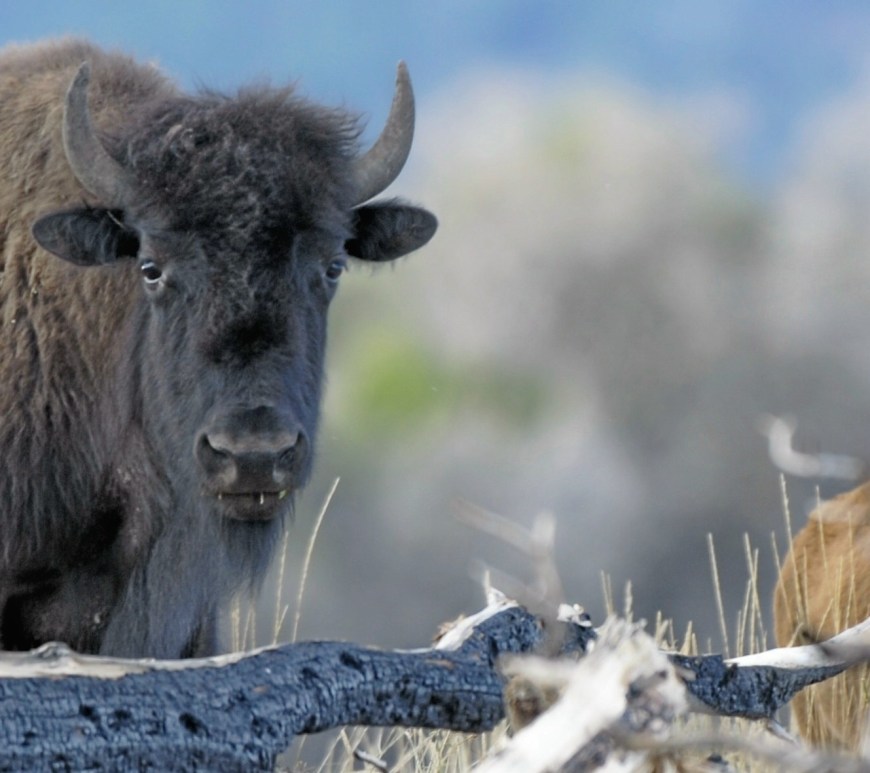
Today sees the announcement of this year’s winners of the BES Early Career Researcher Awards. Journal of Applied Ecology awards the Southwood Prize each year to the best paper in the Journal by an early career author at the start of their career. Dustin Ranglack won last year’s Southwood Prize for his paper ‘Competition on the range: science vs. perception in a bison–cattle conflict in … Continue reading One year on: a Q&A with 2015 Southwood Prize winner Dustin Ranglack

Editor’s Choice 54:2 – Optimizing the use of species distribution maps for planning new protected areas

The Editor’s Choice for Issue 54:2 is written by Kulbhushansingh Suryawanshi, who is taking part in our Associate Editor mentoring opportunity. The article chosen by the Editors as this issue’s Editor’s choice article is ‘Limitations and trade-offs in the use of species distribution maps for protected area planning‘ by Moreno Di Marco and colleagues. Protected Areas have been the ‘big idea’ of biodiversity conservation over … Continue reading Editor’s Choice 54:2 – Optimizing the use of species distribution maps for planning new protected areas

Measuring dark diversity: what do we know and where do we go from here?

In this post Chris Wilson (The Flory Lab) discusses a recent article from Jesper Moeslund and colleagues ‘Using dark diversity and plant characteristics to guide conservation and restoration‘ Central to ecology and conservation biology is the quest to understand and, more importantly, conserve biodiversity. However, generally you can’t manage what you can’t measure, and you can’t measure what you can’t define! Biodiversity is traditionally defined … Continue reading Measuring dark diversity: what do we know and where do we go from here?

Prioritizing conservation and management efforts with new methods to predict invasive species occurrence and impact

In this post Johanna Bradie discusses her recent paper with Brian Leung ‘Estimating non-indigenous species establishment and their impact on biodiversity, using the Relative Suitability Richness model‘ Invasive species are one of the leading causes of biodiversity loss and established invaders are nearly impossible to eradicate. Conservation efforts should therefore focus on preventing the establishment of invasive species. Managers need to be able to predict which … Continue reading Prioritizing conservation and management efforts with new methods to predict invasive species occurrence and impact

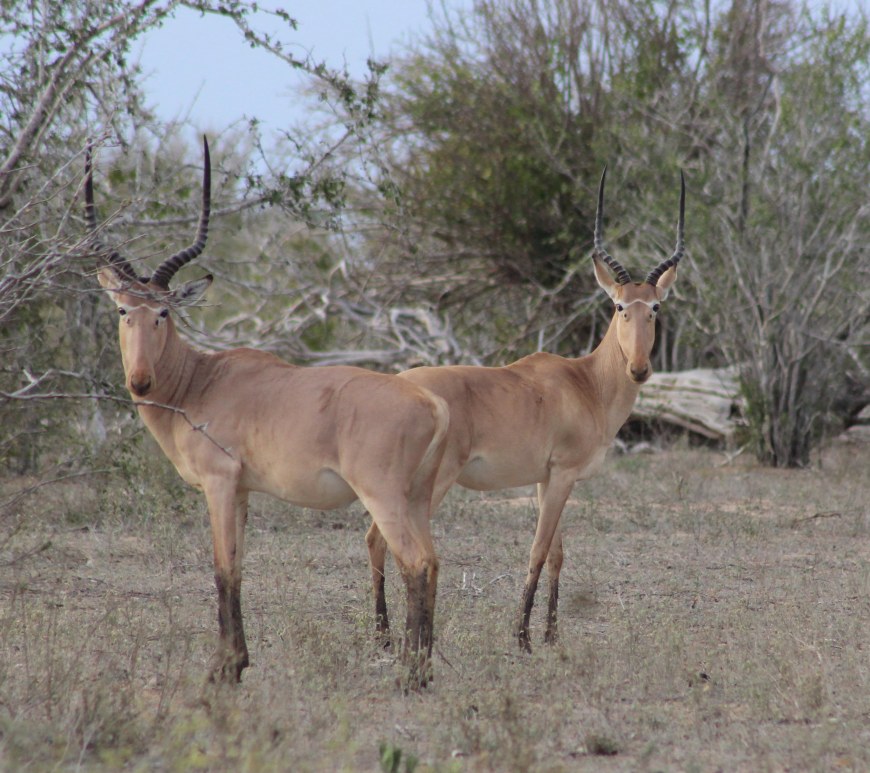
Why hirola are the world’s most endangered antelope, and what it will take to save them – with Somali translation

In this post Jacob Goheen and Abdullahi Ali discuss their recent paper ‘Resource selection and landscape change reveal mechanisms suppressing population recovery for the world’s most endangered antelope‘. Ali has also provided a Somali translation of this post. Journal of Applied Ecology is dedicated to making papers more accessible and increasing engagement with those in the region of the study. We encourage authors to write … Continue reading Why hirola are the world’s most endangered antelope, and what it will take to save them – with Somali translation

Tracking an apex marine predator – the shortfin mako shark

In this post Jeremy Vaudo and Mahmood Shivji discuss their article ‘Long-term satellite tracking reveals region-specific movements of a large pelagic predator, the shortfin mako shark, in the western North Atlantic Ocean’ In your paper you used satellite telemetry to investigate movements and seasonal distributions of shortfin mako sharks (Isurus oxyrinchus) in the western North Atlantic Ocean. What were the biggest challenges for this work? … Continue reading Tracking an apex marine predator – the shortfin mako shark

Forest thinning: a bat’s friend or foe?

In this post, Rachel Blakey discusses her paper in the latest issue of Journal of Applied Ecology ‘Bat communities respond positively to large-scale thinning of forest regrowth‘ The world’s forests are changing. Most of the remaining forests are re-growing after being cleared, but do these regrowth forests resemble the original primary forests? Often, where large tracts of forests were cleared at once (e.g. clear-felling), they … Continue reading Forest thinning: a bat’s friend or foe?

Spotlight: How do renewable energy installations affect wildlife?

In the first post of its kind for The Applied Ecologist’s blog, Dr Lucy Wright, RSPB Principal Conservation Scientist, discusses five articles published in the latest issue of Journal of Applied Ecology, which have been grouped into a special profile on wildlife and renewable energy. All five papers are currently free to read online. Renewable energy is widely accepted to be a vital part of … Continue reading Spotlight: How do renewable energy installations affect wildlife?

New techniques for Atlantic sturgeon conservation

In this post Associate Editor Verena Trenkel discusses a paper she recently handled from Michael Melnychuk and colleagues ‘Informing conservation strategies for the endangered Atlantic sturgeon using acoustic telemetry and multi-state mark–recapture models‘ According to the International Union for Conservation of Nature (ICUN), ten out 17 sturgeon species are currently critically endangered. Among the two species listed as least concern is Atlantic sturgeon which occurs … Continue reading New techniques for Atlantic sturgeon conservation

A new method for assessing the age of old-growth forests

In this post, Associate Editor Nathalie Butt discusses a recent paper ‘Tree-ring based metrics for assessing the functional naturalness of forests‘ by Alfredo Di Filippo, Franco Biondi, Gianluca Piovesan and Emanuele Ziaco. Valuable ecosystems Primeval forest, or ancient woodland in the UK, is an integral part of many epic stories and myths throughout human history, especially in Europe:  just think of all those old tales … Continue reading A new method for assessing the age of old-growth forests