How climate change affects carbon storage in Mediterranean pine forests

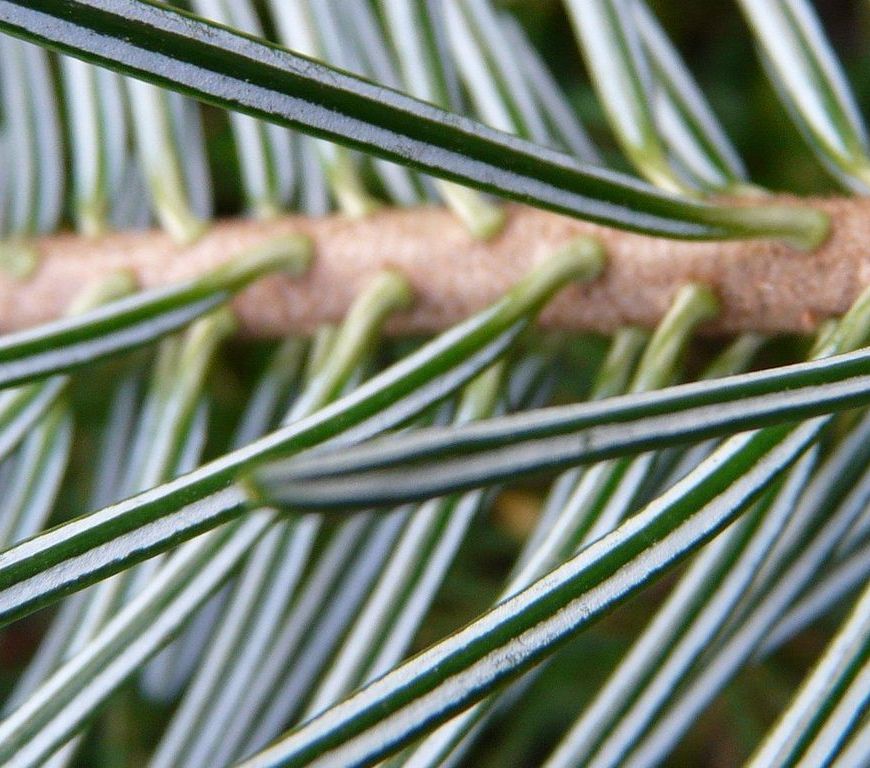
Reforestation is widely promoted as a way to mitigate climate change by capturing carbon from the atmosphere. However, its real success depends on how trees invest (allocate) the carbon they capture, that is, how much they invest to grow leaves, stems or roots, particularly under warmer and drier conditions. In this study, we analysed how climate affects carbon allocation in large-scale pine reforestations across the … Continue reading How climate change affects carbon storage in Mediterranean pine forests

Ying Ki Law: The role of forests in landslide occurrence, recurrence and recovery

Shortlisted for the 2024 Southwood Prize Ying Ki Law explains how her team investigated post-landslide vegetation recovery patterns and the role of forests in occurrence and recurrence probability. About the research Overview Our paper examines how landslides recover and what factors influence their regrowth and landslide risk. While landslide management often focuses on engineering solutions, we emphasize the role of vegetation recovery in long-term stability. … Continue reading Ying Ki Law: The role of forests in landslide occurrence, recurrence and recovery

ECR Journeys: remote sensing in forest restoration

This month, The Applied Ecologist is amplifying the voice of early career ecologists from around the world working in the field of applied ecology to help inspire the next generation. In this post, Fellice Catelo, a PhD student at the University of the Sunshine Coast, Australia shares her story. My background I’m pretty easy and chill! In my free time, I watch horror/thriller films and … Continue reading ECR Journeys: remote sensing in forest restoration

ECR Journeys: Coding for forest conservation

This month, The Applied Ecologist is amplifying the voice of early career ecologists from around the world working in the field of applied ecology to help inspire the next generation. In this post, Abby Williams shares her story. My background I love spending as much time outdoors as I possibly can, whether that’s hiking, wild swimming, cycling or running. I’m also interested in local wildlife … Continue reading ECR Journeys: Coding for forest conservation

Salvage logging and subsequent post-windthrow management diminish forest bird communities for two decades

In this blog post, Michał Walesiak shares how increased bird diversity in an area of unmanaged windthrow persisted over a 20-year span in Poland. Natural disturbances in forests, such as hurricanes, fires, bark beetle outbreaks, often evoke negative emotions in people. Many find it hard to believe that hurricanes, fires, bark beetles… may actually bring some benefits to nature, such as increase in biodiversity! This … Continue reading Salvage logging and subsequent post-windthrow management diminish forest bird communities for two decades

Land sparing outperforms land sharing for Amazonian bird communities regardless of surrounding landscape context

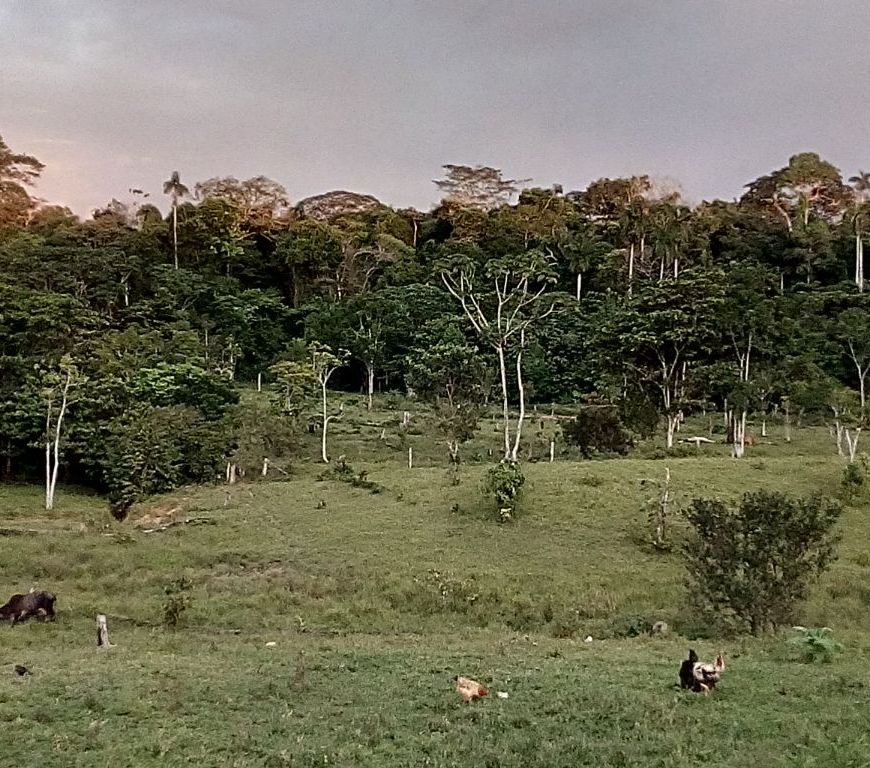
Benjamin Birch discusses the role of wildlife-friendly habitat in the wider surrounding landscape in promoting farmland diversity. Alongside colleagues, Birch modelled strategies of land sparing and land sharing under different levels of production. Background The conversion of natural habitats to agriculture is one of the greatest threats to biodiversity globally. Currently, 40% of the Earth’s land is dedicated to farming, and projections show a further … Continue reading Land sparing outperforms land sharing for Amazonian bird communities regardless of surrounding landscape context

Ricard Arasa-Gisbert: La pérdida de bosques y las matrices sin árboles causan el empobrecimiento funcional de las comunidades de árboles jóvenes en zonas de bosques antiguos en las regiones tropicales

Preseleccionados para el Premio Southwood 2022. Ricard Arasa-Gisbert discute su artículo y el de sus colegas de investigación sobre la pérdida de bosques y el empobrecimiento funcional de las comunidades de árboles jóvenes en las regiones tropicales. Continue reading Ricard Arasa-Gisbert: La pérdida de bosques y las matrices sin árboles causan el empobrecimiento funcional de las comunidades de árboles jóvenes en zonas de bosques antiguos en las regiones tropicales

Ricard Arasa-Gisbert: Forest loss and treeless matrices cause the functional impoverishment of sapling communities in old-growth forest patches across tropical regions

Shortlisted for the Southwood Prize 2022. Ricard Arasa-Gisbert discusses his and research colleagues’ article on forest loss and the functional impoverishment of sapling communities in tropical regions. Continue reading Ricard Arasa-Gisbert: Forest loss and treeless matrices cause the functional impoverishment of sapling communities in old-growth forest patches across tropical regions

Editor’s Choice 59:6: Tree species mixing amplify forest microclimate offsets in European forests

Associate Editor, Sharif Mukul, introduces this month’s Editor’s Choice article by Zhang and colleagues, which shows that microclimate offsetting depends on tree species identity and diversity, and that buffered forest microclimates can be achieved rapidly in young plantations, depending on the species being planted.  Tree canopies can significantly buffer temperature fluctuations and enhance water availability, which has the potential to mitigate the effects of macroclimate … Continue reading Editor’s Choice 59:6: Tree species mixing amplify forest microclimate offsets in European forests

Gypsy moths: Understanding the impact of a dreadful forest pest

In their latest Registered Report, Benjamin Leroy and colleagues outline their methods to review the pathways in which gypsy moth outbreaks, and their subsequent treatment, affect forest ecosystems. To find out more about Registered Reports, read our blog post here. The gypsy moth is a species native to Eurasia and widely considered as one of the most severe pests of temperate forests. The exceptionally voracious … Continue reading Gypsy moths: Understanding the impact of a dreadful forest pest