Impacts of proactive health management on cattle and horse diets and dung biodiversity in Danish rewilding areas

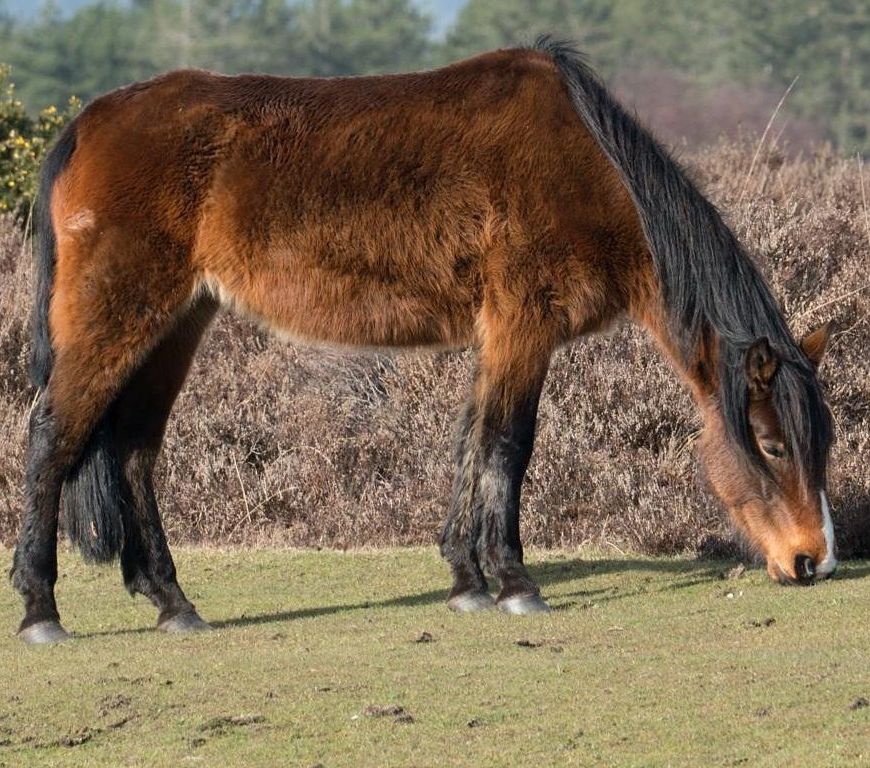
Emil S. Thomassen explains the recent diet study of rewilded cattle and horses, showing functional differences between the two species and reveals the impacts of management actions on this functionality as described in their latest research. The use of DNA metabarcoding for herbivorous diet analysis is a promising tool, yielding high-resolution data on plant consumption. In a time, where nature restoration and conservation are of … Continue reading Impacts of proactive health management on cattle and horse diets and dung biodiversity in Danish rewilding areas

Ecological Associations of Lantana camara in an East African Savanna Park

Fredrick Ssali, Robert Baluku, Gilbert Drileyo and Moses Muhumuza recount their experience investigating the invasive flowering plant Lantana camara and its impact on common native species in western Uganda. Researchers at the Uganda Wildlife Research and Training Institute (UWRTI) teamed up with scientists from two Ugandan Universities and explored associations between Lantana camara and common native species in Queen Elizabeth National Park in western Uganda. … Continue reading Ecological Associations of Lantana camara in an East African Savanna Park

Climate challenges in savannas: How herbivore communities chart the course

Dr. Katja Irob summarises their latest study, conducted alongside colleagues, which analysed the impacts of climate change and rangeland management on degradation in Savanna ecosystems of southern Africa. Findings suggest that, in the face of climate uncertainty, farmers’ most effective strategy for securing their livelihoods and ecosystem stability is to integrate browsers and apply management of mixed herbivore communities.  Savannas as hot spots of environmental … Continue reading Climate challenges in savannas: How herbivore communities chart the course

Strategies for global rangeland stewardship: the equilibrium-non-equilibrium debate

The rangeland equilibrium-non-equilibrium debate produced several important advances in our understanding of rangeland systems. But, in their recent Review, Briske et al. ask if, collectively, these advances are still insufficient to inform the stewardship strategies necessary to sustain global rangelands? Here they provide a summary of their work. The rangeland equilibrium-non-equilibrium debate of the late 20th Century questioned the appropriate ecological model governing the function … Continue reading Strategies for global rangeland stewardship: the equilibrium-non-equilibrium debate

Grazers and fire management: conservation from a ‘systems’ perspective

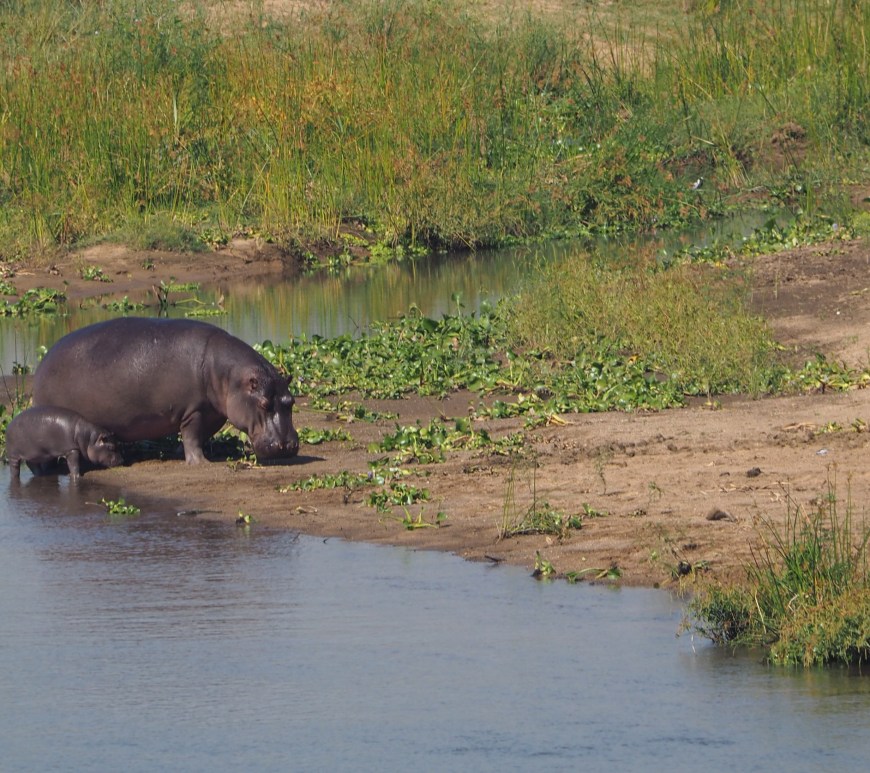
How do grazing herbivores like hippos affect the influence of fire? Following a recently published article, Izak Smit demonstrates the need for interdependence between herbivore and fire management. Grazing animals and fire are in direct competition – both of them consume grass. Previous continental-scale studies suggest that grazing animals have the competitive advantage in drier and more nutritious landscapes, whilst fires dominate in wetter and … Continue reading Grazers and fire management: conservation from a ‘systems’ perspective

Editor’s Choice 55:2 – How does grazing by wild ungulates and livestock affect plant richness?

The Editor’s Choice for issue 55:2 is written by Associate Editor, Jörg Müller. The selected article is Livestock activity increases exotic plant richness, but wildlife increases native richness, with stronger effects under low productivity by David J. Eldridge et al. Browsing and grazing by wild ungulates and livestock affect the vegetation layer in complex ways, creating many management conflicts in silviculture, restoration and conservation. However, certain types of herbivory … Continue reading Editor’s Choice 55:2 – How does grazing by wild ungulates and livestock affect plant richness?

Editor’s Choice 54:3 – Prescribing burns to increase forage for cattle: are managers ‘biting off more than they can chew’?

Issue 54:3’s Editor’s Choice is written by Associate Editor, Jennifer Firn. The article chosen by the Editors is Fire-induced negative nutritional outcomes for cattle when sharing habitat with native ungulates in an African savanna by Wilfred O. Odadi and colleagues. Ecological science is increasingly being applied to understand species interactions and to identify thresholds of degradation in more traditional agricultural landscapes (Scherr & McNeely 2008). This … Continue reading Editor’s Choice 54:3 – Prescribing burns to increase forage for cattle: are managers ‘biting off more than they can chew’?

Climate change and food security

In this post, Adam Frew discusses his paper ‘Increased root herbivory under elevated atmospheric carbon dioxide concentrations is reversed by silicon-based plant defences‘ As the global climate changes the global population continues to rise, we are faced with the daunting challenge of achieving sustainable crop production to meet the increasing demand for food. Professor John Beddington in 2009, UK chief scientist at the time, highlighted … Continue reading Climate change and food security

Northern mixed-grass prairie bounces back, but slowly: reflections on a 33 year long grazing experiment

In this post Julie Kray, Agricultural Science Research Technician, USDA-ARS & Lauren Porensky, Ecologist, USDA-ARS discuss the recent paper ‘Thresholds and gradients in a semi-arid grassland: long-term grazing treatments induce slow, continuous and reversible vegetation change’ How do we strike a balance between an economically sustainable amount of grazing, and an ecologically sustainable amount? This is the central challenge in managing grazed landscapes around the … Continue reading Northern mixed-grass prairie bounces back, but slowly: reflections on a 33 year long grazing experiment

Restoring Australian floodplains? Add water, reduce browsing, and lower salt*

In this post Associate Editor David Moreno Mateos discusses a paper he handled by Gillis Horner and colleagues ‘Recruitment of a keystone tree species must concurrently manage flooding and browsing’ It’s true, land management keeps getting complicated, especially when it gets to restoring sites. But the fact is that studies keep showing that we’re not that good at restoring ecosystems, essentially restored ecosystems tend not … Continue reading Restoring Australian floodplains? Add water, reduce browsing, and lower salt*