Bears on the move: effects of human development and climate change on hibernation in a large carnivore

How is climate change affecting both black bear hibernation and our interactions with the species? Associate Editor, Claudia Bieber comments on the recent article, Human development and climate affect hibernation in a large carnivore with implications for human–carnivore conflicts by Heather Johnson et al. As we were enduring extremely high summer temperatures in Vienna, it was indeed refreshing to find a manuscript dealing with hibernation in … Continue reading Bears on the move: effects of human development and climate change on hibernation in a large carnivore

Poaching problems? More rangers, please…

Sharing his insights into on-the-ground conservation, Maarten Hofman (University of Goettingen, Germany & Bangor University, UK) discusses Moore et al.’s recent article, Are ranger patrols effective in reducing poaching-related threats within protected areas, and the wider implications for tackling illegal poaching. Rangers are the heavy duty machinery in every protected area management’s human resource arsenal. Their list of duties ranges from public outreach and environmental … Continue reading Poaching problems? More rangers, please…

Greater than the sum of its parts: a holistic approach to wildlife trade

In this post, Daniel Bergin discusses issue 54.3’s Practitioner’s Perspective, Holistic management of live animals confiscated from illegal wildlife trade by Dr. Thomas Gray and colleagues. Armed detectives burst through the door. Traffickers are arrested, media coverage generated, and live animals are rescued from the illegal wildlife trade. But what happens next? What happens next is the focus of a new paper by Gray et. al., … Continue reading Greater than the sum of its parts: a holistic approach to wildlife trade

One year on: a Q&A with 2015 Southwood Prize winner Dustin Ranglack

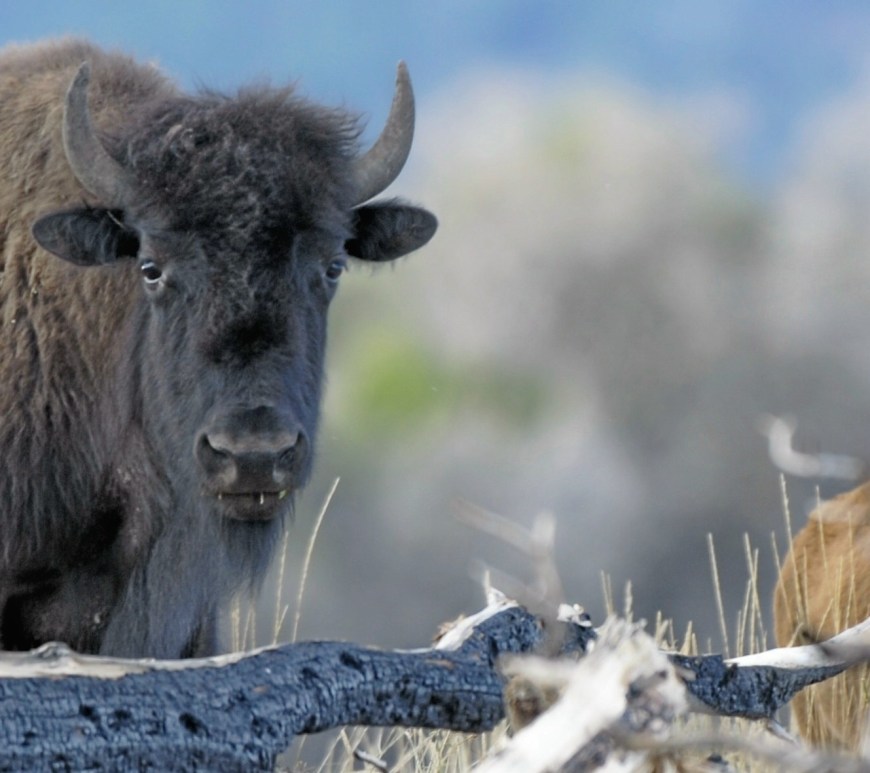
Today sees the announcement of this year’s winners of the BES Early Career Researcher Awards. Journal of Applied Ecology awards the Southwood Prize each year to the best paper in the Journal by an early career author at the start of their career. Dustin Ranglack won last year’s Southwood Prize for his paper ‘Competition on the range: science vs. perception in a bison–cattle conflict in … Continue reading One year on: a Q&A with 2015 Southwood Prize winner Dustin Ranglack

African forest elephants are really slow breeders

In this post, Associate Editor Johan du Toit discusses new Policy Direction “Slow intrinsic growth rate in forest elephants indicates recovery from poaching will require decades” by Andrea Turkalo, Peter Wrege, and George Wittemyer, published today. Intrinsic population growth is related to body mass The rate at which a population grows (r) under ideal conditions with no resource limitation, disease, or predation, is governed by … Continue reading African forest elephants are really slow breeders

Hunting and hiking are not so bad for wildlife populations

In this post Roland Kays discusses his paper ‘Does recreation or hunting affect wildlife communities in protected areas?‘ published today in Journal of Applied Ecology. Public wild lands have dual mandates to protect animals and provide recreational opportunities for people. These goals could be at odds if recreation, ranging from quiet hiking to legal hunting and trapping, hurts the wildlife community.  Past studies have clearly … Continue reading Hunting and hiking are not so bad for wildlife populations

Understanding the distribution of a terrestrial mammal community

Associate Editor Matt Hayward discussed the importance of the recent paper from Lindsey Rich and colleagues ‘Using camera trapping and hierarchical occupancy modelling to evaluate the spatial ecology of an African mammal community’ with his PhD student, Lilian Sales (supervised by Rafael Loyola of the Conservation Biogeography Lab at the Federal University of Goias, Brazil) and below are her views on this paper. Monitoring wildlife … Continue reading Understanding the distribution of a terrestrial mammal community

Showing the way for carnivore conservation: lions can survive without fences with the help of Community Conservancies

In this post Sara Blackburn discusses her paper ‘Human–wildlife conflict, benefit sharing and the survival of lions in pastoralist community-based conservancies‘ Recent work on African lions indicates that they’re in trouble. Widespread declines have been identified across the continent, except in intensively managed fenced reserves, signposting a bleak future for free-ranging lions. This is due to conflict with people; lions kill livestock and, understandably, they … Continue reading Showing the way for carnivore conservation: lions can survive without fences with the help of Community Conservancies

Crucial for population management: new model solves old missing data problem and provides mortality estimates for male African lions

In this post Julia Barthold discusses the recent paper “Bayesian estimates of male and female African lion mortality for future use in population management” by her and co-authors A. J. Loveridge, D.W. Macdonald, C. Packer, and F. Colchero. The article is part of the BES cross-journal special feature “Demography Beyond the Population”. In 2013, I wanted to project the population dynamics of African lions. This … Continue reading Crucial for population management: new model solves old missing data problem and provides mortality estimates for male African lions

Managing species and reducing human–wildlife conflicts

This blog post is part of the blog series ‘Authors in Asia’, to accompany the recent Virtual Issue in Journal of Applied Ecology. You can read other posts in this series here. This post features three manuscripts which look at reducing human–wildlife conflicts and managing species. First, Toshifumi Minamoto discusses his paper ‘A basin-scale application of environmental DNA assessment for rare endemic species and closely … Continue reading Managing species and reducing human–wildlife conflicts